
Reviewed · WALKING TOURS
La Paz: Street Food Walking Tour
La Paz reveals itself through its markets, and this four-hour walk uses food to lead you through the city center. You start near Jaen Street, then move through Lanza Market, Murillo Square, San Pedro, Rodriguez Market, the Witches Market, and San Francisco Church. It is a useful way to connect local dishes with city history, rather than simply checking off sights.
I like the route’s range: you taste several Bolivian specialties while seeing places with very different characters. I also like the help offered by guides such as Christian, Chris, and Erwin, especially for guests dealing with altitude sickness or wanting a more personal look at La Paz. The big concern is reliability: two recent bookings reported that the guide never arrived, so I would confirm the meeting details shortly before going.
Key points at a glance
- Green umbrella meeting point: Find the guide at Riosinho Square near Jaen Street at 2 p.m. for the English-language tour.
- Food across five city areas: Tastings are planned at Lanza Market, San Pedro, Rodriguez Market, the Witches Market, and the San Francisco area.
- A walking history lesson: Murillo Square, Jaen Street, the markets, and the church give the food stops a strong city context.
- Carnivores only: The experience is designed for people who eat meat, and vegetarian options are not promised.
- Guides make a difference: Christian, Chris, and Erwin received especially warm personal praise for their care and city knowledge.
- A serious booking caution: The overall score is 3.3 out of 5 from six ratings, with two reports of a guide failing to appear.
A four-hour introduction to La Paz through food
At $19 per person, this is priced as an inexpensive half-day walking experience. The fee includes the guide and the different tastings, so you are paying for both a meal-sized introduction to local flavors and a guided walk through central La Paz.
That value depends on the tour running as planned. Several people had excellent outings with their guides, but two bookings from late 2024 reported no-show problems and difficulty reaching the provider. I would not ignore that issue. If you book, keep your confirmation details handy and check for a message before heading to Riosinho Square.
The tour begins at 2 p.m. and lasts about four hours. That timing gives you an afternoon route through the central city, with no separate transport listed. Expect to walk from stop to stop, so comfortable shoes are more useful than stylish ones.
The meeting point is Riosinho Square, close to Jaen Street, one of La Paz’s well-known colonial streets. Look for the green umbrella, which is the main recognition signal. Since the meeting instruction is quite specific, arrive with enough time to locate the square rather than rushing in at 2 p.m.
More food tours in La Paz:
- La Paz: Cable Car Ride Tour with Food Tasting
★ 4.2 · 5 reviews - Bolivia: Bolivian Wine Tasting with Charcuterie Board
★ 5.0 · 10 reviews - Uyuni: 3-Days Salt Flats and Desert Adventure Tour with Food
★ 3.8 · 4 reviews
Lanza Market: your first taste of Bolivia
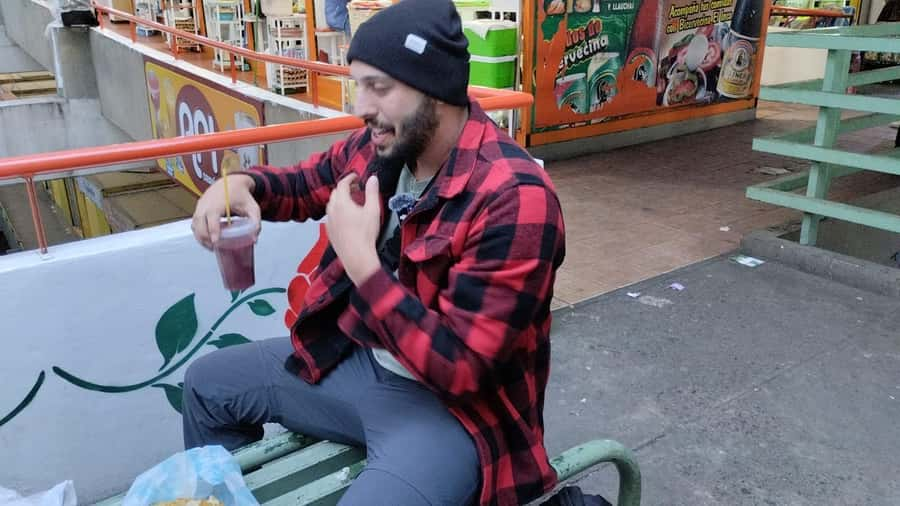
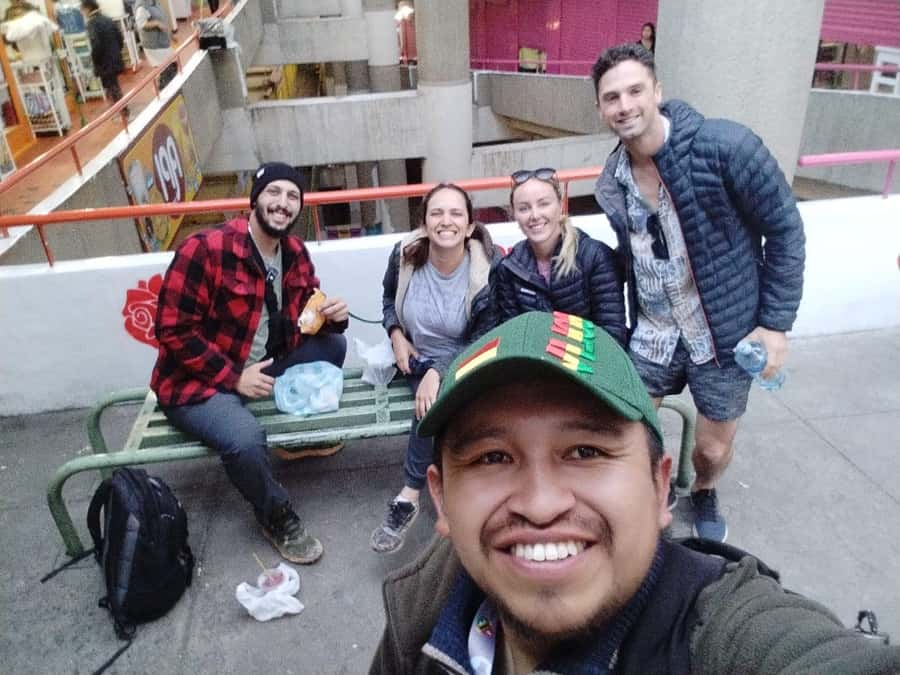
Lanza Market is the first major stop. This is where the food walk begins to feel different from a standard sightseeing circuit. Instead of receiving a broad lecture before eating, you start learning about La Paz while moving through a working market and trying a traditional Bolivian drink.
The drink is not named in the supplied details, so you should not expect a particular beverage unless the guide confirms it. The useful part is the setting. Markets show how food fits into daily life, from the way ingredients are sold to the quick, practical meals people choose during the day.
This stop should appeal to you if you like seeing food in its everyday setting. It may be less comfortable if you prefer polished cafés or carefully presented tasting menus. Market food can be direct and informal, which is exactly the point, but it also means you should bring an open mind.
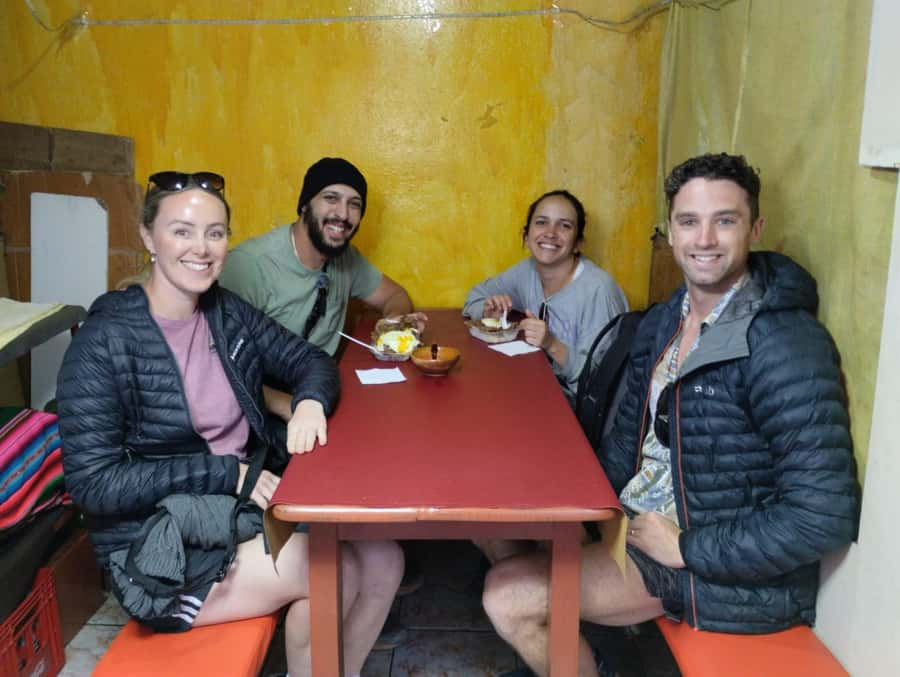
The guide’s explanations matter here. Erwin was praised for describing life in La Paz and taking his group to authentic street-food places. Christian was also praised for connecting the food with the city’s main sights and explaining their history. Those comments suggest that the best version of this tour is not just a succession of snacks. It is a conversation while you walk.
Murillo Square and the city’s central story
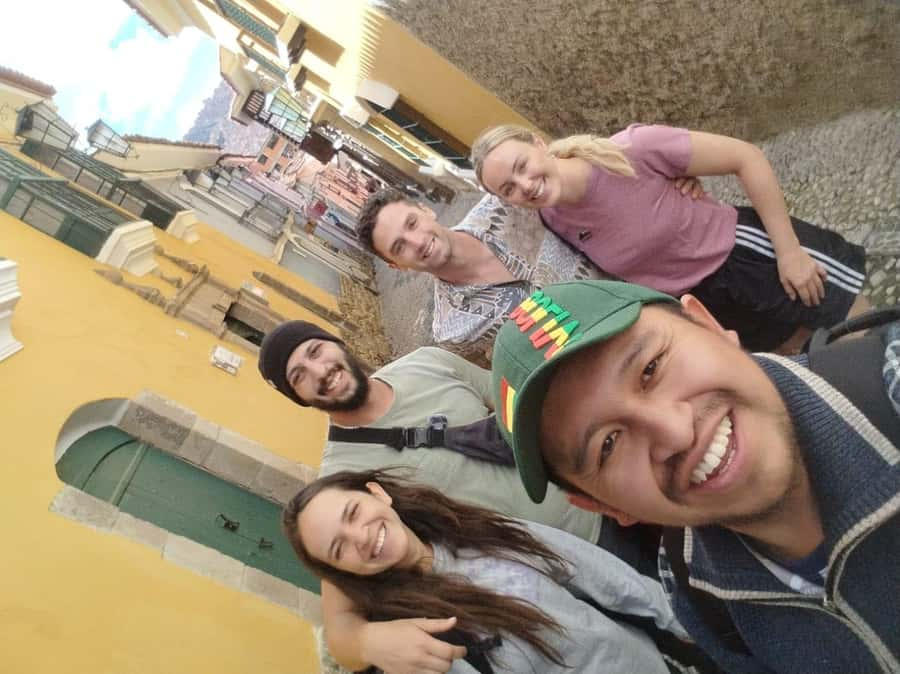
After Lanza Market, the route moves to Murillo Square, the main square. This gives the tour a clear shift from market food to civic La Paz. You can expect the guide to explain the square and its place in the city, though the supplied details do not list particular buildings or monuments inside it.
I like this part of the route because it gives you a pause between tastings. Food tours can become a blur when every stop is another bite. A central square provides room to understand where you are and why this part of La Paz matters.
The city sits at high altitude, and walking can feel demanding, particularly during the first days of a Bolivia visit. One guest had altitude sickness during the tour, and guide Christian helped him find medication at a pharmacy. That is a useful sign of practical care, but it is not a substitute for taking the altitude seriously.
Bring water, use sunscreen, and pace yourself. The operator specifically recommends clothing for changing weather, including a jacket, pullover, and umbrella, along with an outfit suitable for hot conditions. Sunglasses are also sensible. La Paz weather can shift during a single afternoon, and the tour keeps you outdoors for much of its four-hour length.
San Pedro and a more unusual food stop
The next part of the route heads toward San Pedro, described as a particularly notable prison, where you taste another typical Bolivian dish. The wording says you will visit San Pedro, but it does not explain the exact access arrangements or whether you enter the prison itself. Ask the guide for clarification rather than assuming an interior visit.
That uncertainty matters because San Pedro is not simply another market stop. It gives the walk a more unusual subject, and the food tasting adds a local angle to a place many city tours might only mention from outside. The combination makes this one of the route’s more distinctive moments.
The dish itself is not specified. The experience is clearly aimed at meat eaters, and the provider says it is available only for carnivorous people because many Bolivian food stops feature meat. If you are vegetarian, vegan, or have dietary restrictions, this tour is not a safe choice unless the provider confirms suitable alternatives in writing.
You should also pace your appetite. The route includes several tastings, and the food may add up to more than a light snack. One person enjoyed the food but could not finish everything. Treat the walk as a progressive tasting rather than arriving expecting one single meal.
Same corner of Bolivia, a completely different day out:
- La Paz and El Alto: Cable Car Rides and Walking Tour
★ 4.8 · 790 reviews - La Paz Half-Day Walking Tour
★ 4.8 · 591 reviews - La Paz: Private City Tour with Cable Car & Moon Valley Visit
★ 4.9 · 508 reviews - La Paz: Full Day Trip to Copacabana and Isla del Sol
★ 4.5 · 400 reviews
Rodriguez Market: produce and everyday shopping
Rodriguez Market brings vegetables and fruit into the picture. This is a useful counterpoint to the meat-focused warning. Even though the tastings are aimed at carnivores, the market itself gives you a look at the produce that supports daily cooking in La Paz.
The provided information does not name specific fruits or vegetables, so the exact selection will depend on the day. That is part of the appeal of a working market, but it also means you should not book this expecting a fixed menu.
For me, this stop helps keep the route grounded. You move from a colonial street and central square to places where food is bought and used. The tour is strongest when the guide explains those links: what people eat, where ingredients come from, and how the city’s markets fit into ordinary life.
Rodriguez Market may also be the point where your senses feel busiest. You are walking, listening, tasting, and watching people shop. Keep your belongings secure and stay close enough to hear the guide. The supplied details do not promise a private group, so the experience may depend on how well you can follow the guide through market areas.
The Witches Market and another Bolivian specialty
The route then reaches the famous Witches Market, where another food tasting is planned. This stop adds a different cultural layer to the tour. The market is known as one of La Paz’s most particular places, and combining it with food lets you experience it as part of the city rather than as an isolated photo stop.
The tour description does not identify the dish served here. That is worth noting if you need to plan around allergies or have strong food preferences. You are told that there will be a delicious local food, but not exactly what it will be.
Your guide is important at this stop because market traditions can be easy to misunderstand when seen without context. Chris was praised for explaining Bolivian dishes as well as table customs and social habits. That kind of explanation adds value, especially if you want to understand more than the taste of the food.
The route’s food focus also creates a practical limit. This is not a good fit if you want a formal lesson in Bolivian cuisine with detailed ingredient lists and a printed menu. It is a moving, informal experience, with food, stories, and landmarks mixed together.
San Francisco Church: the final tasting
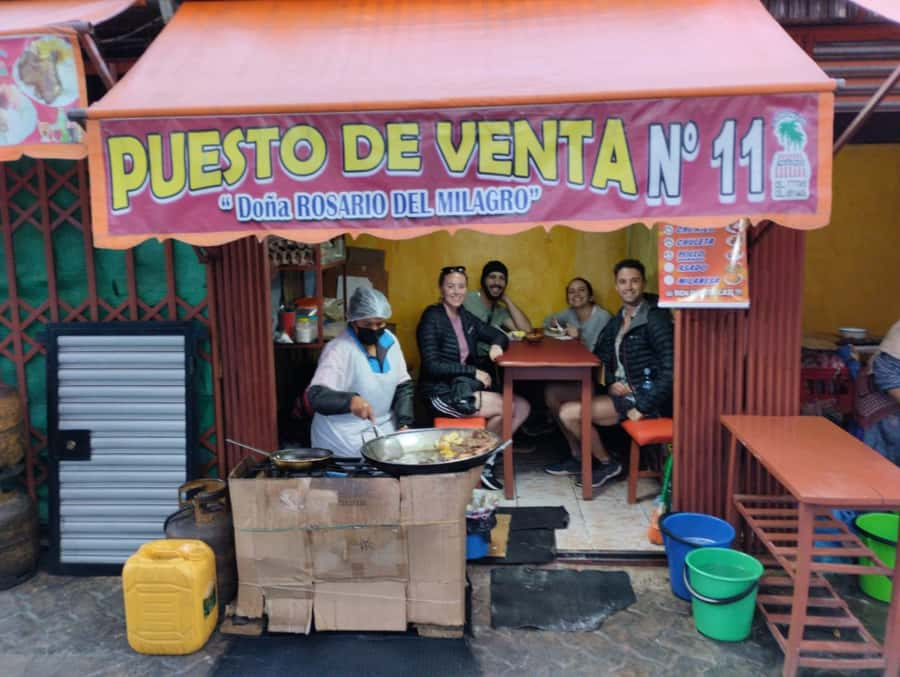
The final stop is the famous San Francisco Church, where the tour ends with another Bolivian food. The church gives the afternoon a recognizable finish and places the last tasting beside one of central La Paz’s best-known landmarks.
Because the experience ends here, you will not return to Riosinho Square as part of the stated plan. That is helpful if you want to continue sightseeing in the center after the tour. The end point also makes it easy to pair this activity with your own visit to nearby sights, though no extra admission or guided church interior visit is included in the details provided.
This last food stop rounds out the route. You have seen markets, a main square, a prison-related landmark, and a major church, with food used as the thread connecting them. The four-hour length gives the guide time to explain the city instead of rushing you through a few quick samples.
What the guides add to the walk
The most warmly described guides were Christian, Chris, and Erwin. Their strengths were slightly different, but all three added personal attention to the experience.
Christian helped one guest manage altitude sickness, including finding medication at a pharmacy. He was also praised for patience, showing the main sights, explaining their history, and serving more food than the guest could finish. That makes him particularly reassuring if you are still adjusting to La Paz.
Chris was praised for being friendly, explaining Bolivian dishes, and teaching table customs. He also made two women feel comfortable while walking through the city. That is useful if you are concerned about feeling at ease on a food walk with a guide you do not know.
Erwin was praised for explaining city life and taking his group to local street-food places while responding to their requests. If he leads your tour, you can reasonably hope for a flexible and personal walk, though guide assignments can change.
The important caution is that good guide reports do not erase the two no-show reports. The overall rating is 3.3 out of 5 from six ratings. That is a mixed record, not a simple recommendation. The provider is RealTours Bolivia, and the meeting instruction is clear, but reliability deserves attention before you commit a limited afternoon in La Paz.
What to bring for changing La Paz weather
The operator suggests bringing:
- Comfortable walking shoes
- Water and snacks
- Sunscreen
- Sunglasses
- A camera
- A jacket or pullover
- An umbrella
- Clothing for both cool and hot conditions
You may not need every item at once, but the advice is practical. The route lasts about four hours, and the weather can change quickly. A small day bag is the sensible way to carry layers, water, and sun protection without slowing yourself down.
Bring an appetite, but do not arrive expecting a clearly defined menu. The food stops are part of the route, and the exact dishes are not listed. Most importantly, book only if you eat meat, since the experience is specifically limited to carnivorous participants.
Is the $19 price good value?
At $19, the tour offers a low-cost way to combine several tastings with a guided look at central La Paz. If the guide arrives and the tastings run as planned, the price is appealing, particularly for someone who wants an introduction to Bolivian food without paying for a full restaurant experience.
The value is also practical. You get a guide in English, a four-hour walk, and food at several points along the route. You do not need to organize separate visits to Lanza Market, Murillo Square, Rodriguez Market, the Witches Market, and San Francisco Church.
Still, price should not hide the main risk. A cheap tour that fails to operate is poor value, and two people reported exactly that problem. Free cancellation up to 24 hours before the start and the option to reserve now and pay later reduce some booking risk, but they do not guarantee that the operator will communicate well on the day.
I would choose this tour for the route and food, but I would also confirm the appointment and green umbrella meeting signal before setting out. If you receive no clear confirmation, consider arranging a backup plan for the afternoon.
Who should book this food walk?
Book it if you eat meat, like market food, enjoy walking, and want city context with your tastings. It is especially suitable for a first afternoon in La Paz, when you want a guide to connect central sights and help you get oriented.
It may also suit you if altitude is a concern, provided you move slowly and tell the guide how you feel. Christian’s response to one sick guest was encouraging, but every person reacts differently, so carry water and do not force yourself through the route.
Skip it if you need vegetarian food, a fixed tasting menu, guaranteed accessibility information, or perfect operator reliability. The walking route and several food stops are attractive, but the mixed score and no-show reports are too important to overlook.
Should you book the La Paz Street Food Walking Tour?
I would book this only after confirming that the tour is running and that you can meet the guide with the green umbrella at Riosinho Square. The route is well chosen, the $19 price is fair, and the strongest guide experiences sound genuinely personal, especially with Christian, Chris, and Erwin.
The decision is simple if you are a meat eater who wants local markets and informal food. The decision is less favorable if you need firm reliability or dietary flexibility. Treat the tour as a promising, good-value introduction with one serious operational warning, not as a guaranteed highlight.
FAQ
Where does the La Paz Street Food Walking Tour begin?
The tour begins at Riosinho Square, close to Jaen Street in La Paz.
What time does the English tour start?
The English-language tour starts at 2 p.m.
How long does the tour last?
The tour lasts approximately four hours.
How much does the experience cost?
The listed price is $19 per person.
What language does the guide speak?
The live tour guide speaks English.
What food and drinks are included?
The tour includes different Bolivian tastings, including a drink at Lanza Market and food stops along the route. The exact dishes are not specified.
Is the tour suitable for vegetarians?
The experience is described as available only for carnivorous people, so vegetarian suitability is not promised.
What should I bring?
Bring comfortable shoes, water, snacks, sunscreen, sunglasses, a camera, and clothing for changing weather. A jacket, pullover, and umbrella are suggested.
Can I cancel and receive a refund?
You can cancel up to 24 hours in advance for a full refund. The activity also offers reserve now and pay later booking.
More Walking Tours in La Paz
- Walking city tour La Paz
★ 3.9 · 25 reviews - Walking tour in Sucre: History, Culture & Amazing Views
★ 4.8 · 79 reviews - Walking tour – A journey through the History of Santa Cruz
★ 4.8 · 61 reviews - Sucre: Free Walking tour (History, culture and traditions)
★ 4.8 · 47 reviews
Just added around La Paz
- Private Tour of Tiwanaku Ruins from La Paz★ 5.0 · 3 reviews
- Private Tiwanaku and Titicaca Day Trip from La Paz★ 4.8 · 3 reviews
- La Paz: Uyuni tour ending in Atacama Chile by bus.★ 3.9 · 3 reviews
- From La Paz: Lake Titicaca and Copacabana Private Tour★ 5.0 · 5 reviews
- LA PAZ: GUIDED TOUR CHACALTAYA + VALLEY OF THE MOON★ 3.6 · 3 reviews
- La Paz: The Feminist Tour★ 5.0 · 3 reviews
- Titicaca Lake: Highlights Tour from La Paz by Bus★ 4.0 · 3 reviews
- La Paz: Uyuni Salt Flats & Lagoon Share Trip (private room)★ 4.7 · 4 reviews
Walking Tours, compared.
La Paz and El Alto: Cable Car Rides and Walking Tour
Read our review →
Walking tour in Sucre: History, Culture & Amazing Views
Read our review →
Walking tour – A journey through the History of Santa Cruz
Read our review →
Free Walking tour (History, culture and traditions)
Read our review →

Browse the lists this tour appears in