
Reviewed · WALKING TOURS
La Paz Half-Day Walking Tour
La Paz makes a strong first impression, but its steep streets and layered politics can be hard to read on your own. This $3 walking tour gives you a useful introduction, linking Plaza Murillo, the Witches’ Market, local customs, and daily city life through stories rather than a quick checklist of sights. I especially like the explanations of the women’s hats and the masked shoe shiners, details you could easily miss while wandering alone.
I also like the care taken with altitude. Guides have kept the pace gentle and tried to use flatter routes, which matters in La Paz more than it might in a city at sea level. The main drawback is scope: in 150 minutes, you see a fairly small part of the city, and this is not the tour for anyone who has trouble walking uphill or using uneven streets.
Key points about the La Paz walking tour
- Plaza Murillo gives you the city’s political center: See the Presidential Palace, National Congress, Cathedral of La Paz, and other major monuments while learning why politics has shaped the city.
- The Witches’ Market explains Andean beliefs: Your guide can explain the purpose of curious potions, lotions, talismans, and other traditional items.
- Local customs are the real highlight: Learn why some women wear distinctive hats, why shoe shiners cover their faces, and why zebras help direct traffic.
- The pace takes altitude seriously: The walk is designed around La Paz’s high elevation, with guides aiming for a slower pace and fewer steep sections where possible.
- Guides bring different personalities: Denise, Max, Daniel, Rem, Matt, Juan, Amara, Remberto, and others have led this walk, with Denise and Max especially praised for humor, warmth, and strong storytelling.
- The low price changes the tipping question: At $3 per person, the tour is exceptional value, but you should budget a tip if the guide gives you a good introduction to the city.
Why this short walk helps you understand La Paz

La Paz is not a city that explains itself at street level. A grand building may sit beside a market stall selling Andean remedies, while a masked shoe shiner works nearby and a person dressed as a zebra helps pedestrians cross the road. Without context, these details can seem random. With a local guide, they become part of a larger picture.
That is the central value of this walk. You are not simply moving from one monument to another. You are being shown how history, politics, religion, work, and popular traditions appear in everyday public spaces.
The tour lasts about two to two and a half hours, or 150 minutes. That is long enough for a proper introduction, but short enough to fit into a first day in La Paz. I would use it early in a stay, when you want to understand where you are before returning to explore markets, churches, museums, and viewpoints on your own.
The format is especially useful if you arrive with limited time. It covers central areas on foot and gives you a working map of the city. You will not see all of La Paz, but you should finish with a better sense of which areas deserve another visit.
More walking tours in La Paz:
- La Paz and El Alto: Cable Car Rides and Walking Tour
★ 4.8 · 790 reviews - Walking city tour La Paz
★ 3.9 · 25 reviews - La Paz: Street Food Walking Tour
★ 3.3 · 6 reviews
Starting in Plaza San Pedro
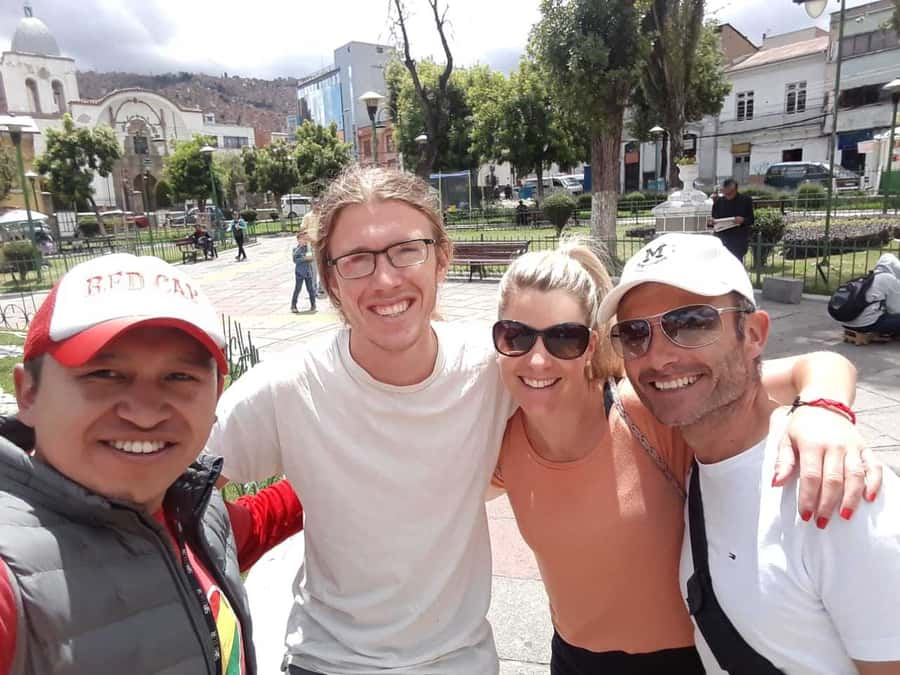
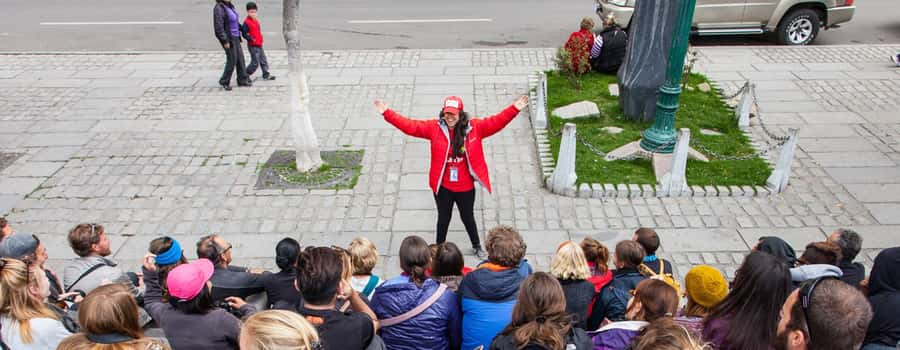
The meeting point is in the center of Plaza San Pedro, also called Plaza Sucre, near the statue on Cañada Strongest. Look for the guide wearing a red cap and an I heart La Paz T-shirt.
That identifying detail is helpful in a busy city, and the central meeting point makes the tour fairly easy to reach. You should still arrive with enough time to locate the statue and guide without rushing. The walk begins in a part of the city where everyday activity matters as much as formal sightseeing, so the setting starts working before the first major monument.
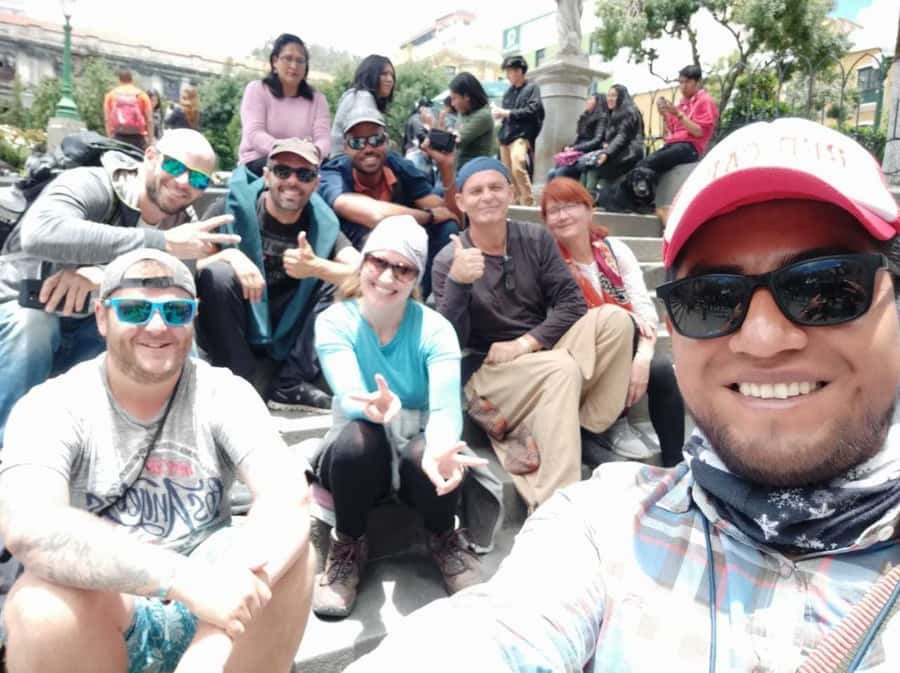
Different guides lead the experience. Names appearing in the guide team include Denise, Max, Daniel, Rem, Matt, Juan, Amara, Maru, and Remberto. The tone may vary from one guide to another, but the strongest pattern is clear: this tour depends on storytelling, questions, and personal connection rather than a memorized speech.
Denise has been especially appreciated for her humor, clear English, and obvious affection for La Paz. Max is known for bringing energy and personal feeling to the city’s past and present. Daniel has been praised for keeping the walk fun while explaining the facts behind what you see. Matt, Rem, Juan, Amara, and Remberto have also been singled out for friendly, informative guiding.
Reading La Paz through street customs
Some of the tour’s best material is not attached to a famous building. It is attached to people.
Your guide explains why women wear distinctive hats, including the social and cultural meaning behind this familiar part of Bolivian dress. You also hear why shoe shiners often wear masks. That custom is easy to misunderstand if you simply pass by, but it becomes more meaningful once a guide explains the social reasons behind it.
The street zebras are another memorable detail. These costumed figures help with traffic and pedestrian awareness, making them one of La Paz’s most unusual public symbols. The explanation turns an amusing sight into a useful lesson about how the city handles crowded roads and public behavior.
This is where I think the walk earns its place in a La Paz itinerary. Monument tours can tell you when a building was constructed. A local guide can also tell you what you are seeing between those buildings, and why it matters to people who live there.
Expect questions to be welcome. Several guides are described as patient and willing to explain local customs, history, and politics in clear English. That makes the walk more useful for anyone who wants more than a quick photograph and a building name.
The Witches’ Market and Andean belief
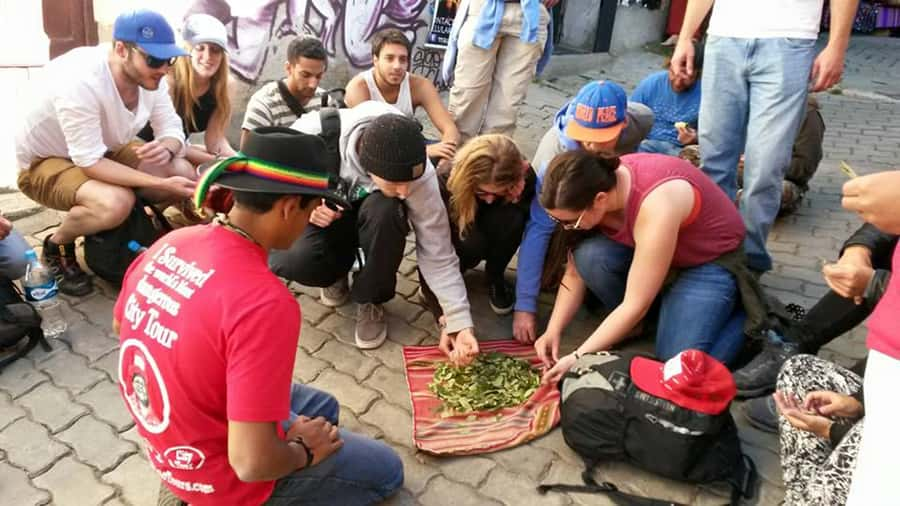
The Witches’ Market is one of the tour’s most distinctive stops. Here, you can see lotions, potions, talismans, and other objects connected with Andean beliefs and traditional practices.
The point is not simply to browse unusual products. Your guide explains what different items are for and how local beliefs fit into wider cultural traditions. This context matters because the market can look like a collection of curiosities when viewed without explanation.
You should expect the stop to be more educational than theatrical. The experience focuses on understanding why people buy these objects and what they represent. Your guide may also explain which remedies or items you might consider buying, but meals, drinks, and purchases are not included in the $3 price.
Bring cash if you want to shop. Cash is also listed as something to bring generally, so it is sensible for small purchases and for tipping your guide. You do not need to buy anything to benefit from the stop.
The market is a good example of the tour’s balance. It introduces a place that many first-time visitors want to see, but it adds cultural background rather than treating it as a strange spectacle.
Same corner of Bolivia, a completely different day out:
- La Paz: Private City Tour with Cable Car & Moon Valley Visit
★ 4.9 · 508 reviews - La Paz: Full Day Trip to Copacabana and Isla del Sol
★ 4.5 · 400 reviews - La Paz: Mountain Bike Down the World’s Most Dangerous Road
★ 4.9 · 386 reviews - La Paz: Cholitas Wrestling Tickets and Transfer
★ 4.4 · 338 reviews
Plaza Murillo and the political heart of the city
Plaza Murillo is the tour’s grandest setting. The square brings together the Presidential Palace, the National Congress of Bolivia, the Cathedral of La Paz, and other historic monuments.
Your guide uses these buildings to explain Bolivia’s political history and the unrest that has shaped La Paz over the years. This is one of the reasons the tour is more useful than a simple photo walk. The buildings are impressive, but their importance comes from the events, institutions, and conflicts connected to them.
You should not expect a full political history of Bolivia in one short visit. The tour gives you an introduction, enough to help you follow later conversations and understand why central La Paz has often been a stage for national events.
The square also provides a change of pace. After learning about street customs and Andean beliefs, you reach a formal civic space where government, religion, and national identity meet. That contrast helps explain the city’s character better than either a market visit or a monument tour could do alone.
The tour covers relatively few major sights, and that is worth understanding before booking. The guide spends time telling stories at each stop, so the experience favors explanation over speed. If you want to enter many buildings or see a long list of landmarks, this will feel limited. If you want a clear introduction to the meaning behind a smaller number of places, the slower approach works well.
Walking at high altitude
La Paz requires more physical effort than the distance on a map suggests. The city’s elevation can make even a modest uphill walk feel demanding, especially during your first day.
The guides take this into account. The walk is paced slowly, and the route may favor flatter streets where possible. One guide has also adjusted the pace for someone having trouble with uphill walking. That kind of flexibility is valuable, but it does not remove the physical demands of the city.
Wear comfortable shoes and bring water, though drinks are not supplied as part of the tour. A sun hat and sunscreen are important because of the strong high-altitude sun. Rain gear is also recommended, since conditions can change quickly.
This tour is not suitable for people with mobility impairments or wheelchair users. The route involves walking through central streets and may include hills or uneven surfaces. If you are concerned about altitude or stamina, consider scheduling the tour when you can walk slowly and take breaks.
How the $3 price affects the value
At $3 per person, this is unusually inexpensive for a two-and-a-half-hour guided city walk. You receive an English-speaking local guide, historical context, cultural explanations, and orientation in several central areas.
The price is low enough that the tour works well as a first-day introduction, even if you later choose paid museums, cable cars, or longer excursions. You are not committing much money, yet you get information that can shape the rest of your stay.
I would treat the listed price as an entry cost rather than the full measure of what the guide’s time is worth. Several people who enjoyed the walk felt that a tip was appropriate, and one specifically noted that the guide explained why the price is so low. If Denise, Max, Daniel, Rem, or another guide gives you a thoughtful, well-paced introduction, bring cash and tip according to the quality of the experience.
The price does not include food, drinks, or purchases at the Witches’ Market. It also does not turn the walk into a private tour. Group size can vary. One afternoon group had only four people, while another walk remained easy to follow despite being fairly large. Your experience may depend partly on the day and guide assigned.
Who should book this walk
I would recommend it to first-time visitors who want a quick, friendly orientation to La Paz. It is particularly useful if you are curious about customs, politics, and daily life rather than only famous buildings.
It also suits solo visitors and couples who want company at the start of a stay. A guide can help you identify places to return to and make the city feel easier to approach on your own.
The walk is a strong choice for anyone with only a few hours in La Paz. It covers the main central themes without requiring a full day, and its English-language format makes the explanations accessible.
You may want something else if you prefer a private experience, need step-free access, or want a very broad sightseeing route. This is a walking introduction, not a full city tour by vehicle, and it does not promise extensive coverage beyond the central areas.
Practical details before you go
Meet at the center of Plaza San Pedro, near the statue, and look for the red cap and I heart La Paz shirt. Wear shoes that can handle city streets, bring sun protection and rain gear, and carry cash.
The activity is offered in English and lasts 150 minutes. You can cancel up to 24 hours before the start for a full refund, and the reserve-now, pay-later option lets you keep your plans flexible.
Most important, do not treat the slow pace as wasted time. At La Paz’s altitude, a measured walk is part of good planning. You will have more energy to listen, ask questions, and notice the small details that make the city memorable.
Should you book the La Paz Half-Day Walking Tour?
Yes, if you want an inexpensive first look at La Paz with real cultural context. The strongest parts are the local explanations of hats, masks, zebras, Andean beliefs, and political life, along with the major stops at the Witches’ Market and Plaza Murillo.
Book it early in your visit if possible. The walk will help you decide where to return, what customs to look for, and how the city’s central spaces fit together. Just bring comfortable shoes, prepare for altitude, and remember that the short route favors good stories over a long list of sights.
FAQ
How long does the La Paz walking tour last?
The tour lasts about 150 minutes, or two to two and a half hours.
Where does the tour meet?
Meet in the center of Plaza San Pedro, also called Plaza Sucre, near the statue on Cañada Strongest in La Paz. Look for a guide wearing a red cap and an I heart La Paz T-shirt.
What language is the tour offered in?
The tour is offered in English with a live local guide.
What places are included?
The walk visits Plaza Murillo, where you can see the Presidential Palace, National Congress of Bolivia, Cathedral of La Paz, and other historic monuments. It also includes the Witches’ Market and other central city sights.
What should I bring?
Bring comfortable shoes, a sun hat, sunscreen, rain gear, and cash. Meals, drinks, and purchases are not included.
Is the tour suitable for wheelchair users?
No. The tour is not suitable for wheelchair users or people with mobility impairments.
Just added around La Paz
- Private Tour of Tiwanaku Ruins from La Paz★ 5.0 · 3 reviews
- Private Tiwanaku and Titicaca Day Trip from La Paz★ 4.8 · 3 reviews
- La Paz: Uyuni tour ending in Atacama Chile by bus.★ 3.9 · 3 reviews
- From La Paz: Lake Titicaca and Copacabana Private Tour★ 5.0 · 5 reviews
- LA PAZ: GUIDED TOUR CHACALTAYA + VALLEY OF THE MOON★ 3.6 · 3 reviews
- La Paz: The Feminist Tour★ 5.0 · 3 reviews
- Titicaca Lake: Highlights Tour from La Paz by Bus★ 4.0 · 3 reviews
- From La Paz: Trip to Uyuni Salt Flats with Wine at Sunset★ 4.4 · 4 reviews
Walking Tours, compared.
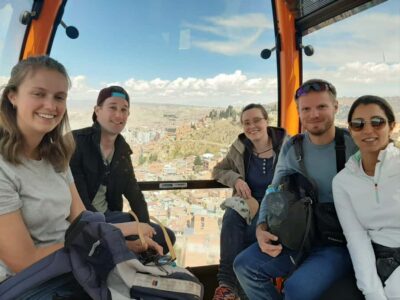
La Paz and El Alto: Cable Car Rides and Walking Tour
Read our review →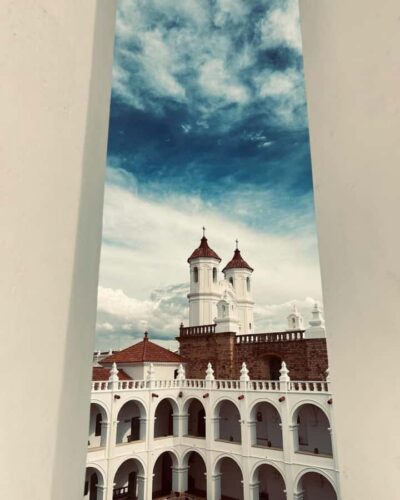
Walking tour in Sucre: History, Culture & Amazing Views
Read our review →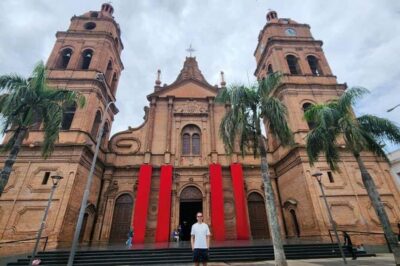
Walking tour – A journey through the History of Santa Cruz
Read our review →
Free Walking tour (History, culture and traditions)
Read our review →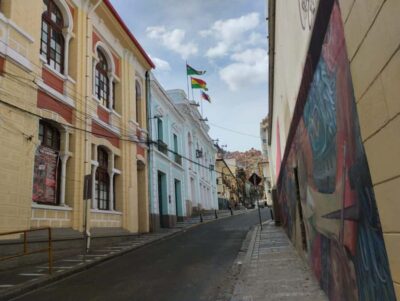

Browse the lists this tour appears in