
Reviewed · UYUNI TOURS
Uyuni Salt Flats (3 Days) English Speaking Guide
The big draw here is not just the white salt plain. It is the sudden change of scenery over three days: rusting British locomotives, salt villages, giant cacti, red lagoons, flamingos, geysers, and volcanoes. I like the small group of up to five and the fact that meals, transport, and two nights of lodging are built into the $449 price.
I also like that the route reaches far beyond the salt flats, giving you a real taste of Bolivia’s high Altiplano. Guides named Nelson and Edgar have been praised for good explanations, safe driving, and fun photos. The catch is simple: accommodation is basic, the altitude is serious, and some days involve long stretches in the vehicle with limited facilities.
Key points at a glance
- Three days, not just three hours: You see Uyuni’s salt crust, cactus island, high desert, colored lagoons, geysers, and volcanoes.
- Small-group format: The vehicle carries no more than five participants, which makes stops and photo sessions easier to manage.
- Two basic overnight stays: Salt-block lodging comes first, followed by very simple accommodation near the Chilean border.
- High-altitude conditions: The route reaches about 15,000 feet in the Siloli Desert, so cold, thin air, and early starts are part of the deal.
- Useful inclusions: Transport, two breakfasts, three lunches, two dinners, tea, coffee, and a first-aid kit are included.
- Extra costs matter: Isla Incahuasi, the national reserve, hot springs, showers, towels, sleeping bags, private rooms, and the Chile transfer cost more.
Why this three-day route is worth considering
At $449 per person, this is not the cheapest way to see Uyuni, but it covers a lot of ground. You are paying for a three-day vehicle journey, an English-speaking guide, meals, two nights of accommodation, and access to places that are difficult to reach independently.
The strongest value comes from the range of scenery. Day one gives you the famous salt flats. Day two shifts into volcanic country and the Siloli Desert. Day three brings steaming geysers, strange rock formations, hot springs, and Laguna Verde beneath Licancábur.
I would choose this route over a one-day salt-flat outing if you have the time and want more than clever perspective photographs. The tradeoff is comfort. This is an expedition-style trip, not a polished hotel circuit.
The group limit of five is useful. Uyuni departures often follow similar schedules, so popular places can be crowded. A small group will not make Isla Incahuasi empty, but it does make it easier to hear the guide, get in and out of the vehicle, and stop for photographs without managing a large crowd.
A few more Uyuni days to weigh up
- 3-Day Tour to Salt Flats and Lagoons
★ 4.5 · 168 reviews - From Uyuni: Red Lagoon & Uyuni Salt Flats 3-Day Guided Tour
★ 4.4 · 160 reviews - Uyuni: Uyuni Salt Flats and San Pedro de Atacama 3-Day Tour
★ 4.3 · 122 reviews
Day one: trains, salt workers, and the great white plain
The first stop is the Train Cemetery, about 3 kilometers from Uyuni’s railway station. It is an eerie collection of more than 100 abandoned train cars and locomotives, many imported from Britain in the early 20th century.
These machines were once part of grand plans to expand rail links through the region. Technical problems and political tension helped bring those plans to a halt, leaving the equipment to rust in the dry salt winds. The result is a strange open-air museum with no fence and few restrictions.
You can walk inside the hollow carriages and climb onto some of the trains for photographs. Wear sturdy shoes and watch your footing. The metal is heavily corroded, and the site is more rugged than polished.
Next comes Colchani, a small settlement beside the salt flats. Its cooperative processes salt for Bolivia and Brazil, and the village gives you a useful look at the work behind the famous white surface.
A local demonstration explains how salt is extracted and refined. A donation is expected for this explanation, so carry some small change. Colchani is also a good place to buy salt handicrafts and woven goods made from llama and alpaca fiber.
The small Salt Museum can be seen in five to ten minutes. Its sculptures and walls are made from salt blocks, so it is more of a quick visual stop than a full museum visit.
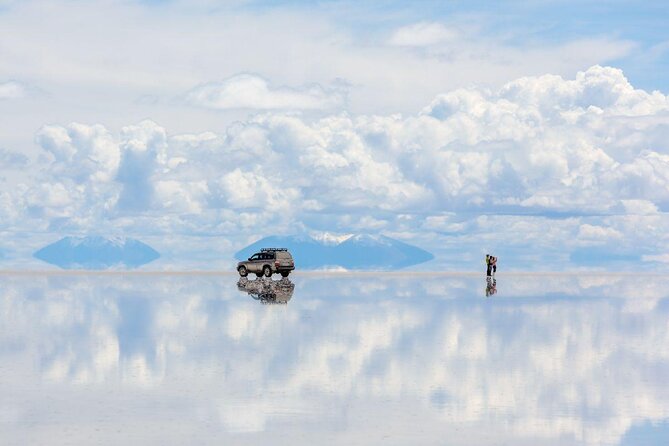
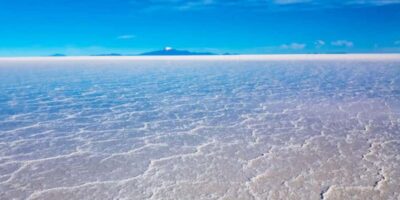
Then the route reaches the Salar de Uyuni, the world’s largest salt flat. The surface covers more than 4,050 square miles, with a thick salt crust marked by repeating polygon patterns. On a dry day, the white surface seems to run without end.
After rain, a thin layer of water can turn the plain into a huge reflection of the sky. That effect is seasonal and weather-dependent, so do not book this trip expecting a guaranteed mirror. The dry season gives you the geometric salt patterns and clearer driving conditions. Wet conditions can produce extraordinary reflections, but they may also make some areas inaccessible.
The salt flat is also an important source of salt and lithium. That industrial side adds useful context to what might otherwise feel like a purely scenic stop.
The Dakar Monument is another brief roadside feature. It commemorates the famous rally’s arrival in Bolivia and has become a recognizable marker on the plain. It is not a major attraction by itself, but it breaks up the drive and provides a quick photo stop.
Lunch is included, which matters here. There are few ordinary places to stop once you are far out on the salt. Three lunches, two breakfasts, and two dinners are part of the package, along with tea and coffee.
Isla Incahuasi and a night in a salt-block hotel
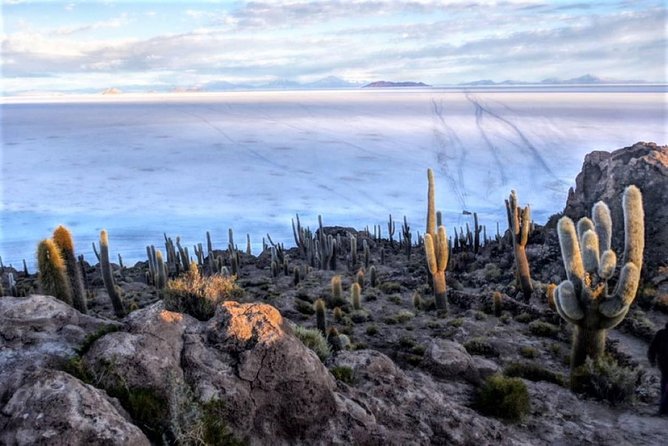
Isla Incahuasi rises from the middle of the salt flat, about 80 kilometers west of Colchani. It is a rocky island covered with giant Trichocereus cacti, some of them several meters high.
The walking route to the top takes about 15 minutes. A loop trail lets you see the cactus-covered slopes and the salt crust from different angles. The contrast is the point: dark rock and tall green cacti surrounded by a perfectly flat white plain.
There is a separate entrance fee of Bs 30. During the wet season, water can cover the route and the island may be closed to access, so ask about conditions before departure.
After sunset, you drive to a hotel built from salt blocks. This is one of the memorable touches of the first day, though you should keep expectations practical. The lodging is basic, and the salt construction is more interesting than luxurious.
The day includes roughly long driving periods, and the schedule can feel stretched. One account of the timing described an early arrival at the second night’s lodging with little to do afterward. Bring a book, keep your camera charged, and accept that this is a remote route where the scenery, not the evening entertainment, is the main event.
Day two: Ollagüe, the Siloli Desert, and Laguna Colorada
Day two leaves the salt plain behind and heads toward volcanic country. Ollagüe is a large stratovolcano on the Bolivia-Chile border, rising to about 19,252 feet. You view it from a lookout rather than climb it.
The volcano is considered potentially active and has sulfur deposits and old mining activity. Its summit crater and fumarole can sometimes be seen from a distance. This stop works best for people who enjoy geology and broad mountain views rather than close-up sightseeing.
The route then reaches the Siloli Desert, one of the highest deserts in the world at roughly 15,000 feet. The air is thin, the ground is bare, and the cold can be sharp. You need to be properly acclimatized before this part of the trip.
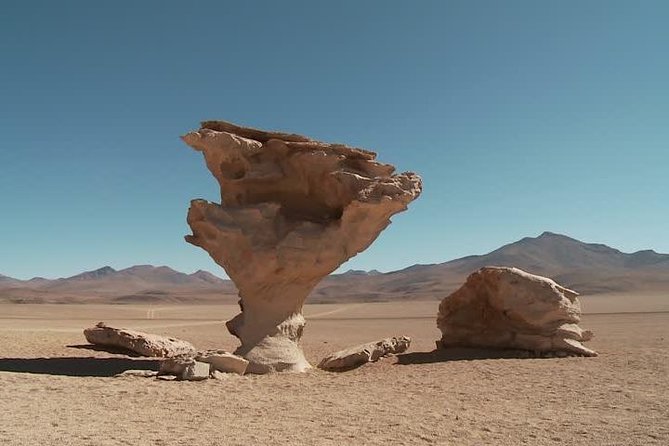
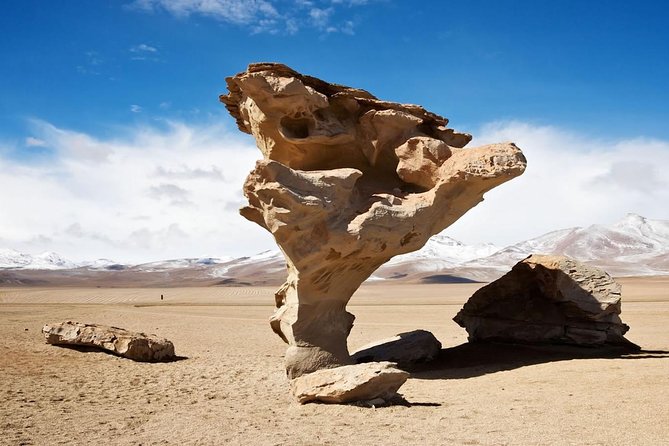
The famous Arbol de Piedra, or Stone Tree, is a 22-foot rock formation shaped by wind erosion. It looks like a tree made from stone, with a narrow base and a broader top. You only need about an hour here, but the stop is worth it for the odd form and the surrounding desert.
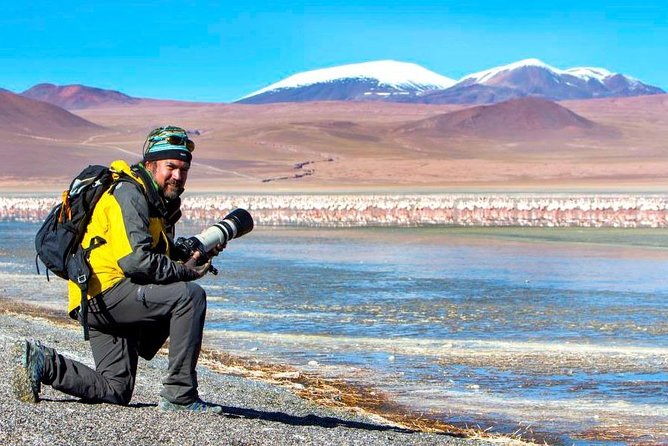
The day’s grand finale is Laguna Colorada, a red salt lake at around 14,000 feet. Algae and other microorganisms help give the water its orange-red color, while white borax deposits form pale patches across the surface.
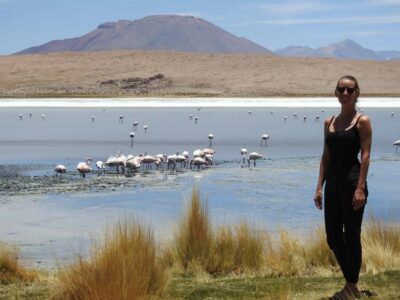
James’s flamingos feed around the lake, along with other Andean wildlife such as llamas, alpacas, and Andean foxes. Sightings are never something to promise, but this is one of the best places on the route to look for high-altitude wildlife.
The lake lies within Eduardo Avaroa Andean Fauna National Reserve. Entry to the reserve is not included and costs Bs 150. That fee is easy to overlook when comparing prices, but it should be part of your budget.
The second night is in basic accommodation. This is the least comfortable part of the trip. Facilities can be sparse, and one account specifically warned that the lodging near Chile was very simple.
Pack warm clothing, sturdy hiking shoes, personal toilet paper, and a towel. Hot showers cost Bs 15, and towels cost Bs 20 to rent. A sleeping bag is available for Bs 50, but you may prefer to bring a suitable one if you already have it.
Same corner of Bolivia, a completely different day out:
- Day Trip to Uyuni Salt Flats
★ 4.0 · 602 reviews - La Paz: 5-Day Uyuni Salt Flats by Bus
★ 4.3 · 153 reviews - From Uyuni: Salt Flats Highlights Jeep Tour with Lunch
★ 4.8 · 133 reviews - Uyuni Salt Flats 3 Days/ 2 Nights with English Speaking Guide
★ 4.0 · 91 reviews
Day three: geysers, hot springs, and Laguna Verde
The final day begins early at Sol de la Mañana, meaning morning sun. The timing is deliberate because the geysers are best seen at first light, when steam rises dramatically in the cold air.
Boiling mud pools bubble beside jets of pressurized steam. Some geysers can send steam as high as 160 feet. There are no safety barriers, so stay well back from unstable ground and do not treat the area like a casual photo studio.
The early start is hard, especially after a basic night at altitude, but this is one of the most unusual stops on the route. The raw heat under the ground feels especially striking against the cold mountain air.
The Dali Desert follows, with brown and ochre ground, scattered rocks, and a wide blue sky framed by snowy volcanic peaks. Its name comes from the surrealist painter Salvador Dalí, whose work is often associated with similarly strange scenes.
You then reach hot springs, where swimming costs Bs 6. This is an optional extra, but it can be a welcome break after the cold morning and long hours in the vehicle. Bring a towel or budget Bs 20 to rent one.
The route ends around Laguna Verde, beneath Licancábur volcano. The lagoon is known for its green color, though the shade can vary and is not always as strong as photographs suggest. The setting is the real reward: a colored lake beneath a huge volcano, with the high Andes all around.
Licancábur reaches about 19,555 feet. It can be climbed by energetic visitors for an additional fee, but the standard route only views it from below. The mountain has even been used for NASA experiments connected with future Mars missions, a fitting detail for a place that feels far removed from ordinary life.
If you are continuing to San Pedro de Atacama, Chile, the transfer costs an additional Bs 130 per person. The advertised activity returns to the Uyuni meeting point, so confirm your onward plans before departure.
Food, lodging, and the real comfort level
The included meals are a major practical benefit. You receive three lunches, two breakfasts, and two dinners, plus tea and coffee. In a remote region with long driving days, that removes much of the daily planning.
The food has received particularly strong praise, with one guide described as an excellent cook. Still, do not expect restaurant variety. If you have dietary needs, confirm them before leaving because the supplied details do not specify special menus.
Accommodation is functional rather than comfortable. The first night in a salt hotel is memorable, but both nights are described as basic. Private rooms cost an additional $35 per person for both nights.
The facilities may be limited. Hot showers, towels, and sleeping bags cost extra, and toilet paper may not be provided. These are small details until you are standing at 14,000 feet without them.
Guides, driving, and the small-group advantage
The strongest praise goes to the human side of the trip. Guides named Nelson and Edgar have been credited with clear information, friendly service, photo help, and hard work. Kevin was also singled out as a safe and friendly driver on one departure.
That matters because the driver-guide role is central here. You spend long stretches on remote roads, and a careful driver is more important than a polished speech. At the same time, guide quality can vary. One account described a guide who acted more like a driver and offered little information.
I would set reasonable expectations. You should receive an English-speaking guide, but do not assume every guide will deliver a formal lecture at every stop. If you want explanations, ask questions early and often.
The group limit of five makes this easier. You can speak directly with the guide, share photo ideas, and avoid the delays of a large coach. It also means the vehicle is likely to feel more personal, though the route itself remains demanding.
What to pack and what to budget
You need warm layers, gloves, a hat, sunscreen, sturdy shoes, water, snacks, toilet paper, and a towel. The altitude can make ordinary walks feel harder, so keep your daypack light and move slowly.
Budget separately for:
- Isla Incahuasi: Bs 30
- Eduardo Avaroa reserve: Bs 150
- Transfer to San Pedro de Atacama: Bs 130
- Hot springs: Bs 6
- Hot shower: Bs 15
- Sleeping bag rental: Bs 50
- Towel rental: Bs 20
- Private rooms: $35 per person for both nights
The first-aid kit is included, but it is still wise to carry any personal medication you need. The tour is suitable for most people, but the height and cold are not minor details.
Who should book this Uyuni trip?
I would recommend it to you if you want the full high-altitude experience and can tolerate basic lodging. It suits photographers, nature lovers, geology fans, and anyone who wants to see the salt flats alongside volcanoes, lagoons, flamingos, and geysers.
I would hesitate if you need private bathrooms, flexible schedules, or low-altitude walking. You may also prefer a shorter outing if your main goal is only the salt flat and its reflection effect.
The free cancellation policy gives you some protection if plans change, provided you cancel at least 24 hours before the start time. The meeting point is Skyline Traveller Uyuni on Avenida Ferroviaria, with a 10:30 a.m. start.
Should you book it?
Yes, if you see Uyuni as a remote nature expedition rather than a luxury holiday. The price is fair for the distance covered, included meals, small group, transport, and two nights of lodging. The scenery is the reason to go, and the route delivers far more than the salt flats alone.
Book with open eyes. Bring warm clothes, toilet paper, a towel, and extra cash. If possible, confirm the second night’s facilities, your guide, and your Chile transfer before setting out. With those expectations in place, this is a powerful three-day journey through one of South America’s strangest corners.
FAQ
How long does the Uyuni Salt Flats experience last?
The experience lasts approximately three days and includes two nights of accommodation.
Where does the tour start?
It starts at Skyline Traveller Uyuni on Avenida Ferroviaria in Uyuni, Bolivia, at 10:30 a.m.
How many people can join the tour?
The group has a maximum of five participants.
Is Isla Incahuasi included in the price?
Transport to Isla Incahuasi is included, but the entrance fee of Bs 30 is not included.
Are meals included?
Yes. The package includes two breakfasts, three lunches, two dinners, tea, and coffee.
Are the national park and hot springs included?
No. Eduardo Avaroa Andean Fauna National Reserve costs Bs 150, and swimming in the hot springs costs Bs 6.
Does the tour finish in Chile?
The standard activity ends back at the Uyuni meeting point. A transfer to San Pedro de Atacama costs an additional Bs 130 per person.
Just added around Uyuni
- Uyuni: Classic Uyuni Salt Flats Tour + Hotel Pickup★ 3.0 · 4 reviews
- Uyuni: Salar de Uyuni Traditional Tour+Sunset Tour★ 4.8 · 3 reviews
- UYUNI SALT FLAT: SUNRISE & STARLIGHT EXPERIENCE★ 3.1 · 3 reviews
- UYUNI SALT FLAT: SUNSET & STARLIGHT EXPERIENCE★ 5.0 · 3 reviews
- Uyuni: 3-Days Salt Flats and Desert Adventure Tour with Food★ 3.8 · 4 reviews
- Uyuni: Full-day tour, Salt flats and Sunset experience★ 4.8 · 5 reviews
- Uyuni: Salar de Uyuni and San Pedro de Atacama 3-Day Tour★ 4.2 · 4 reviews
- Uyuni: 2-day tour to the salt flat and altiplanic lagoons★ 3.3 · 3 reviews
Uyuni Tours, compared.
Red Lagoon & Uyuni Salt Flats 3-Day Guided Tour
Read our review →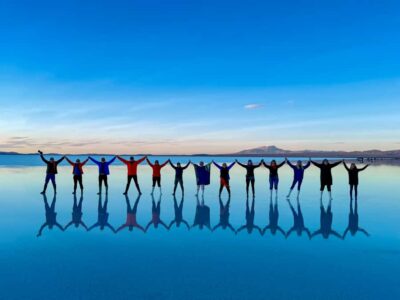
Uyuni Salt Flats and San Pedro de Atacama 3-Day Tour
Read our review →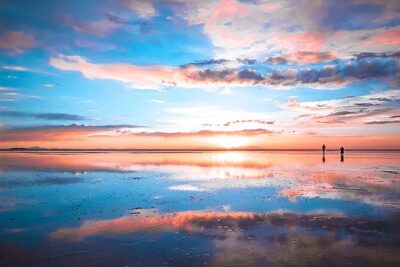
Uyuni Salt Flats 3 Days/ 2 Nights with English Speaking Guide
Read our review →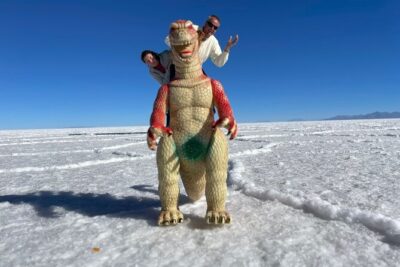
3-Day Uyuni Salt Flat Tour with Sunset and Red Lagoons
Read our review →Browse the lists this tour appears in