
Reviewed · TOURS BY BUS
La Paz: 5-Day Uyuni Salt Flats by Bus
Uyuni is not just a white salt plain. This five-day trip carries you from La Paz into Bolivia’s high desert, where giant cacti, flamingo-filled lagoons, geysers, and volcanoes unfold across an enormous stretch of open country. The Salt Flats are the headline act, but the southern lagoons and volcanic terrain may be the real surprise.
I like the smart use of overnight buses, which saves you two daytime transfers, and I like the care built into the plan: hotel pickup, food, water, snacks, bilingual guiding, and a comfortable hotel stop in Uyuni for breakfast and a shower. The catch is simple: the two highland nights are basic and cold, and the long 4×4 drives can be rough.
Key points to know
- Nine-hour overnight bus ride: Reclining seats and onboard bathrooms make the La Paz to Uyuni trip far easier than a daytime journey.
- The Salt Flats come early: You visit Colchani, the salt mounds, and Incahuasi Island on the first touring day.
- Flamingos and volcanoes: Cañapa, Stink, Chiarkota, Honda, and Ramadita lagoons bring wildlife and snowy volcanic views.
- High-altitude conditions: The route reaches about 5,000 meters, so cold, thin air, and strong sun are part of the deal.
- Shared rooms are truly basic: Warm blankets are provided, but electricity, hot water, towels, and toilets can be limited.
- Good guide support matters: Guides including Johnny, Ronaldo, Adalid, and Dolphin have been praised for calm driving, photography, and keeping groups together.
Why this five-day route works
At $486 per person, this is a substantial purchase in Bolivia, but it covers a lot. You receive hotel transfers in La Paz, two overnight bus tickets, two nights of shared accommodation, food and drinks listed in the schedule, snacks, bottled water, and a bilingual guide. You also avoid having to arrange the awkward La Paz to Uyuni connection yourself.
The price makes the most sense if you want the whole southern circuit rather than a quick visit to the Salar de Uyuni. The route includes salt processing in Colchani, Incahuasi Island, several lagoons, geysers, hot springs, the Dali Desert, and Green Lagoon. It also includes the return bus to La Paz, which makes the trip a self-contained option.
You should budget extra for 200 Bolivianos in entrance fees. Private rooms cost an additional US$35 per person per night, and single rooms are not available. Souvenirs, travel insurance, and any extra purchases at the lodges are also outside the stated price.
The small-group limit is listed as 10 people, though one group was reported as 12. Either way, the shared vehicle and meals mean you will spend a great deal of time with the same people. That can make the long drives more pleasant, but it leaves little room for privacy.
More Uyuni trips done by bus:
- La Paz: Uyuni Salt Flats Tour by Bus
★ 4.8 · 46 reviews - La Paz: Uyuni Salt Flats & Isla Incahuasi 5-Day Bus Tour
★ 4.6 · 6 reviews - From La Paz: Uyuni Salt Flat Tour & Overnight Roundtrip Bus
★ 4.5 · 327 reviews
Night bus from La Paz to Uyuni
The trip begins with pickup at your La Paz hotel. A driver takes you to the bus station, and you board an overnight service for the roughly nine-hour ride to Uyuni.
The bus has reclining seats and a bathroom. That is not luxury, but it is a sensible way to handle the distance. You sleep, at least in theory, while avoiding a full day spent on the road. Bring a warm layer for the bus and keep your passport, phone, and essential medication with you rather than packing them away.
Arrival arrangements are one of the stronger parts of the trip. In Uyuni, you are taken to a hotel or agency base for breakfast. The stop may also include a shower and time to rest before the 4×4 portion begins. At the end, you return to a hotel in Uyuni before the evening bus back to La Paz. Some people were even offered a place to shower and rest at Hotel Atipax without paying for a room, though you should not count on that as a guaranteed service.
Day two: trains, salt, and Incahuasi Island
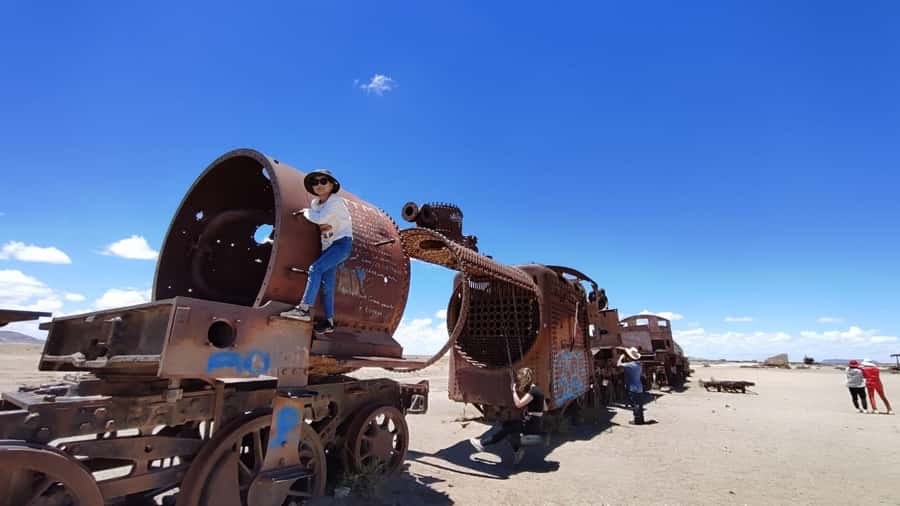
After breakfast, the three-day highland circuit begins. The first stop is Uyuni’s train cemetery, a collection of old, weathered locomotives sitting in the open desert. It is a quick but photogenic introduction to the region, with rusted metal, wide skies, and very little around it.
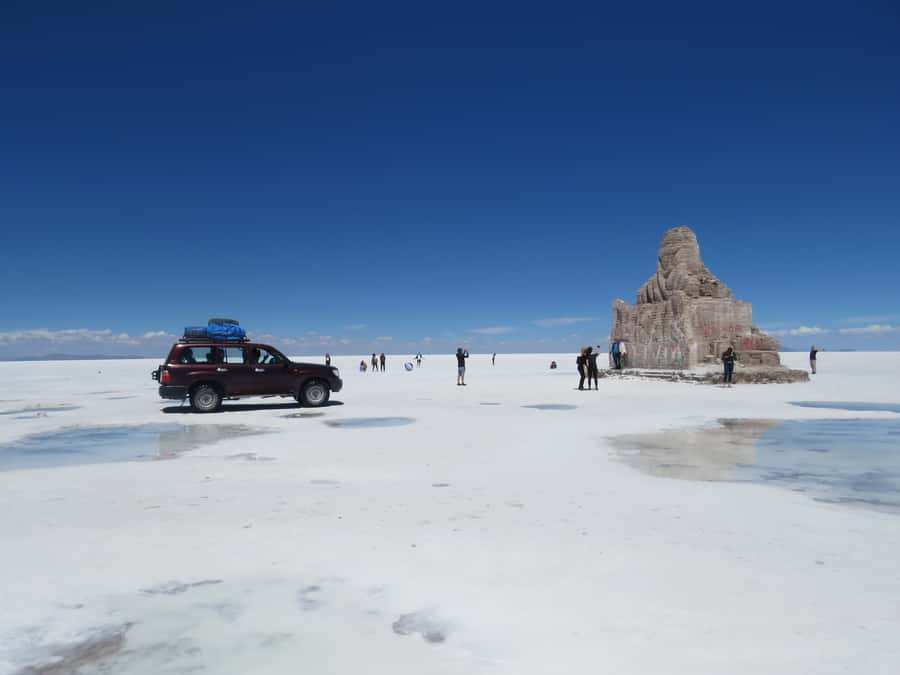
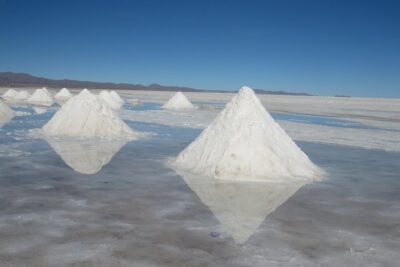
From there, you continue to Colchani, a settlement beside the Salar de Uyuni. Here you can see salt being processed by hand. It is worth paying attention to this stop because it shows that the Salar is not only a photo backdrop. People still gather, shape, and sell the salt that comes from this enormous plain.
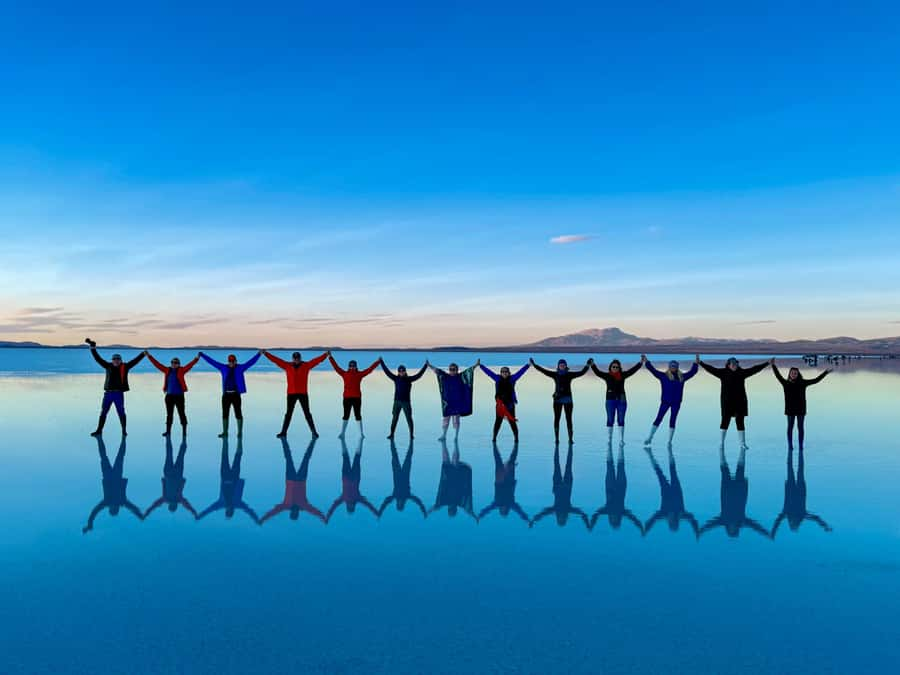
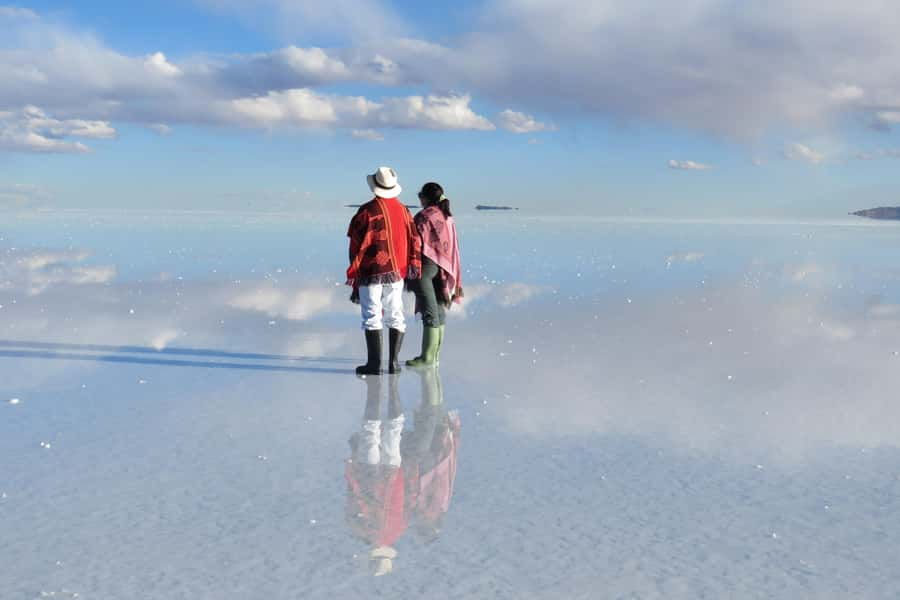
The road then reaches the salt mounds and the central part of the Salar. On a dry day, the surface can look like a huge sheet of white stretching to the horizon. During wetter periods, a thin layer of water may create the famous mirror effect, but the exact conditions cannot be guaranteed.
Incahuasi Island is the day’s main natural feature. This volcanic rock formation rises from the salt and is covered with giant cacti. Give yourself time to look closely at the cactus forest rather than rushing straight to photographs. The contrast between dark rock, green spines, white salt, and distant mountains is what makes the place memorable.
Your driver then crosses the Salar toward San Juan. This is a long day, and the vehicle ride can be tiring. The old Toyota 4x4s used on these routes are practical rather than comfortable, especially in the back row where legroom can be tight. Air conditioning is not assured, and the roads beyond the Salar can be very bumpy.
San Juan provides a shared room and dinner. Food is a bright spot on this trip. Meals are local and generally better than many people expect for such a remote route, although portions and menus can vary. Water, snacks, and meals listed in the schedule are included, so you do not need to carry five days of food.
Day three: flamingos beneath snowy volcanoes
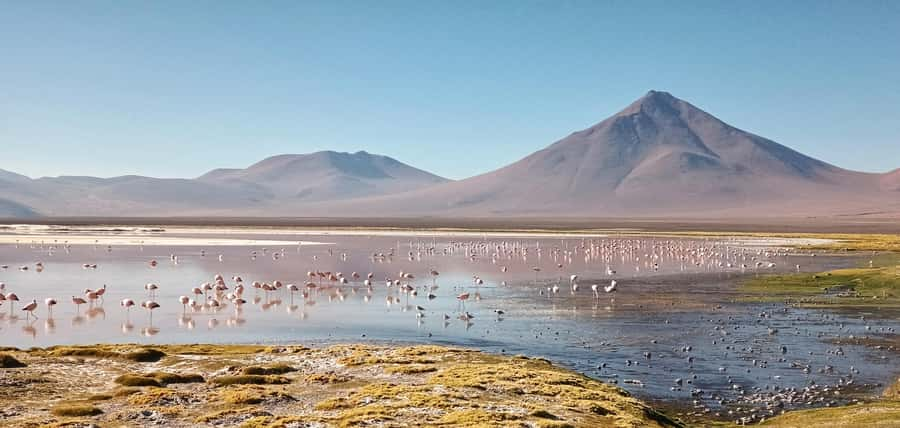
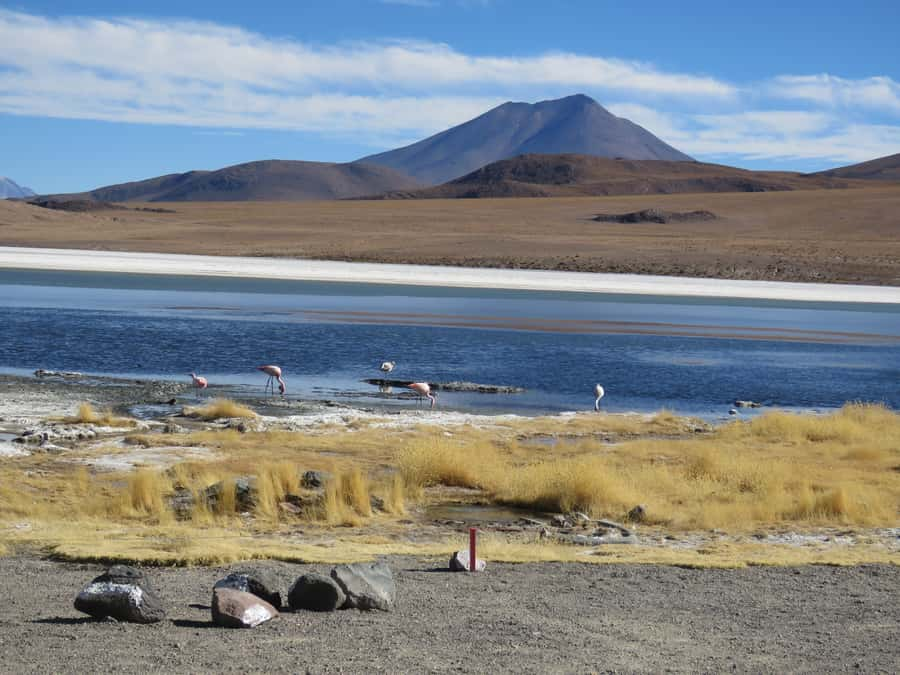
Day three heads southwest through the highland lagoons. Cañapa, Stink, Chiarkota, Honda, and Ramadita are not interchangeable stops. Each has its own color, shoreline, birdlife, and mountain setting, and the changing scenery gives this day more variety than the Salt Flats alone.
The lagoons attract large numbers of flamingos. You may also see Andean geese and gulls around the water. Against the volcanic peaks, the birds add movement to an otherwise stark setting. Bring binoculars if you have them, though the guide can help you spot wildlife from the shore.
The volcano views are a major reason to choose the full circuit. The route reaches wide, open stretches where snowy peaks and volcanic formations appear far beyond the lagoons. This is also where the altitude becomes more noticeable. You may feel tired, cold, or short of breath, so move slowly and drink water.
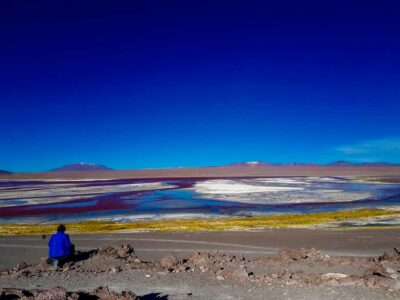
The night is spent near Laguna Colorada in a basic lodge. The red coloring comes from mineral deposits and microscopic life in the water, and it changes with light and weather. The setting is extraordinary, but the accommodation requires a realistic attitude.
Electricity may be available for only a few evening hours. Hot water, towels, soap, toilet paper, and room outlets can be limited or unavailable. Some rooms have been described as very cold, with gravel floors and beds covered by several blankets. A heater may warm the dining room without doing much for the bedrooms.
This is the point where the trip’s value depends on your priorities. If you want remote scenery and can accept a rough night, the lodge is part of the experience. If you need reliable heating, a private bathroom, or a good night’s sleep, the basic option may frustrate you. Paying for a private room does not necessarily solve every comfort issue.
After dinner, look outside if the sky is clear. The lack of nearby city lights can make the Milky Way easy to see. Bring warm clothing for this, because the temperature drops quickly after sunset.
A few more Uyuni days to weigh up
- From La Paz: Uyuni Salt Flats & Lagoons 5-Day Tour
★ 4.2 · 6 reviews - From La Paz: Uyuni and Andean Lagoons 5-Day Guided Trip
★ 4.6 · 3 reviews
Day four: geysers, hot springs, and Green Lagoon
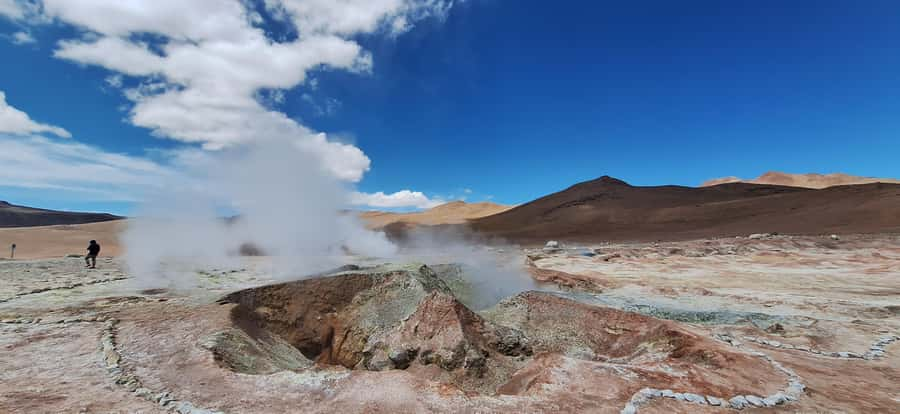
The day starts early, often before sunrise, with a visit to the geysers known as Morning Sun. You see fumaroles, volcanic gases, and small signs of geothermal activity as the first light reaches the area. The air is cold, the ground can feel otherworldly, and the timing gives you a strong reason to tolerate the early start.
The route then crosses its highest point at about 5,000 meters above sea level. This is a serious altitude, even if you are only there briefly. Keep your pace easy, use sun protection, and tell your guide if you feel unwell. This experience is not suitable for pregnant women.
You return to Laguna Colorada before continuing to the Stone Tree, a naturally sculpted rock formation shaped by wind. The route then follows the high plateau to the Polques hot springs. A hot bath can be welcome after the cold morning, but bring a swimsuit and keep your towel situation in mind, since towels are not listed as included.
Next comes the Dali Desert, named for its surreal rock forms and broad, empty views. The final major stop is Green Lagoon at the foot of Licancabur Volcano. The color and the volcano create one of the trip’s strongest photographic scenes, though the exact intensity of the water varies with conditions.
After the Green Lagoon, you travel back toward Uyuni. You may see Andean plants and animals along the road, but this is mainly a long return drive. The schedule places you in Uyuni around 5:00 PM, followed by a short break and the evening bus to La Paz.
The return bus is another overnight ride. Delays are possible. One return service was reported to arrive three hours late, so avoid scheduling an important flight or fixed appointment immediately after the expected 6:00 AM arrival in La Paz.
Guides, drivers, and the value of good leadership
A good guide makes a real difference here because the route is remote, the days are long, and comfort is limited. Names associated with strong service include Johnny, Ronaldo, Adalid, and Dolphin.
Johnny has been praised for staying calm, being funny, prepared, and clear. Ronaldo was noted for warm assistance, photography, and keeping everyone together. Adalid received credit for professional support throughout the three-day route, while Dolphin was praised for smooth driving over difficult roads.
Do not expect every guide to have the same style. One guide was praised for photography but criticized for seeming more focused on racing other vehicles than on the group’s pace. That is a useful warning: the quality of the experience depends partly on the person assigned to your departure.
The driver is just as important as the guide. You spend many hours in the vehicle, sometimes over rough tracks. Calm, careful driving makes a real difference, especially on the last row of the Toyota Cruiser.
Food, rooms, and what to pack
Breakfast, lunch, and dinner are included on the touring days, with snacks and bottled water also provided. The food has generally been a pleasant surprise, with local dishes served in remote dining rooms. Still, choices are limited by the setting, so carry a small personal snack if you have dietary needs.
Pack for cold, sun, dust, and altitude. You should bring:
- Warm layers, gloves, and a hat
- Sunscreen and sunglasses
- Comfortable shoes
- Extra camera batteries or a power bank
- Plenty of phone and camera storage
- A passport
- Personal toiletries and toilet paper
- A towel, since one may not be supplied
- A swimsuit for the hot springs
Charging opportunities can be scarce, and electricity may be turned off at night. Keep your electronics protected from dust and do not assume you can recharge them in your room.
The stated accommodation is shared. Private rooms cost extra, but the tour does not offer a single room. The word basic should be taken seriously. You may receive plenty of blankets and a warm dining room, yet still have a cold bedroom and a shared bathroom with limited supplies.
Is the $486 price fair?
I consider the price reasonable for the amount of transport and sightseeing included, especially because the return to La Paz is built into the plan. Booking separate buses, a Salar excursion, southern lagoon tour, accommodation, meals, and transfers could become complicated and may not save much.
The value drops if you want comfort. The included rooms are not hotel-standard, the 4×4 rides are long, and some useful basics may cost extra at the lodges. The 200 Bolivianos entrance fee should be added to your budget, and a private room costs another $35 per person per night.
You are paying for access to a remote circuit, not a polished resort-style holiday. For scenery, wildlife, and efficient transport, the price works well. For soft beds, dependable showers, and electricity all night, it does not.
Who should book this Uyuni tour?
I would choose this trip if you want more than the Salt Flats and have five days available from La Paz. It suits you if you enjoy big natural spaces, early starts, simple lodging, shared meals, and long drives in exchange for access to places that are difficult to reach independently.
It is also a good fit if you want the planning handled for you. Hotel pickup, bus transfers, meals, water, and a bilingual guide remove many small problems from a complicated route. English and Spanish guiding is available, and the group is intended to remain small.
I would look for another option if you need a private bathroom, reliable heating, or a predictable return time. The route is not suitable for pregnant women, and anyone sensitive to high altitude should think carefully about the 5,000-meter crossing.
You can cancel up to 24 hours in advance for a full refund, and reserve now while paying later. That flexibility is useful, but it does not change the central choice: this is a scenery-first trip with basic comfort, not a luxury tour.
FAQ
How long is the La Paz to Uyuni bus ride?
The overnight bus ride takes about nine hours. The included bus has reclining seats and a bathroom onboard.
How many nights are spent in shared accommodation?
The tour includes two nights in shared rooms during the highland portion. Private rooms cost an additional US$35 per person per night, and single rooms are not available.
What entrance fees are extra?
Entrance fees are not included and are listed as 200 Bolivianos per person. Souvenirs and travel insurance are also extra.
Is food included?
Yes. Breakfast, lunch, and dinner are included according to the schedule, along with snacks and bottled water.
Does the tour visit the hot springs?
Yes. On day four, you visit the Polques hot springs, where you can take a hot bath.
Is the tour suitable for pregnant women?
No. The experience is listed as not suitable for pregnant women, partly because the route reaches about 5,000 meters above sea level.
Just added around Uyuni
- Uyuni: Classic Uyuni Salt Flats Tour + Hotel Pickup★ 3.0 · 4 reviews
- Uyuni: Salar de Uyuni Traditional Tour+Sunset Tour★ 4.8 · 3 reviews
- UYUNI SALT FLAT: SUNRISE & STARLIGHT EXPERIENCE★ 3.1 · 3 reviews
- UYUNI SALT FLAT: SUNSET & STARLIGHT EXPERIENCE★ 5.0 · 3 reviews
- Uyuni: Salar de Uyuni and San Pedro de Atacama 3-Day Tour★ 4.2 · 4 reviews
- Uyuni: 3-Days Salt Flats and Desert Adventure Tour with Food★ 3.8 · 4 reviews
- Uyuni: Full-day tour, Salt flats and Sunset experience★ 4.8 · 5 reviews
- Uyuni: 2-day tour to the salt flat and altiplanic lagoons★ 3.3 · 3 reviews
Tours by Bus, compared.
Uyuni Salt Flat Tour & Overnight Roundtrip Bus
Read our review →
Visit to Uyuni Salt Flats from La Paz Bolivia by Bus
Read our review →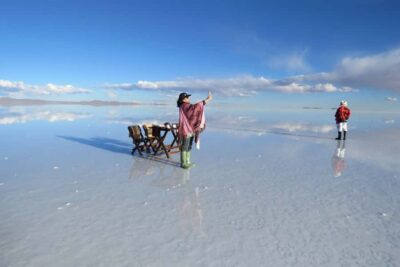
Uyuni Salt Flats & Isla Incahuasi 5-Day Bus Tour
Read our review →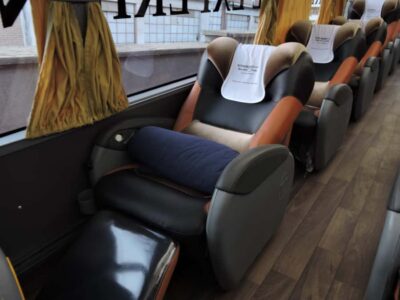
Uyuni tour express from Sucre by bus (round trip)
Read our review →Browse the lists this tour appears in