
Reviewed · UYUNI TOURS
Uyuni Salt Flats 3 Days/ 2 Nights with English Speaking Guide
The real prize here is not just the famous white salt plain. Over three days, you move from cactus-covered islands and optical-illusion photos to flamingo lagoons, volcanic deserts, geysers, and hot springs. I like the wide range of scenery and the fact that meals, transport, and two nights of lodging are bundled into the $380 price.
I also like the sunset on the salt flats, served with a glass of wine, and the small-group limit of 11 people. The tradeoff is comfort: you spend long hours in a hot 4WD, sleep in basic shared rooms, and the English guidance can vary. Bring warm clothes, patience, and a little extra cash for fees.
Key points to know before booking
- Three very different days: The salt flats are only the opening act, followed by high desert, flamingo lagoons, geysers, and colored lakes.
- Two basic hostel nights: The first night has shared toilets and no Wi-Fi. The second uses a shared six-bed room, with no hot water and limited electricity.
- Long 4WD days: Day two and day three each run about 10 hours on rough roads, with plenty of time inside the vehicle.
- Extra fees are required: Budget for the Incahuasi Island, national reserve, hot spring, toilet, food, and souvenir costs.
- Guide quality matters: Orlando and driver Gabriel received warm personal praise, but English communication and organization may not be consistent on every departure.
- Best for hardy sightseers: This suits you if dramatic scenery matters more than soft beds, private bathrooms, or a relaxed pace.
Why three days is the right length for Uyuni
A quick salt-flat outing gives you the famous white expanse, but it misses much of what makes this region special. This three-day route goes far south into Eduardo Avaroa National Reserve, where the setting changes from blinding salt to volcanic rock, dry desert, steaming earth, and lagoons colored by minerals and algae.
You start in Uyuni at 10:30 a.m., which gives you a useful morning to arrive in town, collect your things, and eat before departure. After that, the schedule becomes demanding. Day two begins at 6:30 a.m., and day three starts around 5:00 a.m. Those early starts are not for show. They let you reach the geysers and high-altitude viewpoints before the day gets too far along.
The group is capped at 11 people. That is small enough to make perspective photos manageable and to keep the 4WD from feeling like a full coach tour, though the vehicle can still feel crowded during the long stretches between stops.
A few more Uyuni days to weigh up
- 3-Day Tour to Salt Flats and Lagoons
★ 4.5 · 168 reviews - From Uyuni: Red Lagoon & Uyuni Salt Flats 3-Day Guided Tour
★ 4.4 · 160 reviews - Uyuni: Uyuni Salt Flats and San Pedro de Atacama 3-Day Tour
★ 4.3 · 122 reviews
Day one: trains, salt workshops, and Incahuasi Island
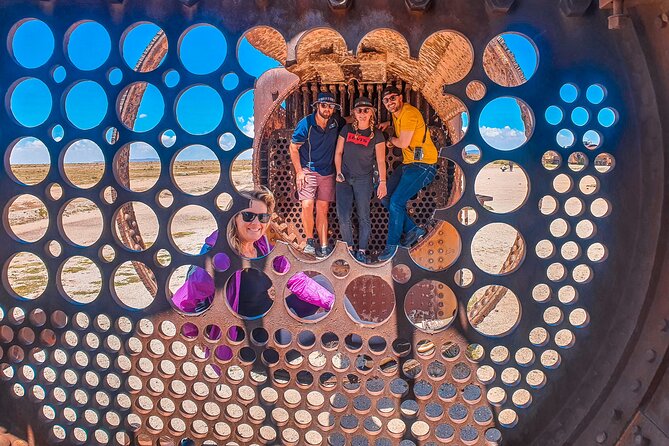
The first stop is the Train Graveyard on the edge of Uyuni. Rusting locomotives sit in the open desert, a stark contrast to the bright salt plain ahead. It is an easy place to take photographs and a quick introduction to the region’s past industrial ambitions.
Next comes Colchani, a small settlement beside the salt flats. Local workshops sell salt handicrafts along with textiles made from llama and alpaca wool. I would treat this stop as more than a shopping break. It gives you a glimpse of how nearby communities use the materials and traditions of the high plains, and it is the most practical place on the route to buy a small souvenir.
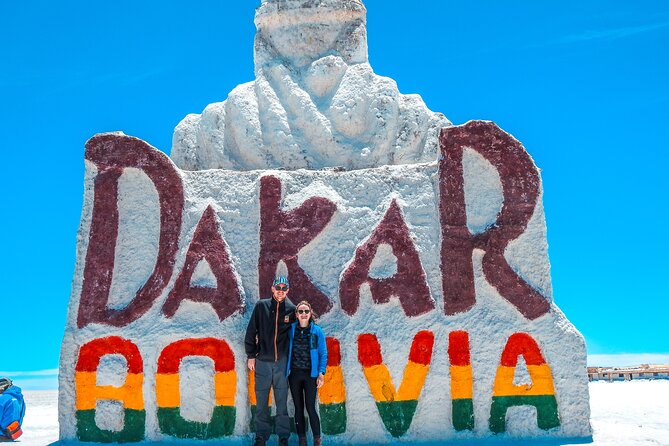
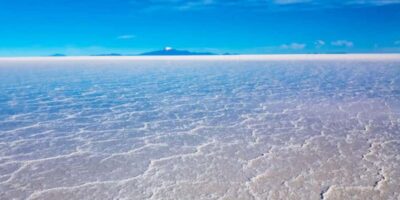
Once the vehicle reaches Salar de Uyuni, the scale changes completely. The flat white surface seems to continue without an edge. You stop at the Ojos de Agua Salada, or salty water openings, and visit a former salt hotel now used as a museum and restaurant. There are also flags from around the world and a monument connected with the Dakar race.
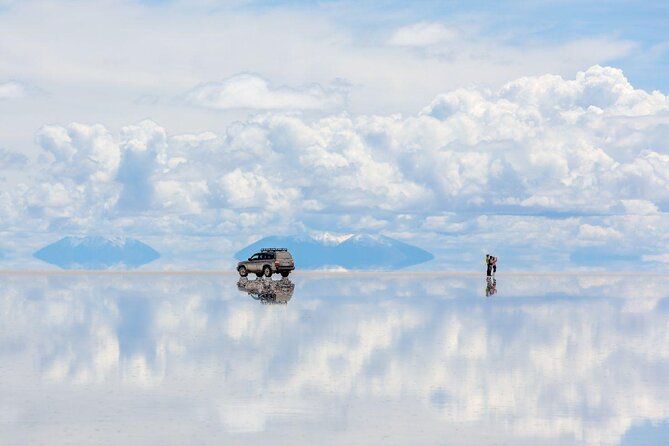
The salt hotel and Dakar monument are brief stops, but they help break up a place that can otherwise feel almost abstract. The salt plain is so uniform that even a small object gives your eye a sense of distance and scale.
Lunch is served on the route. The exact menu is not specified, so you should tell the operator about allergies before departure and still carry backup snacks. One past experience with this trip found food allergy needs were not handled well, so I would not rely on a special meal request alone.
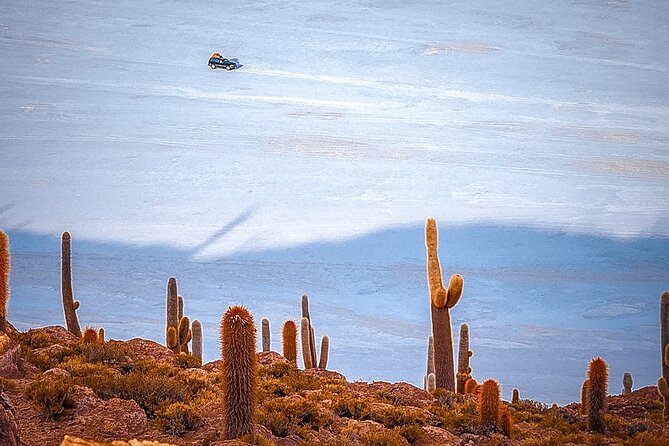
The afternoon highlight is Incahuasi Island. This rocky island rises from the salt and is covered with giant cacti. You can hike to the top for views across the white plain, while the rock formations underfoot show the island’s coral origins. The hike is not described as difficult, but you are at high altitude, so take it slowly and carry water.
The entrance fee to Incahuasi is extra, listed at 30 BOB. It is a small addition compared with the overall price, but you should have local currency ready.
Perspective photos and a salt-flat sunset
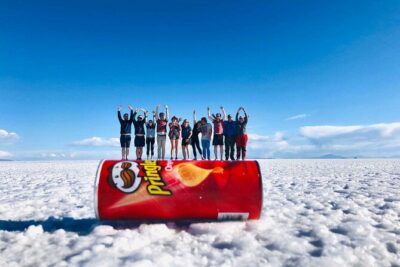
After Incahuasi, the group has time to make the classic perspective photographs. The dead-flat surface lets you play with size and distance, so a person can appear to hold another person in one hand or stand beside an oversized object.
This is one part of the day where the guide and group cooperation really matter. You need someone to help position the camera and keep everyone patient while each person takes a turn. An English-speaking guide can be especially useful here, since the fun depends on clear instructions more than on a formal explanation of geology.
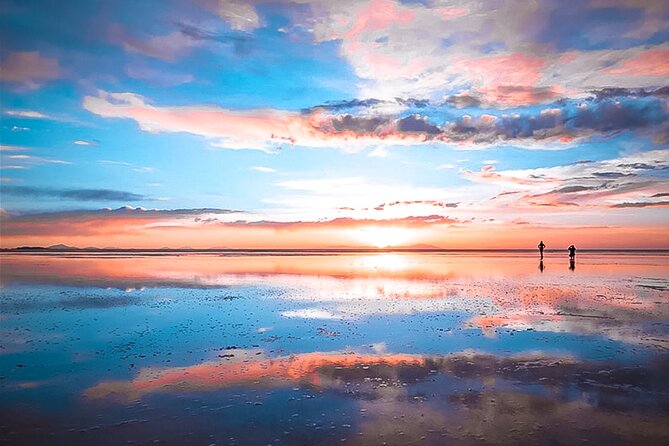
The day ends at a broad section of the salt flats for sunset. The white surface reflects the changing light, and the scene shifts through warm colors as the sun drops. A glass of wine is included in this stop, giving the long day a pleasant finish.
Your first night is at Agencha Hostel. Room arrangements may be three-bed, four-bed, five-bed, or six-bed rooms, all with shared toilets. There is no Wi-Fi. That is worth knowing before you arrive, especially if you need to contact family or manage work.
Day two: lagoons, volcanoes, and the Red Lagoon
Breakfast begins at 6:30 a.m. Day two takes you away from the salt flat and into increasingly rough, remote country. The first major stop is the Chiguana Desert on the southern side of the salar, with volcanoes around it. Ollagüe, still active, can be seen from a viewpoint.
The road becomes rocky, and the 4WD does much of the work. This is not a sightseeing route where you glide between polished attractions. You may spend long periods bouncing over uneven ground, with heat inside the vehicle and no air conditioning. The scenery is the reward, but you should expect the journey itself to be tiring.
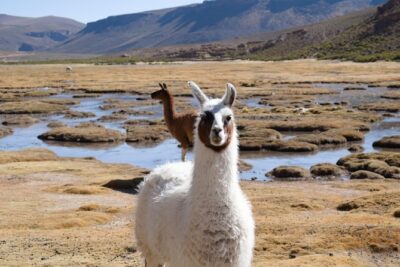
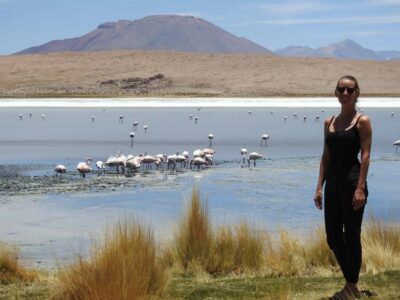
The route then reaches Cañapa, Hedionda, and Chiarcota lagoons. Flamingos gather in these high-altitude waters, creating one of the most memorable contrasts of the trip: delicate pink birds against bare volcanic ridges and mineral-colored water.
The flamingos are not placed in a park for viewing. They are part of the natural setting, so the quality of the sighting can vary. Still, these lagoons add movement and wildlife to a route otherwise dominated by rock, salt, and sky.
After lunch, you enter Eduardo Avaroa National Reserve. The Desert of Siloli is described as one of the highest and driest deserts in the world. Its rock formations look shaped by wind and time, with the Rock Tree being the best-known photo stop.
The Red Lagoon comes later in the day. Its strong color comes from the high-altitude environment and mineral-rich water, while pink flamingos feed around its edges. The viewpoint gives you a chance to appreciate the full setting rather than just stopping for a quick photograph.
The entrance fee to Eduardo Avaroa National Reserve is 150 BOB, not included in the tour price. This is the largest required admission charge, so include it when judging the real cost.
That night is the most basic. Huayllajara Hostel uses shared six-bed rooms and shared bathrooms. There is no hot water, specifically to protect the national park, and there is no Wi-Fi. Electricity is available only from about 7:00 p.m. to 10:00 p.m., according to one detailed account of the trip.
The high desert can become very cold after dark. Pack a warm hat, layers, thick socks, and a jacket you can sleep in if needed. Do not assume that a sleeping bag or heated room is part of the package, because neither is specified.
Same corner of Bolivia, a completely different day out:
- Day Trip to Uyuni Salt Flats
★ 4.0 · 602 reviews - La Paz: 5-Day Uyuni Salt Flats by Bus
★ 4.3 · 153 reviews - From Uyuni: Salt Flats Highlights Jeep Tour with Lunch
★ 4.8 · 133 reviews - 3-Day Uyuni Salt Flat Tour with Sunset and Red Lagoons
★ 5.0 · 83 reviews
Day three: geysers at dawn and a warm outdoor bath
The final morning starts around 5:00 a.m. The first stop is Sol de Mañana Geyser, where fumaroles, steaming craters, and boiling mud pots create a raw volcanic scene. You walk near the geothermal activity, so follow the guide carefully and keep your distance from unstable ground and hot areas.
The early hour adds to the experience. Steam and cold air make the geysers feel especially intense, but you will need to get out of bed before sunrise and dress for the cold. This is not a gentle final morning.
Next comes an open-air hot spring at about 35 degrees Celsius. The entrance fee is 6 BOB. After the freezing start, the bath can be a welcome change, though you will need to manage your belongings and changing arrangements in a very basic setting.
The route continues through the Dali Desert, then to the Green Lagoon and White Lagoon. These stops bring more color and contrast to the reserve. You also pass Rock Valley and make a short stop in San Cristobal Village to use the toilets.
Lunch is a picnic by the roadside. That detail tells you a lot about the day. You are not returning to a restaurant between every attraction, and the route remains remote almost until the end.
Arrival in Uyuni is scheduled between 5:45 and 6:45 p.m. That makes day three another full 10-hour day. If you have a bus, train, or flight shortly afterward, leave a generous buffer. The stated arrival window is useful, but rough roads and stops can affect timing.
What the $380 price really covers
At $380 per person, this is not a budget day trip, but the price includes the main costs of a three-day expedition. You get 4WD transport, a local driver, an English-speaking guide, two hostel nights, two dinners, two breakfasts, and three lunches.
The cost becomes easier to judge when you think about the distance and the logistics. You are not arranging separate transport to several distant parts of the reserve, and someone else handles the rough driving. That lets you focus on the views instead of navigating isolated roads.
Still, the advertised price is not the final amount you should carry. Required and likely expenses include:
- Incahuasi Island: 30 BOB
- Eduardo Avaroa National Reserve: 150 BOB
- Hot spring: 6 BOB
- Toilets along the way: about 30 BOB
- Personal spending: about 150 BOB for water, snacks, handicrafts, and similar needs
The package is good value if you want the full salt-flat and reserve route and are comfortable with shared lodging. It is less appealing if you prefer private rooms, reliable hot water, strong internet, or carefully managed dietary needs.
An optional hostel upgrade is available for an added final payment. The exact upgrade amount is not given, so ask about the price and room setup before booking.
The 4WD, driver, and English guide
The vehicle carries luggage on a rooftop rack, which keeps the inside less crowded but means your bags are exposed to dust and weather during loading and unloading. Pack anything you need during the day in a small personal bag rather than burying it in the roof luggage.
You can expect long stretches in the jeep. One detailed account describes a hot vehicle without air conditioning, so carry water, sun protection, and light clothing for daytime. At the same time, do not pack only for heat. The second night and early morning reserve stops can be bitterly cold.
The driver and guide have separate roles. The local driver handles the difficult roads, while the English-speaking guide is meant to explain the sites and organize the group. On one departure, the guide Orlando and driver Gabriel were especially warm and helpful. Gabriel spoke only Spanish in that account, but his friendly attitude and excitement around the flamingos made a strong impression.
That same experience also points to the main risk: guide quality can vary. An English-speaking guide is included, but communication may not always be clear or well organized. Confirm key details at the start of the trip, including meal arrangements, departure times, bathroom stops, and how much time you will have at each site.
Who should book this trip
I would recommend this tour to you if you want the broadest possible introduction to the Uyuni region in three days. It covers the salt flats, Incahuasi, flamingos, volcanoes, colored lagoons, geysers, hot springs, and desert rock formations without requiring you to plan separate transfers.
It is also a good fit if you like photography. The route gives you several kinds of subjects: rusty trains, giant cacti, optical-illusion images, sunset colors, flamingos, fumaroles, and unusual rock formations.
You should think twice if you have strict food allergies, need a private bathroom, struggle with long vehicle rides, or dislike early mornings. Most people can take part, but the schedule is physically demanding in a basic way. The issue is not a technical hike. It is the combination of altitude, cold, rough roads, early departures, and limited facilities.
The overall rating of 3.9 from 91 ratings fits the experience I would expect from the details. The scenery is the strong point. The weak points are comfort, communication, and the uneven standard of guiding.
Should you book the Uyuni three-day tour?
Book it if your priority is seeing the major sights and reaching the reserve without arranging your own 4WD, meals, and accommodation. The salt flats are spectacular, but the flamingo lagoons, Red Lagoon, geysers, and hot spring are what make the extra two days worthwhile.
I would choose this trip with realistic expectations and a well-packed bag. Bring warm layers, water, snacks, sun protection, cash in Bolivianos, and patience for rough roads. If you can accept shared rooms and uncertain guide quality, $380 is a fair price for a very full route. If comfort and polished service matter most, pay for the hostel upgrade or choose a more private option.
FAQ
How long does the tour last?
The experience lasts three days and two nights. Day one begins at 10:30 a.m., and arrival back in Uyuni on day three is scheduled between 5:45 and 6:45 p.m.
What places are visited on day one?
Day one includes the Train Graveyard, Colchani, the Uyuni Salt Flats, Ojos de Agua Salada, a former salt hotel used as a museum and restaurant, the Flags of the World area, the Dakar monument, Incahuasi Island, perspective-photo locations, and a sunset stop.
What is included in the $380 price?
The price includes 4WD transport, an English-speaking guide, a local driver, two hostel nights, two dinners, two breakfasts, and three lunches.
Are entrance fees included?
No. Incahuasi Island costs 30 BOB, Eduardo Avaroa National Reserve costs 150 BOB, and the hot spring costs 6 BOB. Toilets along the route may cost about 30 BOB.
What are the rooms like?
The first night at Agencha Hostel may use three-bed, four-bed, five-bed, or six-bed rooms with shared toilets. The second night at Huayllajara Hostel uses a shared six-bed room with shared bathrooms.
Is there Wi-Fi or hot water?
There is no Wi-Fi at either listed hostel. The second hostel has no hot water, and electricity is available only from about 7:00 p.m. to 10:00 p.m.
How large is the group?
The tour has a maximum of 11 participants.
What time does the tour leave each day?
Day one starts at 10:30 a.m. Day two starts with breakfast at 6:30 a.m. Day three begins around 5:00 a.m. for the geyser visit.
Can the tour be canceled for bad weather?
Yes. The experience requires suitable weather and a minimum number of participants. If it is canceled for either reason, you can receive a different date or experience, or a full refund. You can cancel for a full refund up to 24 hours before the start time.
Just added around Uyuni
- Uyuni: Classic Uyuni Salt Flats Tour + Hotel Pickup★ 3.0 · 4 reviews
- Uyuni: Salar de Uyuni Traditional Tour+Sunset Tour★ 4.8 · 3 reviews
- UYUNI SALT FLAT: SUNRISE & STARLIGHT EXPERIENCE★ 3.1 · 3 reviews
- UYUNI SALT FLAT: SUNSET & STARLIGHT EXPERIENCE★ 5.0 · 3 reviews
- Uyuni: 3-Days Salt Flats and Desert Adventure Tour with Food★ 3.8 · 4 reviews
- Uyuni: Full-day tour, Salt flats and Sunset experience★ 4.8 · 5 reviews
- Uyuni: Salar de Uyuni and San Pedro de Atacama 3-Day Tour★ 4.2 · 4 reviews
- Uyuni: 2-day tour to the salt flat and altiplanic lagoons★ 3.3 · 3 reviews
Uyuni Tours, compared.
Red Lagoon & Uyuni Salt Flats 3-Day Guided Tour
Read our review →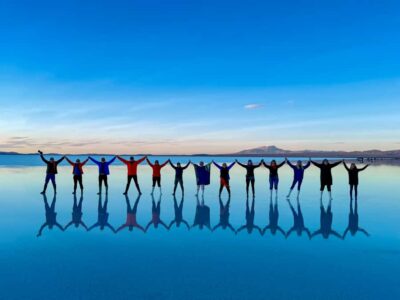
Uyuni Salt Flats and San Pedro de Atacama 3-Day Tour
Read our review →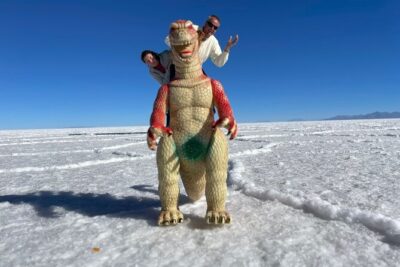
3-Day Uyuni Salt Flat Tour with Sunset and Red Lagoons
Read our review →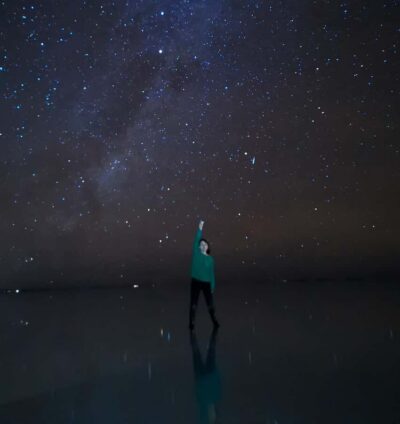
Browse the lists this tour appears in