
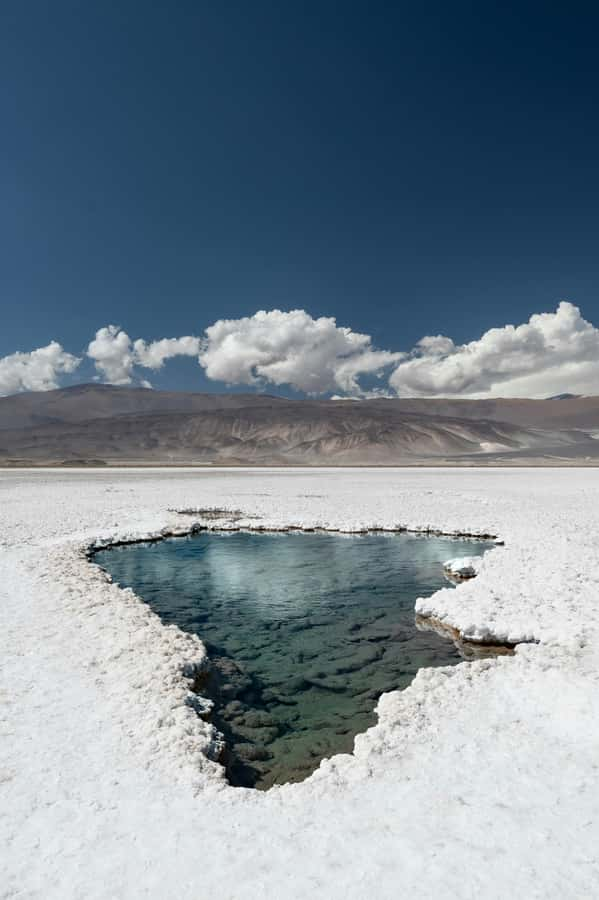
Reviewed · UYUNI TO ATACAMA CROSSINGS
Uyuni: 3-Day Salt Flats Tour ending in San Pedro de Atacama
The best part of this trip is the sharp change in scenery from bright-white salt to flamingo-filled lagoons, red desert, geysers, hot springs, and the green waters beneath Licancabur Volcano. The mirror reflections and perspective photos on the salt flats are the headline act, but the second and third days bring the wilder scenery.
I like the small group of up to six people, which makes a long 4WD ride easier to manage, and I like that the trip finishes in San Pedro instead of returning to Uyuni. The tradeoff is real: roads are rough, the second night is very basic, and hot water is not guaranteed.
Key points to know before booking
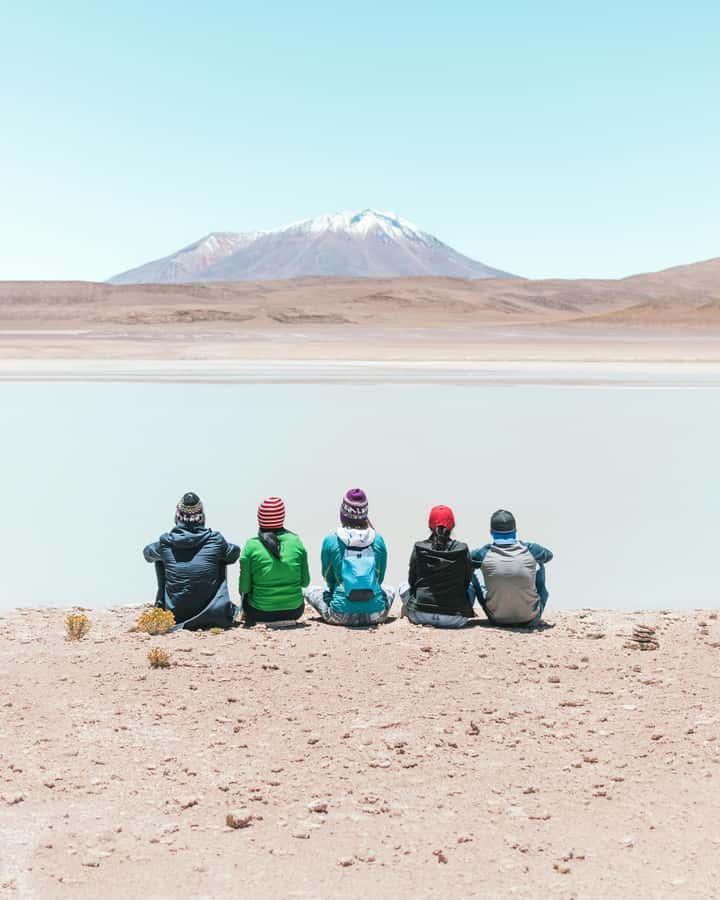
- The salt flats are only the first day: The route continues through flamingo lagoons, Siloli Desert, Red Lagoon, geysers, hot springs, and the Green Lagoon.
- You cross into Chile on the third morning: The tour ends at the Hito Cajon border at about 9:30 a.m., followed by transport to San Pedro de Atacama around 12:30 p.m.
- The second night is rustic: The Laguna Colorada Refuge uses shared dormitories with two, three, four, or six beds and a shared bathroom.
- Your 4WD carries up to six people: That keeps the cost down, but you will spend long stretches on bumpy, unpaved roads.
- Rain can change the first night: From December through April, flooding may prevent access to salt lodges, so the overnight stay may move to a regular hostel in Uyuni.
- Pack cash and warmth: Snacks, entrance fees, toilets, and rubber boots cost extra or are not included, while winter nights can be bitterly cold.
Why this three-day route works so well
At $427 per person, this is not the cheapest way to see the Uyuni area. But the price covers three days of 4WD transport, meals, two nights of lodging, a guide-driver, water during meals, and the onward vehicle to San Pedro de Atacama.
That final transfer matters. If you already plan to continue into Chile, you avoid arranging a separate border crossing and the awkward return to Uyuni. The tour is best understood as both a sightseeing trip and a practical overland connection.
You also get a small group rather than a large bus. Six people per driver is still a close fit in a 4WD, especially with bags, but it is a reasonable size for a route where the vehicle is your dining room, waiting room, and viewing platform for much of the day.
The English or Spanish guide-driver is part of the value. Jamie is one guide name associated with the experience, so it is worth asking about availability if you want an English-speaking guide with a known connection to the trip. Do not expect a polished coach tour. This is a remote route, and the guide’s handling of timing, roads, weather, and altitude matters as much as narration.
More Uyuni to Atacama crossings:
- Uyuni: Uyuni Salt Flats and San Pedro de Atacama 3-Day Tour
★ 4.3 · 122 reviews - San Pedro de Atacama: 3 D. Tour Uyuni and Back to San Pedro
★ 4.8 · 61 reviews - From La Paz to Atacama: Uyuni Salt Flats 4-Day Tour
★ 3.9 · 31 reviews
Day 1: Train Cemetery to the white horizon
Pickup begins around 10:30 to 10:45 a.m. If you are already in Uyuni, the vehicle can collect you from your hotel lobby. If you arrive by bus on the same day, pickup from the terminal is available. When your bus arrives early, you can wait at the office or be taken to a café for breakfast.
The first stop is the Train Cemetery, just outside Uyuni. Rusting railway wagons sit in the open air, a reminder of the mining rail system that once served this part of Bolivia. It is an easy first stop for photos, but do not mistake it for a large museum. You are looking at abandoned machinery in a stark setting, with the desert doing much of the visual work.
Next comes Colchani, a small settlement tied to salt production. You can learn how local workers process the salt and browse handicrafts. This is a useful stop because it gives some human context before you spend hours surrounded by a nearly blank white surface.
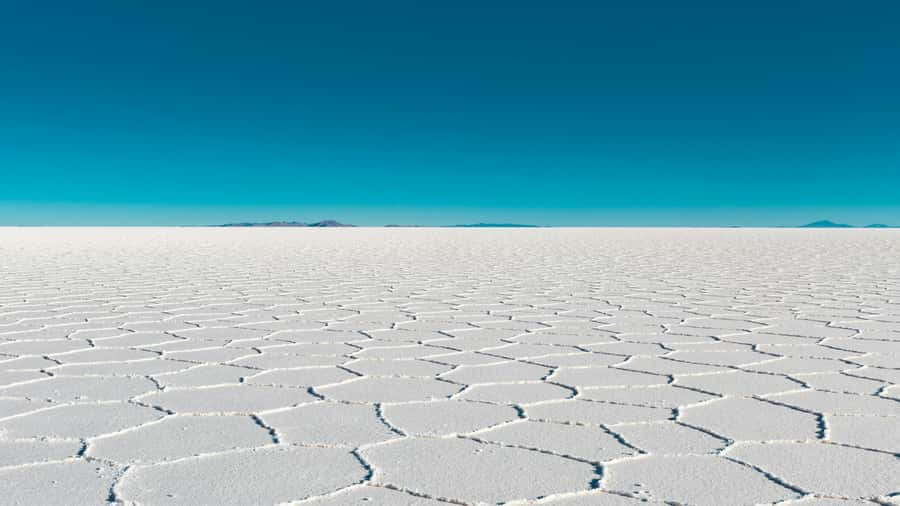
Once the 4WD reaches the salt flats, the scale changes quickly. You may see the geometric patterns formed by salt crystals, along with areas shaped by underground river aquifers. The route includes Flags Square, the Dakar Monument, and the first salt hotel.
The salt hotel is one of the route’s odd and memorable sights. Salt blocks are used in the building, giving the stop a direct link to the ground beneath you. Lunch is served in this area, followed by time for the famous perspective photos.
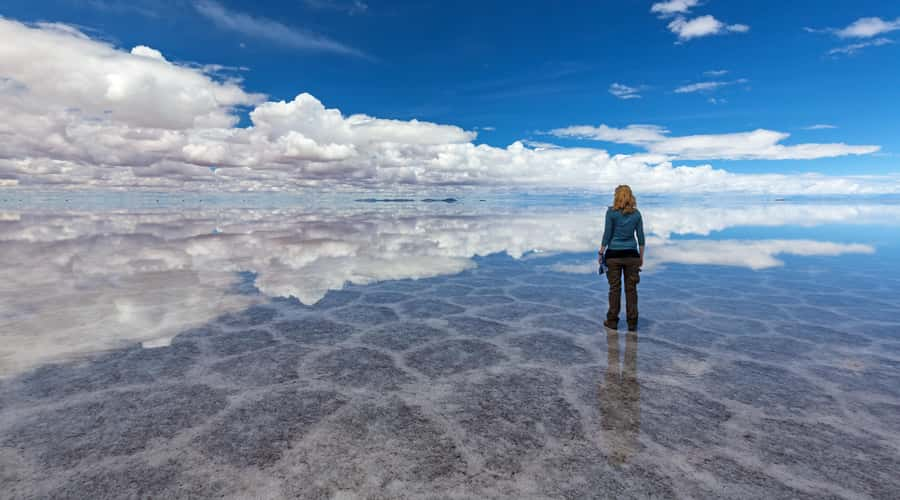
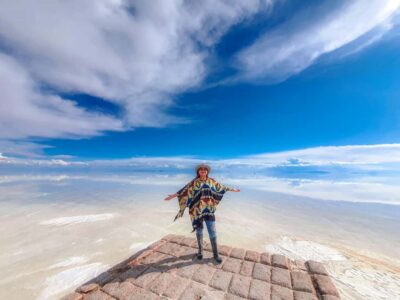
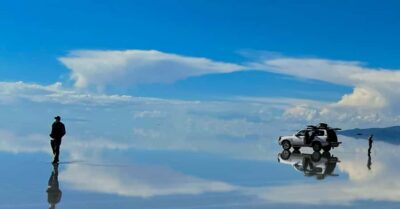
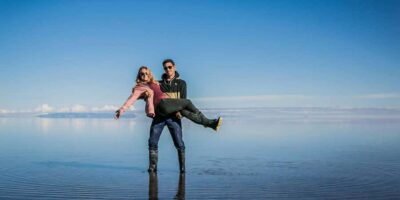
This is when your guide earns their keep. The flat surface lets you play with distance, size, and forced perspective. A bottle, shoe, toy, or person can appear huge or tiny when placed carefully in the frame. Ask your group to take turns, since the best shots usually need the photographer to stand well back.
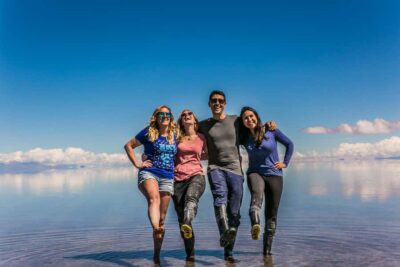
During the rainy season, a thin layer of water can turn the salt into a giant natural mirror. The exact reflection conditions depend on weather and road access, so nobody can promise a perfect mirror. Still, the possibility is a major reason to choose this trip between December and April, even though that period can also bring flooding and itinerary changes.
In the afternoon, you visit Incahuasi Island. It is not a tropical island, of course. It rises from the salt flats with coral fossils and giant cacti, offering a strong contrast to the white plain around it. From here, you can look toward Tunupa Volcano and understand how much volcanic rock and ancient water shaped the region.
The day ends with sunset across the flats. The low sun can turn the white surface gold, orange, and pink. The horizon may look softly blurred, especially when water is present. After sunset, you go to the salt hostel.
The first night is the more comfortable of the two. Rooms are double or triple, with private bathrooms, although a quadruple room may occasionally be assigned. That is still a simple stay, but it gives you a better reset before the rougher second day.
Day 2: Four lagoons, flamingos, and Red Lagoon
Day two leaves the salt flats behind. After breakfast, the group stops in San Juan, where you can buy snacks and use the restroom. Take this chance seriously. Facilities become scarce, and snacks are useful during long stretches between stops.
The route continues toward Ollagüe Volcano, which is active and sacred to Indigenous communities. You will not get a city-style viewpoint or a paved approach. This is remote mountain country, seen from the 4WD and roadside stops.
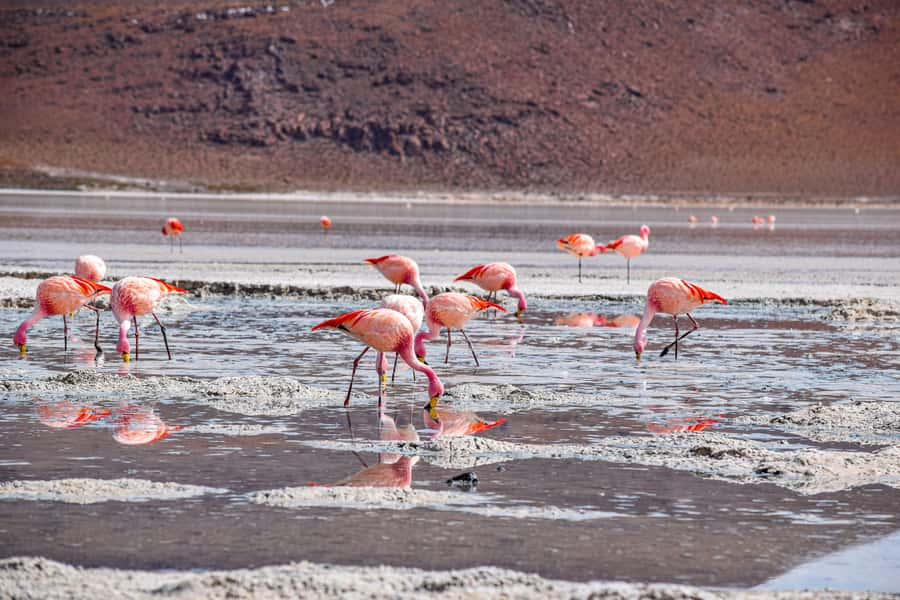
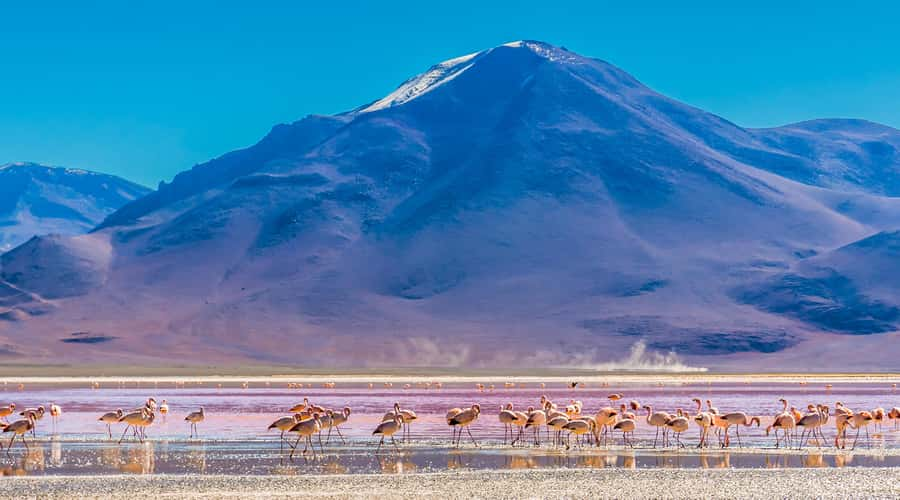
The lagoon section is the heart of the second day. Cañapa, Hedionda, Chiarcota, and Honda each bring a different combination of water, mountains, salt, and birds. Pink flamingos are the main attraction, joined by Andean ducks and seagulls.
Hedionda Lagoon is also the lunch stop. The simple meal is welcome after the morning ride, but keep your expectations practical. Food is included and the menu aims for variety, with a basic vegetarian option, but this is not a food-focused tour.
The roads are rough and unpaved. You will bounce across broad open areas for hours, often with no internet and few signs of settlement. That remoteness is what makes the views powerful, but it can be tiring if you dislike long vehicle days or have back problems.
After lunch, the 4WD enters the Siloli Desert, described as one of the driest places on Earth. The famous Stone Tree is the stop to watch for. Wind has shaped the volcanic rock into a narrow, tree-like form, and it makes a wonderfully strange photo against the desert.
The route then enters Eduardo Avaroa National Reserve, Bolivia’s most visited national park. The reserve is not about a single attraction. It is the steady sequence of volcanic ground, open desert, bright lagoons, and distant peaks that makes this day feel so different from the salt flats.
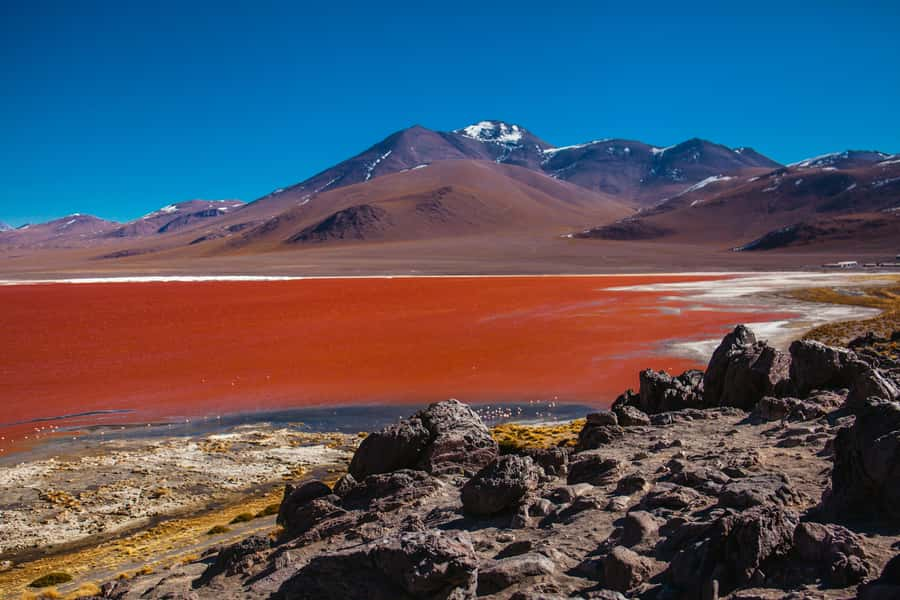
The climax is Red Lagoon, or Laguna Colorada. Its reddish water comes from mineral content and algae, while pink flamingos gather in the shallows. Color varies with light and conditions, so do not expect one fixed shade of red. The scene can look muted or intensely colored depending on the time and weather.
After Red Lagoon, you continue to Huayllajara for the second night. This is the point where comfort drops sharply. The refuge uses shared dormitory rooms with two, three, four, or six beds, assigned according to availability. Bathrooms are shared, heating is limited or absent, and hot water is not guaranteed.
A sleeping bag is included from May through September, when night temperatures can be extremely low. I would still bring warm layers, a hat, and dry socks in every season. Hot showers are available in principle, but drought, gas shortages, or frozen pipes can stop them. Hot water works about 75 percent of the time, which is useful information to have before you arrive.
Day 3: Geysers, hot springs, and the Chilean border
The final morning starts early at the Sol de Mañana Geysers. You will be up before sunrise to see steam and geothermal activity in the cold morning air. The timing is uncomfortable, but it puts you at the geysers during the part of the day when the steam is most dramatic.
Next comes Polques Hot Springs. This is your chance to warm up in mineral water before another stretch in the vehicle. Bring a swimsuit and keep your towel accessible. The springs are a welcome break after a cold start, though conditions can vary at remote facilities.
The Dali Desert follows. Its eroded rocks and isolated forms are said to recall Salvador Dalí’s paintings. The comparison is easy to understand once you see the broad, empty setting and the strange shapes scattered across it. This is a quick visual stop rather than a place with facilities or a long walking route.
The final major sight is Green Lagoon, near Licancabur Volcano. The volcano rises beside the lagoon and marks the natural border area with Chile. The water’s color can shift with minerals, wind, and light, so the name does not mean it will always appear the same bright green in every photograph.
The tour ends at the Chilean border, called Hito Cajon, at about 9:30 a.m. From there, you board a separate vehicle to San Pedro de Atacama and usually arrive around 12:30 p.m. The timing makes this route convenient if San Pedro is your next base, but leave room in your plans for delays caused by roads, border procedures, or weather.
You should also confirm your onward arrangements before booking. The advertised endpoint is San Pedro, but the organized tour portion finishes at the border. The transfer is included, which is helpful, yet this remains a remote international crossing rather than a normal city-to-city bus ride.
A few more Uyuni days to weigh up
- 3-Day Tour to Salt Flats and Lagoons
★ 4.5 · 168 reviews - From Uyuni: Red Lagoon & Uyuni Salt Flats 3-Day Guided Tour
★ 4.4 · 160 reviews - Uyuni Salt Flats 3 Days/ 2 Nights with English Speaking Guide
★ 4.0 · 91 reviews - 3-Day Uyuni Salt Flat Tour with Sunset and Red Lagoons
★ 5.0 · 83 reviews
What the price includes, and what it does not
The $427 price includes pickup in Uyuni, 4WD transportation, two nights of shared accommodation, meals described in the program, water during meals, and the San Pedro transfer. It also includes an English- or Spanish-speaking guide-driver and a sleeping bag from May through September.
The main extra costs are entrance fees, snacks, toilets, and rubber boots. Bring cash. You should not count on card machines or reliable internet in the remote sections, especially on day two.
Rubber boots are especially worth considering during the rainy season. The tour does not provide them, and wet salt can be unpleasant without suitable footwear. Ask locally about current conditions before setting out.
Internet is very limited. On day two, you may have none at all. Treat this as part of the trip rather than a service failure, and download maps, booking details, and important contact information before leaving Uyuni.
Who should book this Uyuni trip?
I would choose this tour if you want the main Uyuni sights and need to continue to Chile. It suits you if you can handle long rides, cold nights, simple meals, and basic rooms in exchange for a remarkable run of natural sights.
The trip is not a good fit for children under three, pregnant women, or anyone with back problems. The uneven roads and high-altitude conditions can be demanding, and the operator may briefly stop the vehicle if altitude or weather creates a safety concern.
You also need flexibility. From December through April, rain can flood the salt-flat roads and force a change from salt-lodge accommodation to a hostel in Uyuni. Other road or weather problems can alter the order of stops.
Free cancellation up to 24 hours before departure and reserve-now, pay-later booking give you some planning room. Even so, your wider Bolivia and Chile itinerary should allow slack. A tight connection after the 12:30 p.m. arrival in San Pedro is not wise.
Should you book it?
Book this tour if you want one continuous route from Uyuni to San Pedro de Atacama, especially if mirror photos, flamingos, volcanic deserts, and an early-morning geyser visit all appeal to you. The small group and included border transfer add useful value to a demanding journey.
Skip it if you need reliable heating, private bathrooms every night, smooth roads, strong internet, or a predictable shower. The first night is manageable, but the Laguna Colorada refuge is genuinely basic.
For the right person, the discomfort is part of the bargain. You trade comfort for three days of scenery that changes almost hour by hour, from salt geometry and giant cacti to red water, steaming ground, hot springs, and a green lagoon under Licancabur.
FAQ
How long does the Uyuni to San Pedro de Atacama tour last?
The tour lasts three days. It ends at the Chilean border at about 9:30 a.m. on day three, followed by transport to San Pedro de Atacama, where arrival is expected around 12:30 p.m.
Where does pickup take place in Uyuni?
Pickup is available from your hotel in Uyuni between 10:30 and 10:45 a.m. Pickup from the bus terminal is also available if you arrive on the same day as the tour.
How many people share the 4WD vehicle?
The group is limited to six participants per driver, including the guide-driver.
What type of accommodation is provided?
The first night is in a salt hostel, usually in a double or triple room with a private bathroom. The second night is in a basic Laguna Colorada Refuge dormitory with two, three, four, or six beds and a shared bathroom.
Is a sleeping bag included?
A sleeping bag is included from May through September. You should still bring warm clothing because winter nights are very cold and most accommodation has little or no heating.
Are entrance fees included in the price?
No. Entrance fees are not included. Snacks, toilets, and rubber boots are also not included.
Can the itinerary change because of weather?
Yes. Weather and road conditions can change the route, especially during the rainy season from December through April. If flooding blocks the salt lodges, the first night may be changed to a regular hostel in Uyuni.
Just added around Uyuni
- Uyuni: Classic Uyuni Salt Flats Tour + Hotel Pickup★ 3.0 · 4 reviews
- Uyuni: Salar de Uyuni Traditional Tour+Sunset Tour★ 4.8 · 3 reviews
- UYUNI SALT FLAT: SUNRISE & STARLIGHT EXPERIENCE★ 3.1 · 3 reviews
- UYUNI SALT FLAT: SUNSET & STARLIGHT EXPERIENCE★ 5.0 · 3 reviews
- Uyuni: Full-day tour, Salt flats and Sunset experience★ 4.8 · 5 reviews
- Uyuni: Salar de Uyuni and San Pedro de Atacama 3-Day Tour★ 4.2 · 4 reviews
- Uyuni: 3-Days Salt Flats and Desert Adventure Tour with Food★ 3.8 · 4 reviews
- Uyuni: 2-day tour to the salt flat and altiplanic lagoons★ 3.3 · 3 reviews
Uyuni to Atacama Crossings, compared.
Uyuni Salt Flats & San Pedro de Atacama 3-Day Tour
Read our review →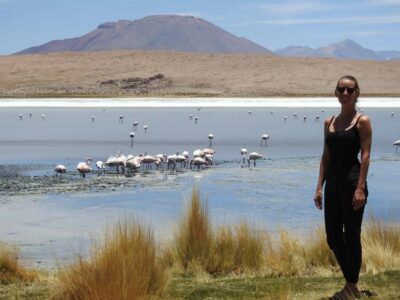
Uyuni Salt Flats and San Pedro de Atacama 3-Day Tour
Read our review →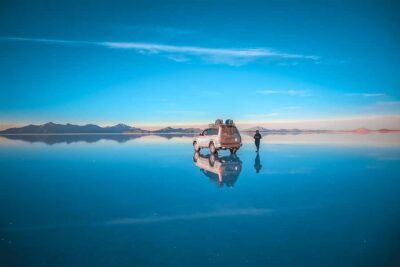
4-Day Trip to San Pedro de Atacama w/Salt Flats
Read our review →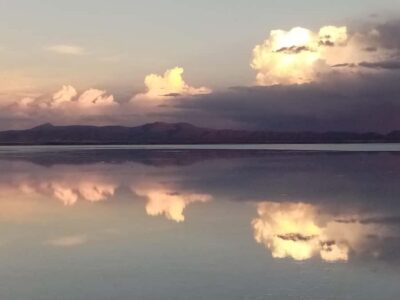
From La Paz to Atacama: Uyuni Salt Flats 4-Day Tour
Read our review →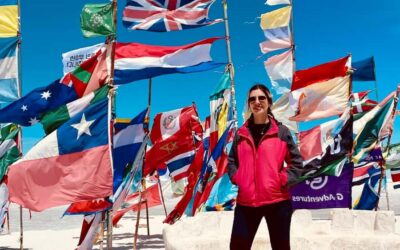
Salar de Uyuni and San Pedro de Atacama 3-Day Tour
Read our review →Browse the lists this tour appears in