
Reviewed · UYUNI TO ATACAMA CROSSINGS
From La Paz: 4-Day Trip to San Pedro de Atacama w/Salt Flats
The great prize here is the Salar de Uyuni crossing, not simply a visit to the salt flats. Over three hard-driving days, you move from rusting locomotives and giant cacti to flamingo lagoons, sulfur vents, desert rock formations, and the Chilean border. I like that the trip links Bolivia and San Pedro in one sweep, and I like the small group size, capped at 11 people.
You should know what you are buying. The $493 price covers the long bus ride, 4WD transport, meals, lodging, and border transfer, but the two nights are basic and the first night is really an overnight bus ride. Roads are rough, showers can be cold or unavailable, and you will need extra cash for park fees, toilets, hot springs, and personal costs.
Key points to know before you book
- The salt flats are only the beginning: You also see Incahuasi Island, colored lagoons, flamingos, the Siloli Desert, geysers, hot springs, and Licancabur Volcano.
- The first night is spent on a bus: Check in at 8:30 p.m. in La Paz, then leave at 9 p.m. for Uyuni.
- You ride in a 4WD for three days: Vehicles have rooftop luggage racks, but six people plus bags can make the back seats tight.
- Expect simple lodging: Agencha is the more comfortable night. Huayllajara is more basic, with shared rooms and toilets.
- Carry cash and warm clothing: Park entry, toilets, hot springs, migration tax, snacks, and personal costs are extra.
- The trip finishes in Chile: Guides assist at the border, with arrival at San Pedro de Atacama’s main square around 1:30 p.m.
From La Paz to Uyuni on the overnight bus
Your trip begins at the bus office in La Paz at 8:30 p.m. The bus leaves at 9 p.m., so leave enough time to find the office, check in, and settle your bags. The ride to Uyuni is a useful transfer, but it is also the least exciting part of the experience.
The bus includes dinner, breakfast, a bottle of water, a hot drink, heating, a toilet, a polar blanket, Wi-Fi, and a first aid kit. It is described as a comfortable sleeper bus, though sleeping well depends on how you handle overnight road travel.
I would pack a small bag for the bus rather than burying everything in your main luggage. Keep your passport, warm layer, water, toiletries, and phone charger close by. Once you leave Uyuni, phone service and Wi-Fi may disappear for several days, so handle messages, money transfers, and other online tasks before the 4WD departure.
You reach Uyuni at about 7:30 a.m. The morning includes free time, then a meeting at the local office at 10 a.m. The 4WDs leave at 10:30 a.m. This gap can feel disorganized, especially if you are tired from the night bus. It is wise to treat the morning as a waiting period rather than expecting an immediate start.
More Uyuni to Atacama crossings:
- La Paz: Uyuni Salt Flats & San Pedro de Atacama 3-Day Tour
★ 4.1 · 145 reviews - La Paz: Uyuni tour ending in Atacama Chile by bus.
★ 3.9 · 3 reviews - Uyuni: Uyuni Salt Flats and San Pedro de Atacama 3-Day Tour
★ 4.3 · 122 reviews
Train Cemetery and the first salt-flat stops
The first stop is the Train Cemetery outside Uyuni. Rusted locomotives from the late nineteenth and early twentieth centuries sit in the open desert. Their metal frames and worn wheels make a strong contrast with the white salt ahead, and this is one of the better places for creative photos.
Next comes Colchani, a settlement tied to local salt production. You can see small-scale processing, browse the craft market, and visit the museum. This stop is brief, but it gives the salt flats a human side. The Salar is not just a giant photo backdrop. Salt is collected, shaped, sold, and built into tourist facilities across the region.
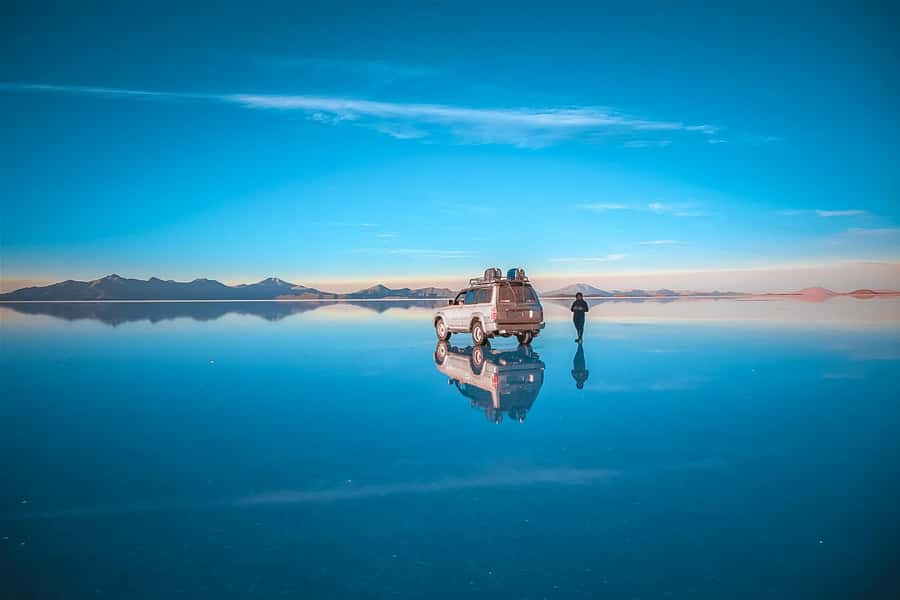
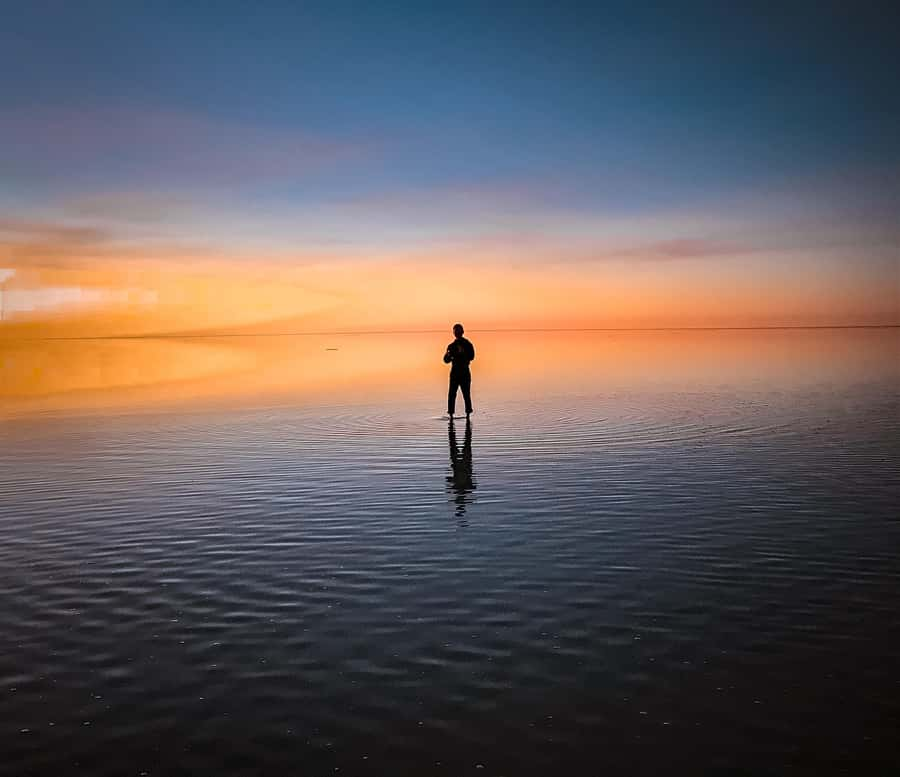
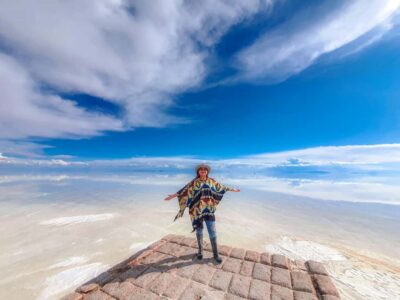
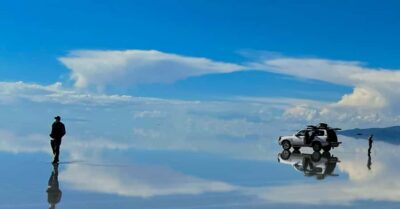
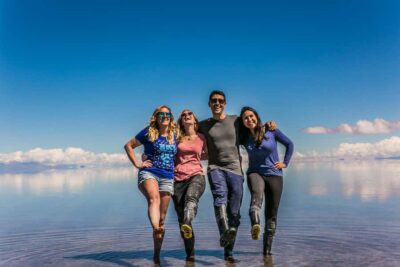
Then the road turns white. The Salar de Uyuni is vast, flat, and visually strange in the best way. In the dry season, the surface forms geometric patterns. After rain, a thin layer of water can create the famous mirror effect. Conditions change with the weather, so the exact photo opportunities are not guaranteed, but a wet salt surface can produce some of the most memorable images of the trip.
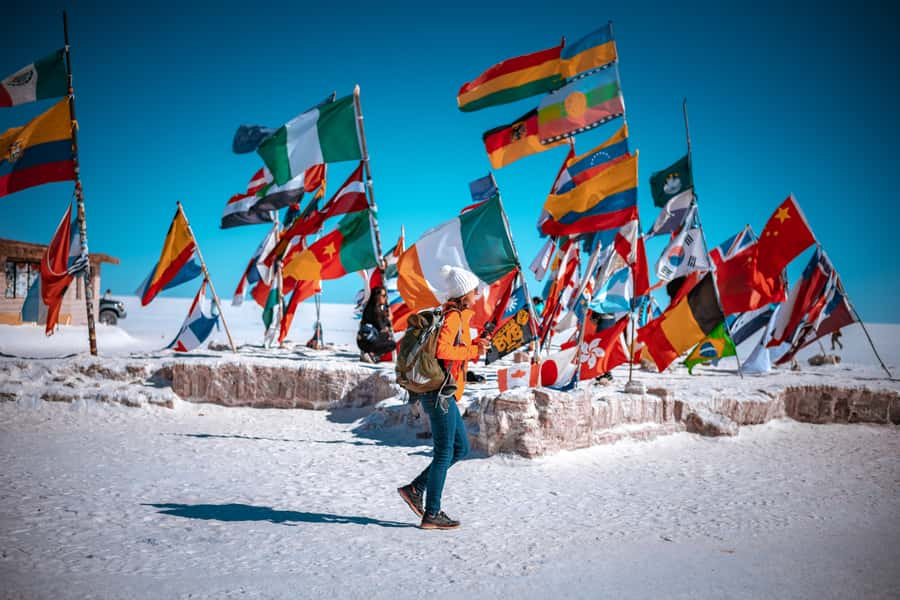
The 4WD stops at salt eyes, where water and minerals appear through the crust, and at a salt hotel-museum made from blocks of salt. You also see the Dakar Monument and a display of international flags. These stops are touristy, but they help break up a huge expanse where distances can be difficult to judge.
Incahuasi Island and sunset on the Salar
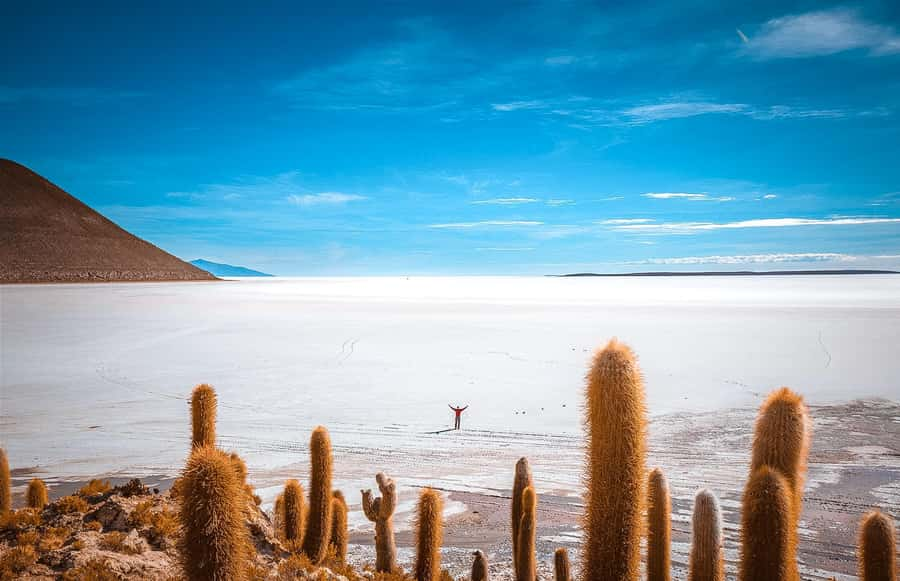
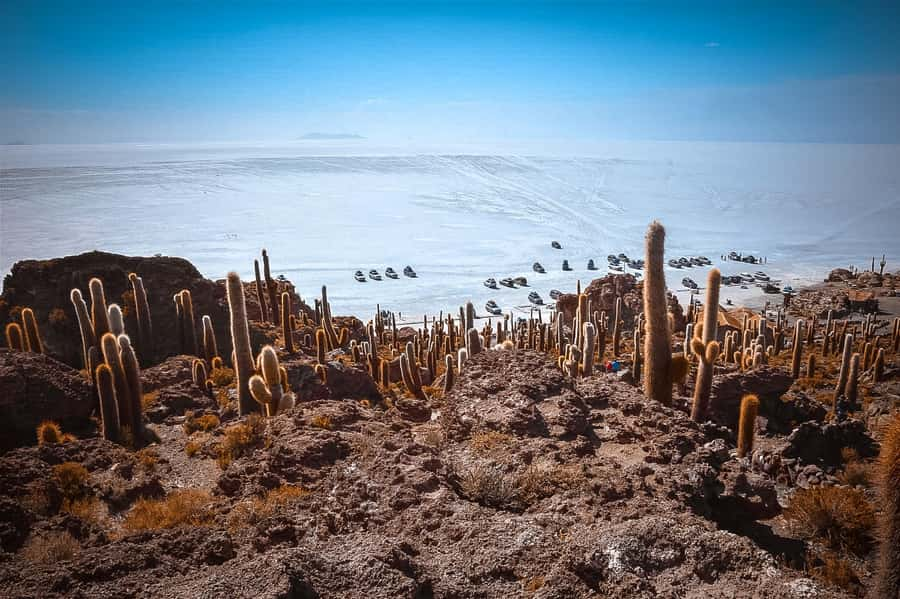
Incahuasi Island rises from the salt plain like a rocky ship. Its giant cacti are the main attraction, with some growing to impressive heights. A walk here gives you a better sense of the scale of the Salar because the white plain stretches away on every side.
Entry to Incahuasi costs 30 Bolivianos and is not included. During the rainy season, usually January through April, water can prevent access to the island. The operator may also change the overnight location if roads are affected, so keep your plans flexible during those months.
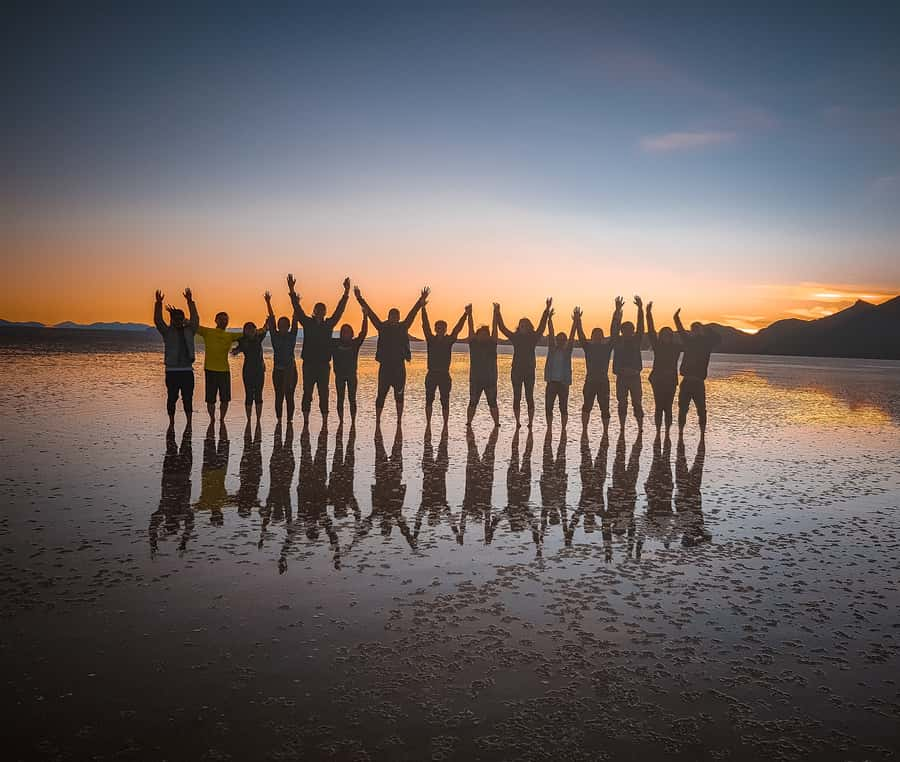
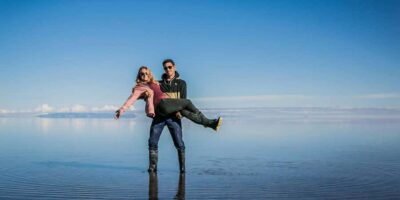
The first day in the 4WD ends with sunset on the salt flats. A glass of wine is included at this point, adding a pleasant pause after a long day in the vehicle. Guides such as Mary, James, Andres, and others named by passengers have helped with portraits and perspective photos, which matters here because the flat surface makes scale tricks possible.
You then sleep at a hostel in Agencha. Rooms are listed as four, five, or six-bed rooms with shared toilets. Conditions can be simple, but this is generally the better of the two nights. Hot water may be limited, and a sleeping bag is not included. In cold months, I would bring one or rent one locally if that option is offered.
Flamingo lagoons and the Red Lagoon
Day three moves away from the salt plain and into high desert scenery. The route includes Chiguana and an overlook toward Ollague, a volcanic area that adds a darker, rougher texture after the bright Salar.
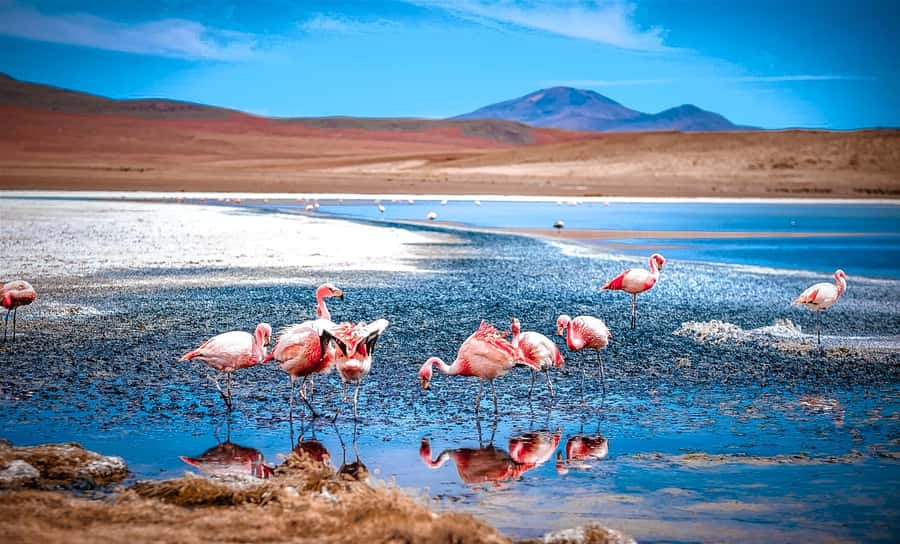
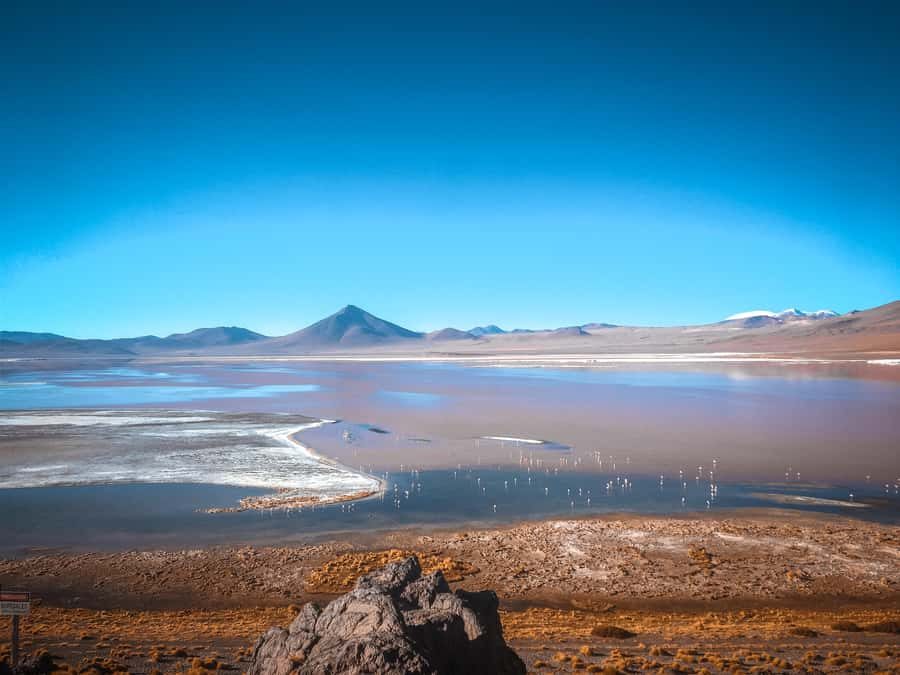
The main stops are Cañapa, Hedionda, and Chiarcota lagoons. Flamingos feed in the shallow water, and you may also see llamas, alpacas, and viscachas, small rabbit-like animals that live among the rocks. These lagoons are a major reason to choose the full crossing instead of a quick salt-flat visit. Each has a different color and setting, and the birds bring movement to an otherwise wide-open region.
The driving is part of the day. You spend hours on rough tracks in a Land Cruiser-style 4WD, with frequent stops to stretch your legs and take photos. Six people and their luggage can make the vehicle feel tight, especially if you are tall. Some groups take turns changing seats, which helps.
Lunch is provided, followed by the Siloli Desert and the Stone Tree. The Stone Tree is a naturally shaped rock formation worn by wind. It is a quick stop, but the surrounding desert gives you a clear sense of how isolated this route is.
The day ends at Laguna Colorada, or Red Lagoon. Minerals and algae give the water its reddish tone, while flamingos gather in large numbers. Wind, cold, and altitude can make this stop physically demanding, but the color and birdlife are among the strongest sights on the trip.
You sleep in Huayllajara in a shared six-bed room with a shared toilet. This is the roughest night. Electricity may be available for only a few hours, hot water may not work, and Wi-Fi, if offered, costs extra and may not be useful. Bring toilet paper, a power bank, several warm layers, and a towel. Do not count on charging your phone beside your bed.
A few more La Paz days to weigh up
- La Paz: Full Day Trip to Copacabana and Isla del Sol
★ 4.5 · 400 reviews - From La Paz: Day Trip to Chacaltaya and Moon Valley
★ 4.4 · 65 reviews - Private Tiwanaku and Titicaca Day Trip from La Paz
★ 4.5 · 62 reviews - From La Paz: El Alto and Cholets Guided Day Trip
★ 4.2 · 7 reviews
Geysers, hot springs, and the border to Chile

Day four starts early with the Sol de Mañana geysers. The area has fumaroles, bubbling mud, sulfur fumes, and steam vents. You will be out in the cold at high altitude, often with strong wind, so gloves, a hat, and layers are more useful than fashionable clothes.
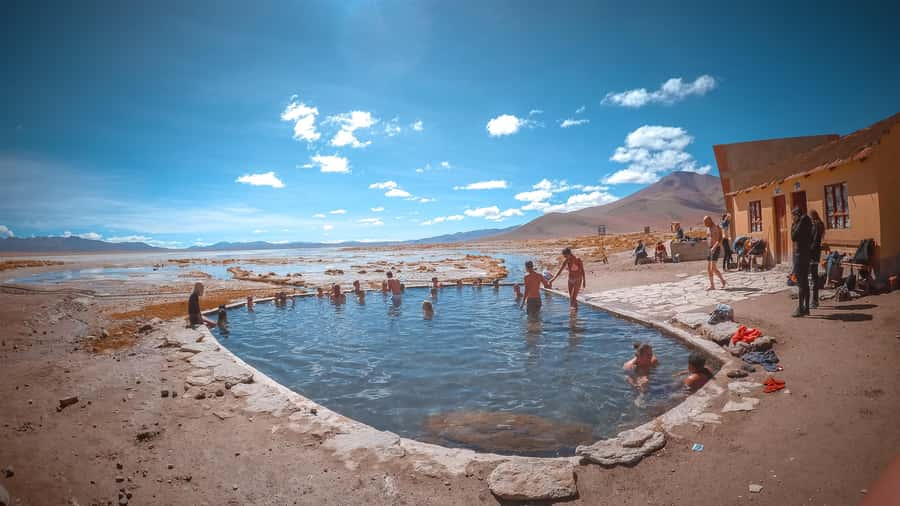
The hot springs at Polques offer a welcome break. The water gives you a chance to warm up while looking across the surrounding desert. Entry costs 6 Bolivianos. Bring a swimsuit and towel if you plan to get in, since neither is listed as included.
The Salvador Dalí Desert comes next, with sculpted rocks and broad views toward the surrounding volcanoes. Its name comes from rock forms that some people find reminiscent of the surrealist artist’s work. You do not need to be interested in art to enjoy the stop. The appeal is the unusual shapes and the sudden change from steaming vents to dry, wind-shaped stone.
The final viewpoint takes in the Green Lagoon, White Lagoon, and Licancabur Volcano. Licancabur rises above the border region and gives the last stretch of Bolivia a strong visual finish. You may spend less time at individual stops than expected because the route has a fixed border schedule.
Guides assist with the crossing at about 10 a.m. The transfer then continues to San Pedro de Atacama, where you arrive around 1:30 p.m. and are dropped at the main square. This makes the trip especially useful if you already plan to visit Chile. You do not need to arrange a separate cross-border transfer, but you do need your passport or identity card and the Bolivian migration tax of 15 Bolivianos.
Food, lodging, and the real level of comfort
The food is practical rather than luxurious. Included meals consist of one dinner and one breakfast on the bus, plus two lunches, two dinners, and two breakfasts during the 4WD journey. Breakfast can be as basic as bread, jam, and tea or coffee, so I would carry filling snacks if you need a large morning meal.
Lunches and dinners can be better than expected, with local dishes served in simple dining rooms. Still, the remote route limits choice. You are eating to keep moving, not dining for a special culinary experience.
The first hostel night in Agencha is basic but usually comfortable enough. The second night is more of a desert shelter than a conventional hotel. Shared rooms, shared toilets, cold conditions, limited electricity, and little or no connectivity are part of the deal.
This is also why packing matters so much. Bring thermal layers, gloves, thick socks, a hat, sunscreen, lip balm, toilet paper, a towel, snacks, and a power bank. Toiletries and sleeping bags are not included. You should also keep medication in your day bag, especially if you are prone to altitude sickness.
What $493 buys you
At $493 per person, the trip is not the cheapest way to reach San Pedro. You may find a lower price by traveling independently to Uyuni and arranging a three-day crossing there. One passenger specifically noted that booking locally in Uyuni can cost less.
The value comes from convenience. This package books the La Paz to Uyuni bus, organizes the 4WD, includes an English-speaking guide and local driver, covers meals and lodging, and handles the transfer to San Pedro. It also removes the need to solve the border connection yourself.
You should budget extra for:
- 30 Bolivianos for Incahuasi Island
- 150 Bolivianos for Eduardo Avaroa Reserve
- About 30 Bolivianos for toilets along the route
- 6 Bolivianos for the hot springs
- 15 Bolivianos for Bolivian migration tax
- Drinks, snacks, toiletries, sleeping bag rental, and personal expenses
Tips for the guide and driver are not listed in the formal inclusions, but you should carry enough cash for them. A useful working amount for extras is around 350 Bolivianos, though your spending will depend on snacks, rentals, and optional purchases.
Guides, drivers, and the group experience
The tour uses English-speaking guides and local drivers, with a maximum group of 11. In practice, the group may be split between two 4WDs. That arrangement can work well, but ask how the guide will be assigned to the vehicles.
Some groups have a guide riding in one vehicle while the second car receives less commentary. If learning about geology, wildlife, and local life is important to you, confirm that the English-speaking guide will spend time in your vehicle. Drivers such as Yvan, Ivan, Pedro, Roger, Arturo, Jonny, and others have been praised for careful handling on rough tracks.
The best guides do more than recite facts. They organize meals, coordinate hostels, help at the border, and take photos when the setting calls for it. The trip moves quickly, so a calm guide makes a real difference when plans shift because of weather or road access.
Who should book this crossing?
I would choose this trip if you want to see the main sights of southwestern Bolivia and finish in Chile without arranging several separate transfers. It suits people who value scenery and variety over comfort, and it works well for anyone with only a few days.
It is a poor fit if you have serious back problems, altitude sickness, or trouble with cold, rough roads, and basic accommodation. The activity is also not suitable for people over 95, according to the stated restrictions.
The pace is demanding. You spend long hours in a 4WD, rise early, and sleep at high-altitude hostels. Yet the rewards are unusually varied: the Salar’s white expanse, flamingos at colored lagoons, sulfur vents, hot water in the desert, giant cacti, and the border view toward Licancabur.
Should you book it?
Book this tour if you want a well-organized route from La Paz to San Pedro and accept that comfort comes second to access. The strongest parts are the range of scenery, the careful drivers, the helpful guides, and the simple border connection.
Skip it or book locally in Uyuni if price matters more than convenience, or if you want greater control over your vehicle, lodging, and departure time. For the best experience, bring serious cold-weather clothing, cash, snacks, toilet paper, and a power bank. Think of it as a high-altitude expedition with beds and meals, not a polished hotel tour.
FAQ
Where does the trip begin and end?
It begins at the bus office in La Paz City and finishes at the main square in San Pedro de Atacama, Chile.
What time does the bus leave La Paz?
You meet at the bus office at 8:30 p.m. and the bus departs at 9 p.m.
Is an English-speaking guide included?
Yes. The experience includes an English-speaking guide, a local driver, and a small group limited to 11 participants.
What accommodation is provided?
The first night is in Agencha in a four, five, or six-bed room with shared toilets. The second night is in Huayllajara in a shared six-bed room with a shared toilet.
Are entrance fees included?
No. Incahuasi Island, Eduardo Avaroa Reserve, toilets along the route, hot springs, and the Bolivian migration tax are extra.
Can I visit Incahuasi Island during the rainy season?
Access is not possible during the rainy season from January through April. The overnight location may also change if road access is affected.
More 4-Day Experiences in La Paz
- From La Paz to Atacama: Uyuni Salt Flats 4-Day Tour
★ 3.9 · 31 reviews - San Pedro de Atacama: 4-Day Uyuni Salt Flats Tour
★ 3.7 · 8 reviews
Just added around La Paz
- Private Tour of Tiwanaku Ruins from La Paz★ 5.0 · 3 reviews
- Private Tiwanaku and Titicaca Day Trip from La Paz★ 4.8 · 3 reviews
- La Paz: Uyuni tour ending in Atacama Chile by bus.★ 3.9 · 3 reviews
- From La Paz: Lake Titicaca and Copacabana Private Tour★ 5.0 · 5 reviews
- LA PAZ: GUIDED TOUR CHACALTAYA + VALLEY OF THE MOON★ 3.6 · 3 reviews
- La Paz: The Feminist Tour★ 5.0 · 3 reviews
- Titicaca Lake: Highlights Tour from La Paz by Bus★ 4.0 · 3 reviews
- From La Paz: Trip to Uyuni Salt Flats with Wine at Sunset★ 4.4 · 4 reviews
Uyuni to Atacama Crossings, compared.
Uyuni Salt Flats & San Pedro de Atacama 3-Day Tour
Read our review →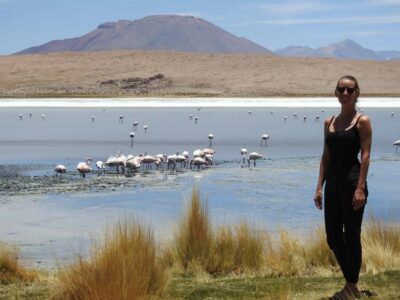
Uyuni Salt Flats and San Pedro de Atacama 3-Day Tour
Read our review →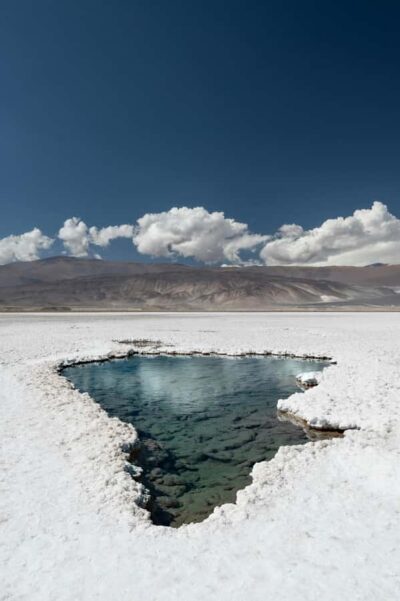
3-Day Salt Flats Tour ending in San Pedro de Atacama
Read our review →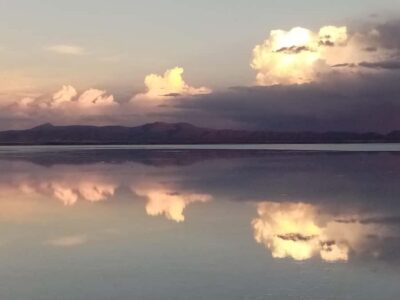
From La Paz to Atacama: Uyuni Salt Flats 4-Day Tour
Read our review →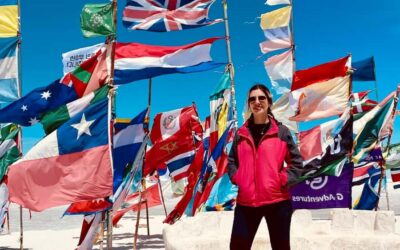
Salar de Uyuni and San Pedro de Atacama 3-Day Tour
Read our review →Browse the lists this tour appears in