
Reviewed · CITY TOURS
Sucre: A Day Spent Exploring the Historic Area of the City
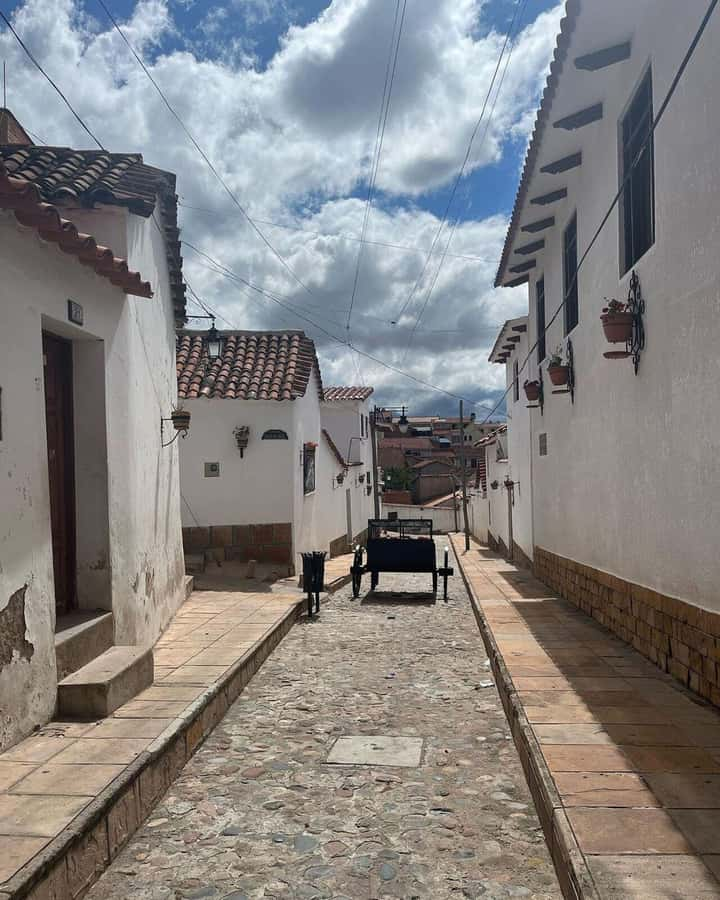
Sucre’s story comes into focus on foot, from the quiet whitewashed cemetery to the room where Bolivia declared independence. This seven-hour walking tour links the city’s major landmarks with smaller corners, including the Guereo Mansion and Calle de los Gatos.
I especially like the traditional breakfast near the cemetery and the visit to ASUR, where you can see indigenous weaving rather than just read about it. The small group, capped at 10 people, also gives the guide room to explain details. The tradeoff is a long day with plenty of walking, stairs, public transport, and little free time.
Key points at a glance
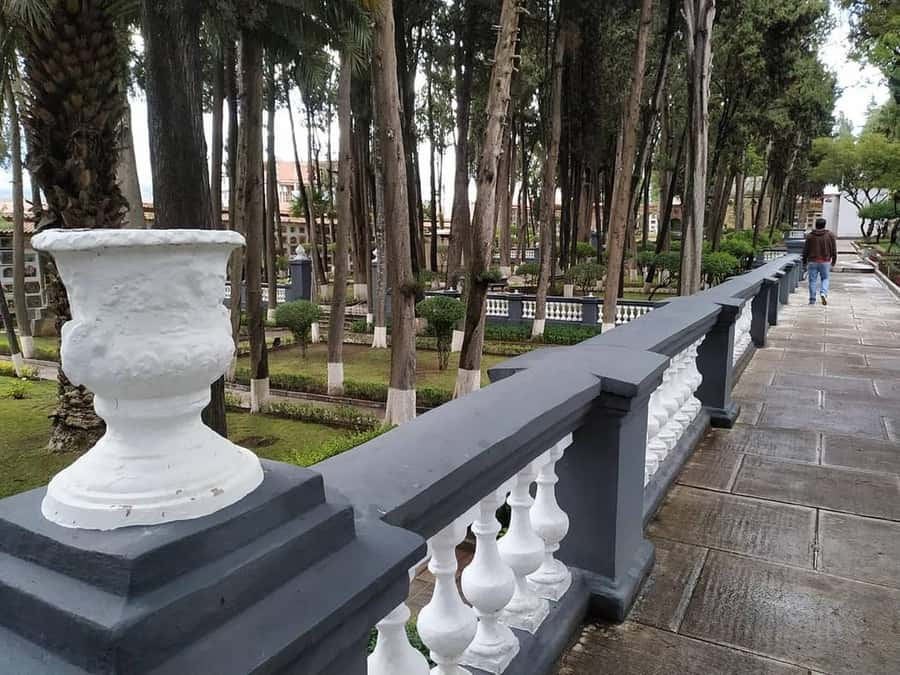
- Start with Sucre’s General Cemetery: Spend about 75 minutes among ornate graves, religious art, and quiet paths before the city gets busy.
- See where independence was declared: Casa de la Libertad preserves the setting connected with Bolivia’s declaration of independence on August 6, 1825.
- Visit a university founded in 1624: The old law school at Universidad de San Francisco Xavier connects Sucre with the intellectual and political life of the region.
- Watch indigenous textile work at ASUR: The museum covers pre-colonial, colonial, and republican periods, with traditional weavers demonstrating their craft.
- Finish above the city: San Felipe Neri and the Mirador de La Recoleta provide some of Sucre’s best views, especially late in the day.
- Expect a full, active schedule: The tour costs $40 per person and includes admissions, breakfast, public buses, and a guide in English or Spanish.
Why this Sucre walking tour works
Sucre is not a city you understand by checking off one grand monument. Its appeal comes from the way churches, courtyards, university buildings, museums, plazas, and narrow streets fit together. This tour gives you that larger picture in one day.
You begin at Plaza Oruro, in front of the old cemetery, then move through the central district before heading uphill toward Recoleta and San Felipe Neri. The route mixes major sights with places you might otherwise miss on your own.
The pace is fairly brisk. Several stops last 30 to 45 minutes, while the cemetery and San Felipe Neri receive more time. You will have lunch on your own, but the included breakfast gives you an early local meal before the walking begins.
The tour is best for you if you want context. A guide can explain why Sucre is tied so closely to Bolivia’s independence, how the university shaped the region, and why indigenous textiles remain an important part of local identity. If you prefer long café breaks or independent wandering, this schedule may feel too packed.
More historical sites near Bolivia:
- Walking tour in Sucre: History, Culture & Amazing Views
★ 4.8 · 79 reviews - Walking tour – A journey through the History of Santa Cruz
★ 4.8 · 61 reviews - Sucre: Free Walking tour (History, culture and traditions)
★ 4.8 · 47 reviews
Breakfast and quiet paths at the General Cemetery
The meeting point is Plaza Oruro, directly in front of Sucre’s old cemetery. The morning begins with an optional traditional Bolivian breakfast at a nearby local eatery. Since breakfast is included in the tour price, you can start the day with something local instead of searching for food before meeting the guide.
The General Cemetery is not treated as a quick photo stop. You spend about 75 minutes there, with time for a guided walk through one of Sucre’s more peaceful and visually distinctive places.
Expect ornate tombs, religious symbols, family memorials, and carefully maintained paths. The cemetery offers a quieter way to see local customs and the role of Catholic traditions in Sucre’s public life. It also gives your guide a useful setting for discussing the city’s social and religious culture.
Keep your voice low here. Visitors are asked to remain quiet, especially inside the cemetery, out of respect. Photography is allowed as part of what to bring, but use good judgment around graves and people paying their respects.
The cemetery is also a practical reminder that this is a walking day. Wear shoes with good support, bring water, and use sunscreen. Sucre’s sun can be strong even when the air feels mild.
A 1624 university and Sucre’s central plaza
After the cemetery, you take public transportation for about 15 minutes toward the center. The ride is simple, but it is part of the local experience and keeps the tour price reasonable. It also means you are not spending the whole day inside a private vehicle.
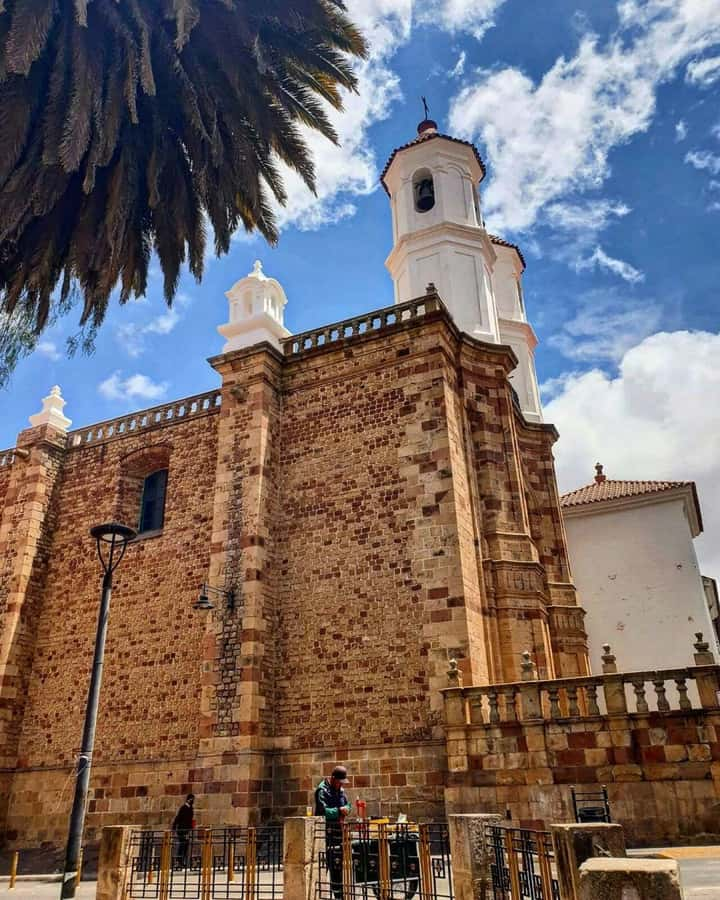
The next stop is Universidad Mayor, Real y Pontificia de San Francisco Xavier de Chuquisaca, commonly known as USFX or the University of Charcas. Founded in 1624, it is one of the oldest universities in the Americas and an important part of Sucre’s identity.
The visit lasts about 30 minutes and focuses on the old law school. The architecture gives you a sense of the institution’s age, while the guide can connect the university with the intellectual and political forces that shaped the region.
This stop matters because Sucre was not only a colonial administrative center. It was also a place where lawyers, scholars, clergy, and political thinkers met. That background helps explain why the city played such an important part in Bolivia’s independence story.
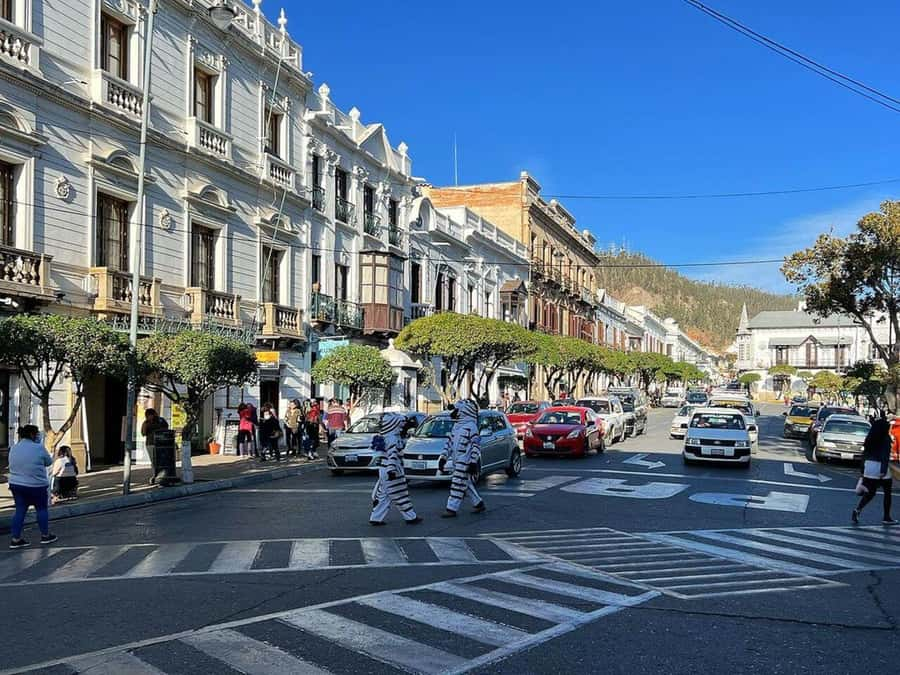
From the university, the route continues to Plaza 25 de Mayo, Sucre’s central square. Allow about 30 minutes here. The plaza is a good place to get your bearings, watch everyday city life, and see the buildings that frame the historic center.
The square remains an active gathering place for locals and visitors. Your guide will point out important buildings and explain how the plaza functioned as the center of colonial and republican Sucre. You will have time for photographs, but the main value is the setting. After seeing quieter sites, you can watch the city work around its central public space.
Inside Casa de la Libertad
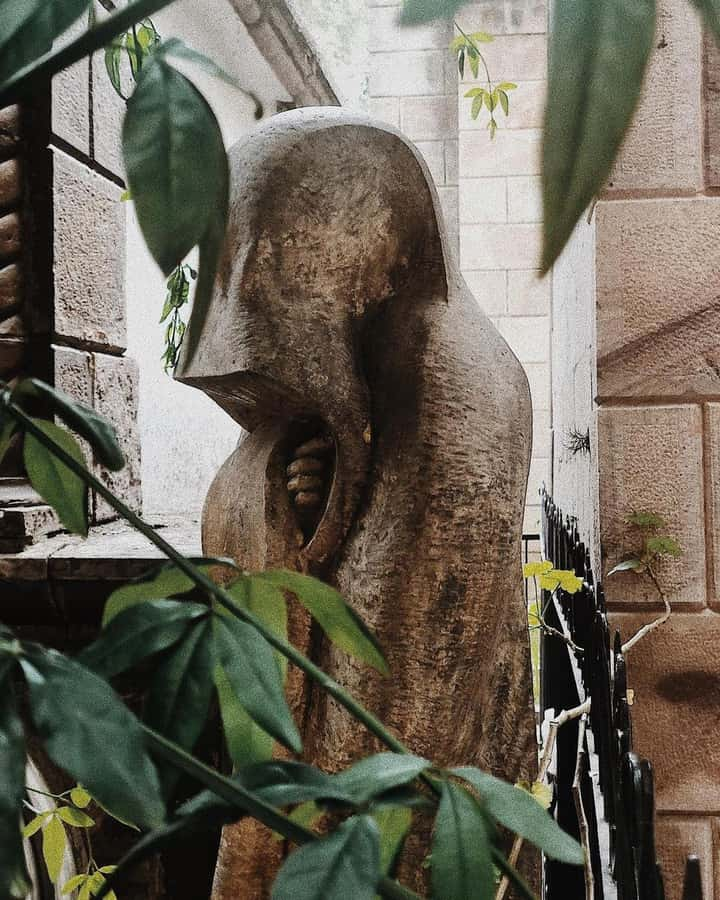
Casa de la Libertad is the emotional center of the tour. Bolivia’s Declaration of Independence was signed here on August 6, 1825. Today, the building operates as a museum with documents, objects, and exhibits connected with the country’s struggle for independence.
The visit lasts about 30 minutes. That is enough time for a focused introduction, though you should not expect to examine every display at length. The guide helps you understand why this particular building matters and how Sucre became linked with the creation of Bolivia.
The museum gives the independence story a physical setting. Dates and political names can blur together when you read them in a guidebook. Standing in the building where the declaration was signed makes the event easier to place.
Smoking is not allowed inside the buildings visited during the tour. As with the cemetery, you should keep your voice down and follow the museum’s rules. A camera is useful, but take care to observe any restrictions inside exhibition rooms.
The group then moves to Plaza Pedro de Anzúrez for about 30 minutes. This stop adds another public square to the route and lets the guide expand on Sucre’s colonial layout and civic life. It is also a useful pause between indoor visits and the museum that follows.
More city tours in Bolivia:
- La Paz: Private City Tour with Cable Car & Moon Valley Visit
★ 4.9 · 508 reviews - Customizable Private City Tour – La Paz
★ 5.0 · 69 reviews - La Paz City Tour and Moon Valley
★ 4.2 · 38 reviews - Walking city tour La Paz
★ 3.9 · 25 reviews
Indigenous textiles at ASUR
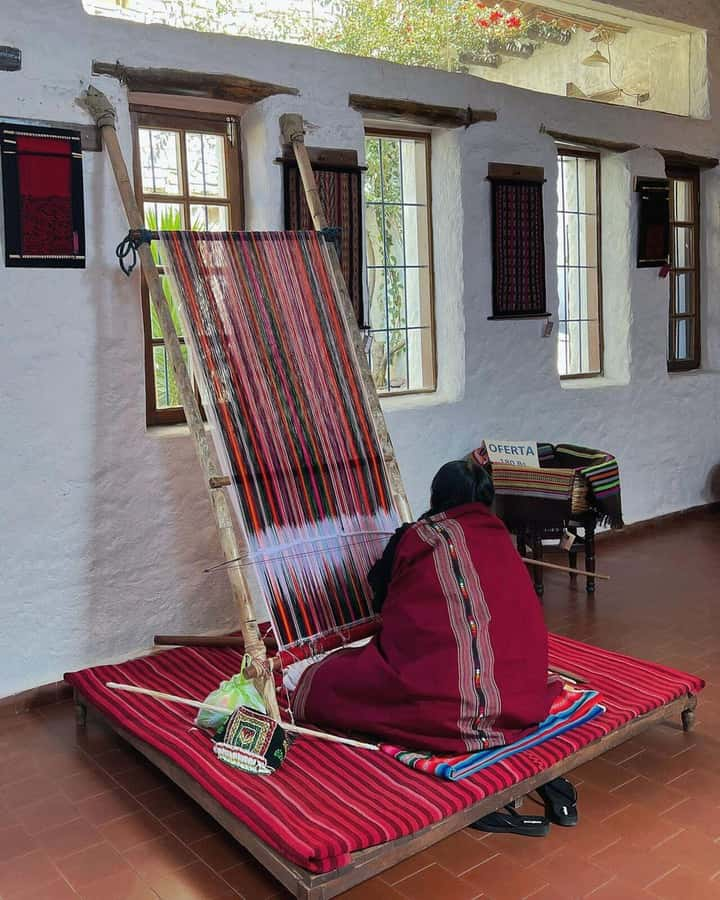
Museo ASUR is one of the most worthwhile stops for anyone who wants more than colonial architecture. The museum occupies a well-preserved building and presents indigenous textiles and clothing from the pre-colonial, colonial, and republican periods.
You spend about 45 minutes here with a guided visit. The collection shows how patterns, colors, materials, and clothing styles carry information about community and tradition. Rather than treating weaving as a decorative side note, the museum presents it as a skill passed through generations.
A gallery also features traditional weavers demonstrating their techniques. This makes the visit more direct than simply looking at finished garments behind glass. You can watch how the work is done and see the care required to produce detailed designs.
The ASUR visit is especially valuable because it connects Sucre with communities beyond the central colonial streets. The city’s identity is not limited to Spanish-era churches and grand courtyards. Indigenous culture remains part of the surrounding region, and this museum gives you a clear way to see that continuity.
Do not rush this stop. If textiles interest you, ask the guide about the designs and periods represented. If you have only a passing interest, the live demonstration still gives the museum a human focus.
Guereo Mansion and Calle de los Gatos
The tour continues to the Guereo Mansion, also called the Palacete del Guereo. This 45-minute guided visit focuses on the building’s colonial-era architecture.
The mansion is a change of scale from the large public spaces earlier in the day. Look for the details that define old Sucre: courtyards, arches, decorative features, and the way rooms are arranged around open areas. The guide can explain how the building fits into the city’s architectural story.
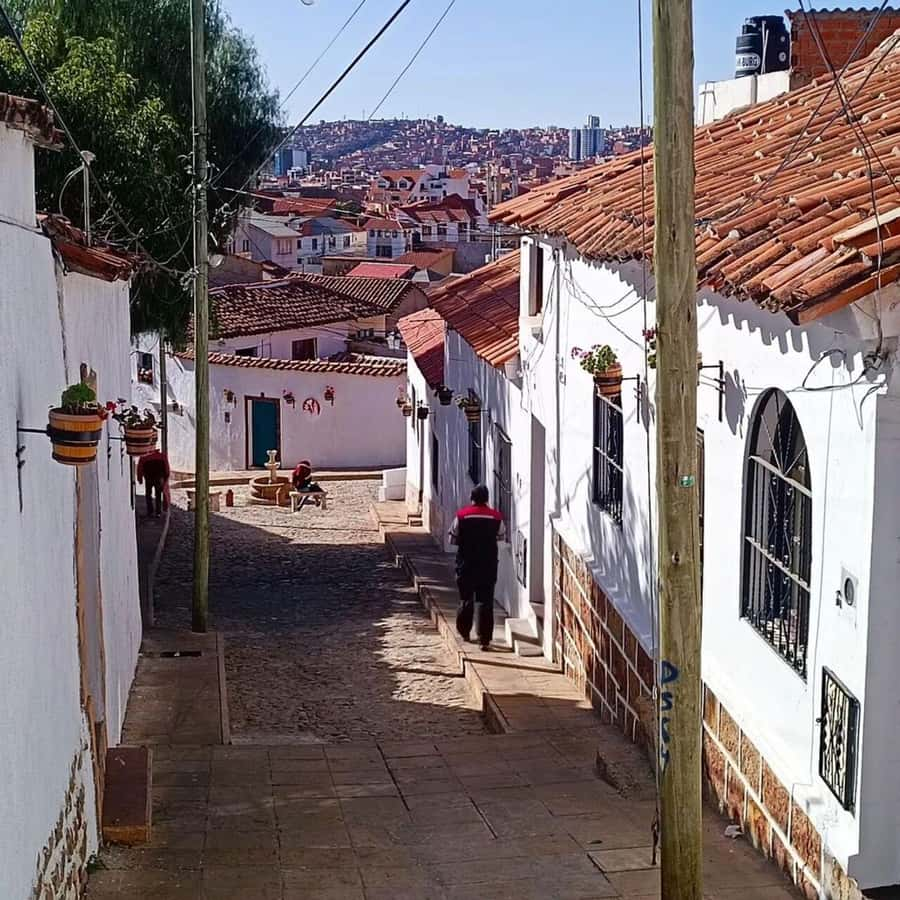
Nearby, you visit Gato Negro, known as Calle de los Gatos, for about 15 minutes. This is a short stop on a quaint old street. It is less about a major museum or formal lesson and more about seeing a small piece of Sucre’s older character.
This part of the route rewards curiosity. You may want to take photographs, but the visit is brief, so do not count on a long pause. It works as a transition between the mansion and the final hilltop stop.
Views from San Felipe Neri and Recoleta
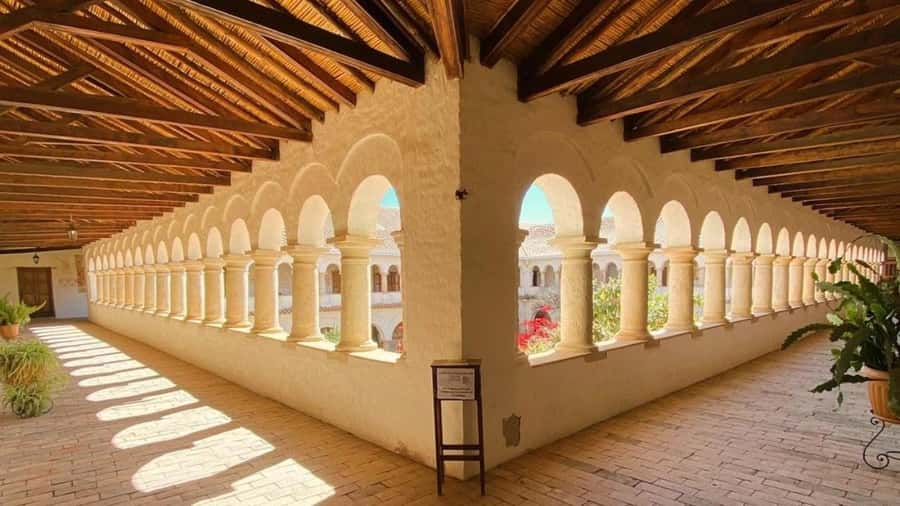
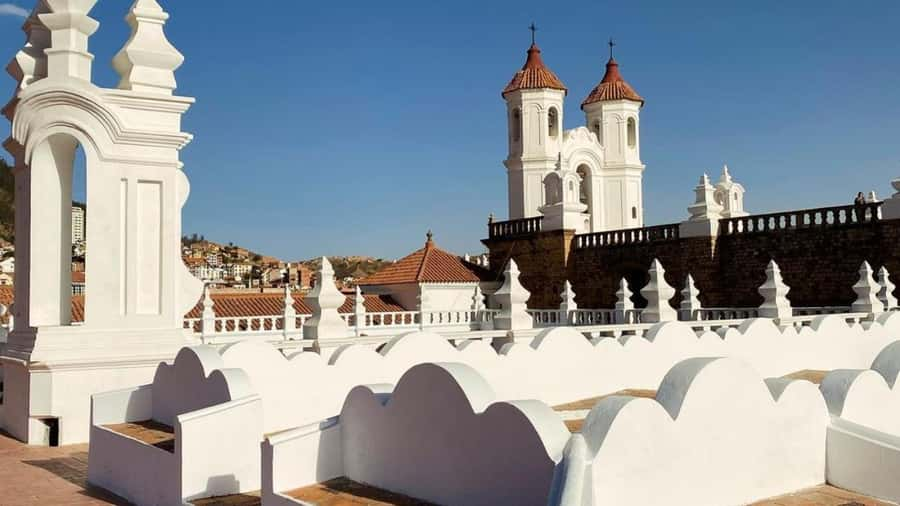
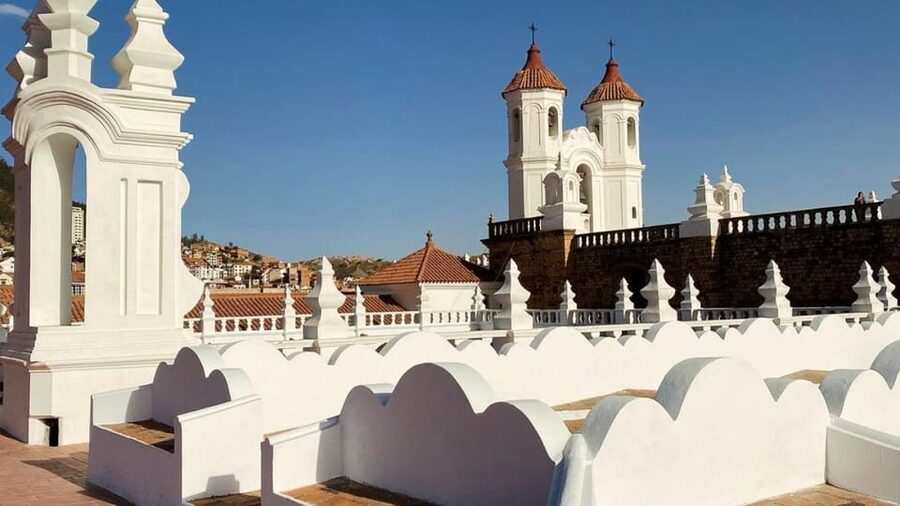
The final major visit is Iglesia de San Felipe Neri, with about an hour set aside for the church and convent. The complex includes arches, courtyards, colonial-style buildings, and terraces with wide views over Sucre.
This is one of the best places for photographs. From above, you can see the city’s white buildings and historic center in one broad view. The height also helps you understand the shape of Sucre, which is harder to grasp while walking between individual streets.
The route also includes the Mirador de La Recoleta and the old convent area. The guide shares stories about the site and its place in Sucre’s history. Late afternoon is a good time for this part of the tour because the light can soften the city and make the terraces feel calm after a busy day.
San Felipe Neri is not only a viewpoint. Its architecture gives you a final look at the religious buildings that helped define colonial Sucre. The arches and courtyards are worth your attention before you head outside for the city view.
The tour ends back at Plaza 25 de Mayo. That return is convenient if you plan to eat, shop, or continue exploring the center on your own. Your afternoon meeting point is different from the morning meeting point, and the guide gives you the exact details at the end of the morning session.
What $40 includes, and what it does not
At $40 per person, the price is fair for a seven-hour guided day. You are paying for entry to Universidad de San Francisco Xavier, Casa de la Libertad, ASUR, and San Felipe Neri, along with breakfast, public buses, and guiding.
The admissions add up in both money and convenience. You do not need to work out which museums to enter or how to connect each site. The public bus ride also keeps transportation costs low while giving you a glimpse of ordinary city movement.
Lunch is not included, and neither are personal expenses. Plan to buy lunch separately or carry enough money for it. The schedule is full enough that you should not assume you will have a long restaurant break during the tour.
A small group of up to 10 people is another plus. You can usually hear the guide more easily than in a large coach group, and there is a better chance to ask questions. Guide Gari received particular praise for explaining Bolivia and indigenous culture, though the available feedback identifies his tour as Spanish-language. Confirm your preferred language when booking if English is important to you.
The tour is offered in English and Spanish. Free cancellation is available up to 24 hours before the start, and you can reserve now and pay later, which helps if your Bolivia plans are still moving around.
Who should book this day in Sucre?
I would recommend this tour to first-time visitors who want a strong introduction to Sucre’s history, architecture, religion, and indigenous culture in one day. It is also a good fit if you value a guide’s explanations more than free time.
The tour suits active walkers who can manage several hours on foot, public transport, museum visits, and some stairs or uneven surfaces. It is not suitable for wheelchair users or people with mobility impairments.
Bring comfortable shoes, water, sunscreen, a hat, weather-appropriate clothing, and a camera. You will move between indoor and outdoor sites, and the final viewpoints are more enjoyable when you are prepared for sun.
Should you book this Sucre tour?
Book it if you want the major historic sights tied together with context, especially Casa de la Libertad, the 1624 university, ASUR, and San Felipe Neri. The breakfast, public bus ride, and small group make the day feel more local than a simple monument circuit.
Skip it if you want a slow morning, long meals, or plenty of unplanned time. Seven hours is a serious commitment, and the route covers a lot of ground.
For most visitors with one full day in Sucre, the $40 price offers solid value. You get the city’s central story, an important indigenous arts stop, several admissions, and hilltop views in one organized outing.
FAQ
How long does the Sucre tour last?
The tour lasts seven hours, beginning at Plaza Oruro and finishing at Plaza 25 de Mayo.
Where is the meeting point?
The guide meets you at Plaza Oruro, in front of Sucre’s old cemetery. The guide’s name is sent by email or WhatsApp one day before the tour.
Is breakfast included?
Yes. A traditional Bolivian breakfast near the old cemetery is included.
What languages are available?
The tour is offered in English and Spanish.
What admissions are included?
The price includes entry to Universidad de San Francisco Xavier, Casa de la Libertad, Museo ASUR, and the Convent of San Felipe Neri.
Is transportation included?
Yes. Public bus transportation used during the tour is included.
Is the tour suitable for wheelchair users?
No. The experience is not suitable for wheelchair users or people with mobility impairments.
Just added around Bolivia
- Uyuni: Classic Uyuni Salt Flats Tour + Hotel Pickup★ 3.0 · 4 reviews
- Uyuni tour express from Sucre by bus (round trip)★ 4.2 · 4 reviews
- Uyuni: Salar de Uyuni Traditional Tour+Sunset Tour★ 4.8 · 3 reviews
- UYUNI SALT FLAT: SUNRISE & STARLIGHT EXPERIENCE★ 3.1 · 3 reviews
- UYUNI SALT FLAT: SUNSET & STARLIGHT EXPERIENCE★ 5.0 · 3 reviews
- Uyuni: 3-Days Salt Flats and Desert Adventure Tour with Food★ 3.8 · 4 reviews
- Uyuni: Full-day tour, Salt flats and Sunset experience★ 4.8 · 5 reviews
- Uyuni: Salar de Uyuni and San Pedro de Atacama 3-Day Tour★ 4.2 · 4 reviews
City Tours, compared.
Private City Tour with Cable Car & Moon Valley Visit
Read our review →
Private Vehicle & Guide. City Tour + Moon Valley
Read our review →
Browse the lists this tour appears in