
Reviewed · DEATH ROAD BIKE TOURS
From La Paz: The World’s Most Dangerous Road Biking Tour
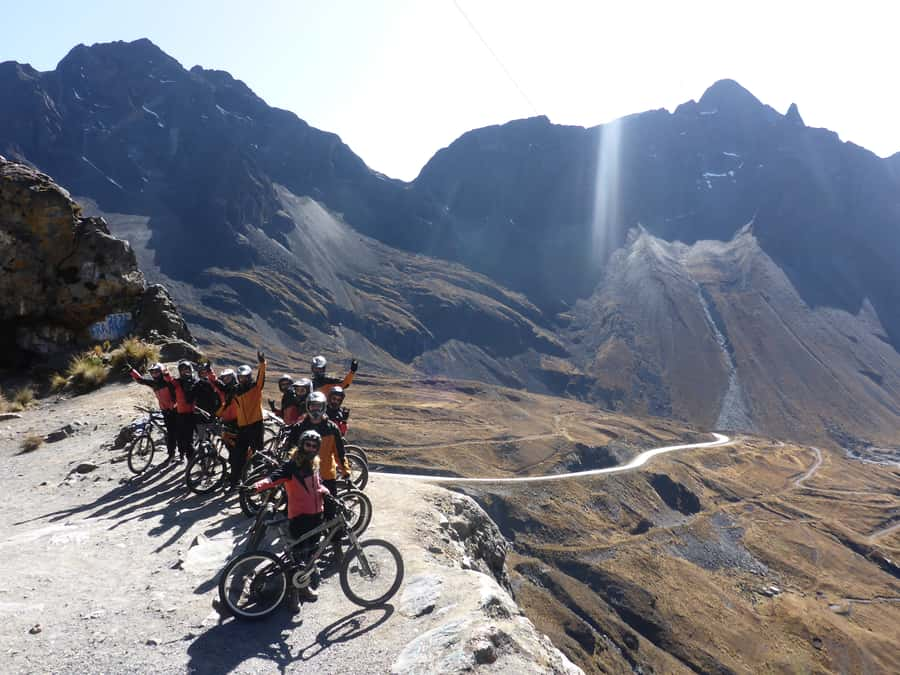
Bolivia’s Death Road tour is a full day of fast descents, misty cliffs, waterfalls, and changing weather. You start among snow-covered peaks at 4,700 meters and finish near Yolosita at about 1,200 meters, hot, muddy, and ready for a shower.
I like the strong safety setup, with full-face helmets, pads, gloves, downhill bikes, hydraulic brakes, mechanics, and first-aid-trained guides. I also like the finish: buffet lunch, showers, and a swimming pool turn a dusty ride into a proper day out. The drawback is the long transport time, including a return journey of about three hours, and the ride still demands confidence on a bike.
Key points to know before you book
- The route covers about 64 kilometers downhill, starting in cold high-altitude air and ending in warm, humid country.
- The real Death Road begins at Chuspipata, after an easier paved descent helps you get used to the bike.
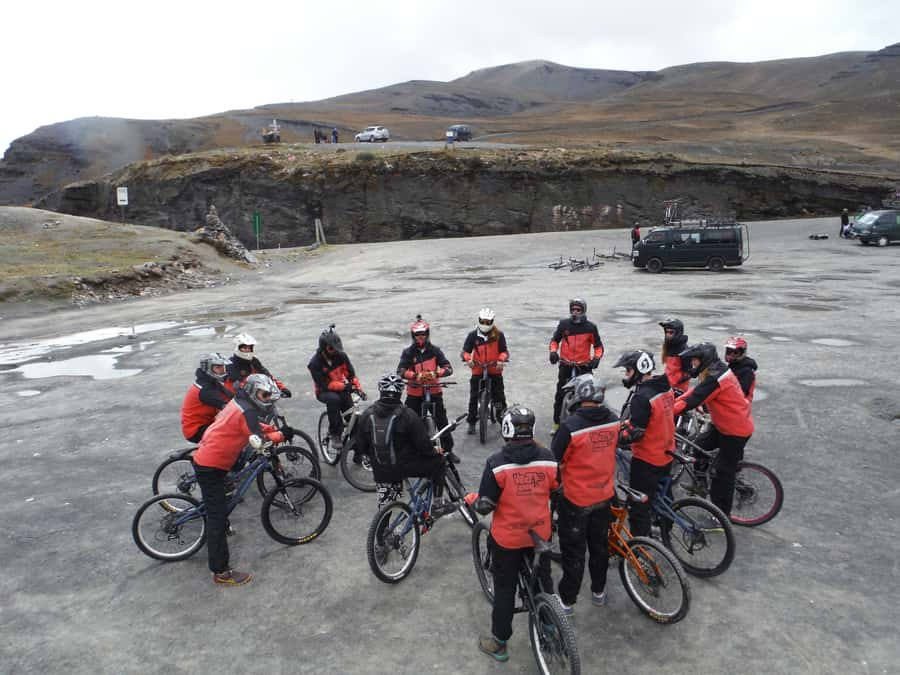
- Safety equipment is supplied, including a full-face helmet, jacket, pants, gloves, elbow pads, knee pads, and a full-suspension bike.
- Guides are central to the experience, with English and Spanish support, bike checks, riding advice, photos, and roadside assistance.
- The finish is unusually comfortable, with a buffet lunch, showers, swimming pool, and time to relax.
- Bring cash for the 50-boliviano Death Road tax, and remember that the optional zipline costs extra.
From La Paz to the high pass at 4,700 meters
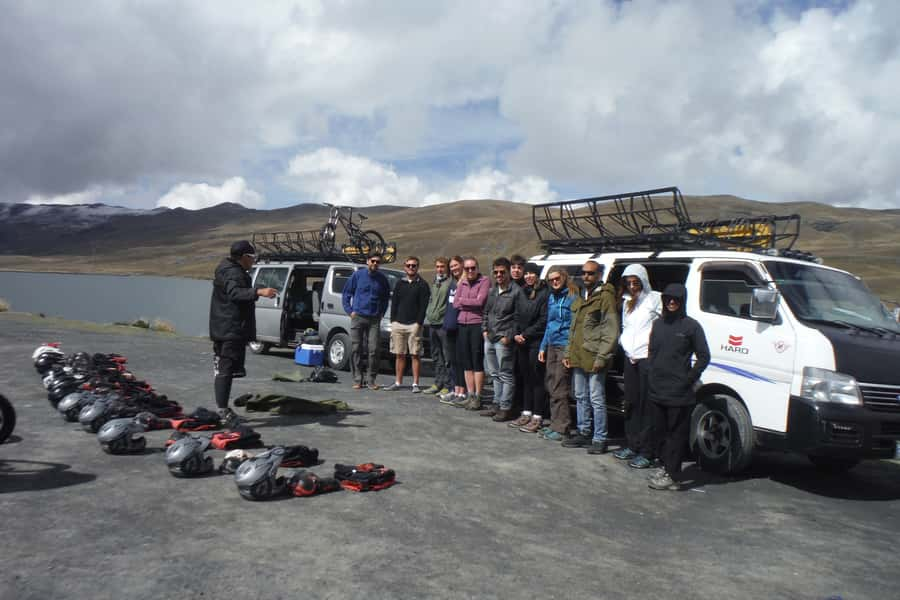
Your day begins at the Vertigo Biking office, where the tour bus should be parked outside. The first ride is a roughly 45-minute transfer to Cristo de la Cumbre, also known as La Cumbre, high above La Paz.
This opening transfer matters. You are leaving the city and climbing into a colder, thinner world of snow-covered peaks. The air can feel sharp at this altitude, so keep your warm clothes within reach rather than burying them in your bag.
At the starting point, expect about 30 minutes of safety instructions and bike preparation. The guides check the equipment, explain how the ride works, and give you basic advice before you set off. Guides named in past outings include Victor, Freddy, Javier, Eddy, Chris, and Maury, though the exact team depends on the date.
The staff also takes time to check the bikes during the day. That is useful here because the route changes quickly, and you want the brakes and suspension working properly before the rougher section begins.
More Death Road rides from Bolivia:
- La Paz: Mountain Bike Down the World’s Most Dangerous Road
★ 4.9 · 386 reviews - La Paz | Death by Bike Route | Lunch
★ 3.4 · 7 reviews - World’s Most Dangerous Road “Private” Mountain Biking Trip
★ 5.0 · 7 reviews
The paved opening gives you time to settle in
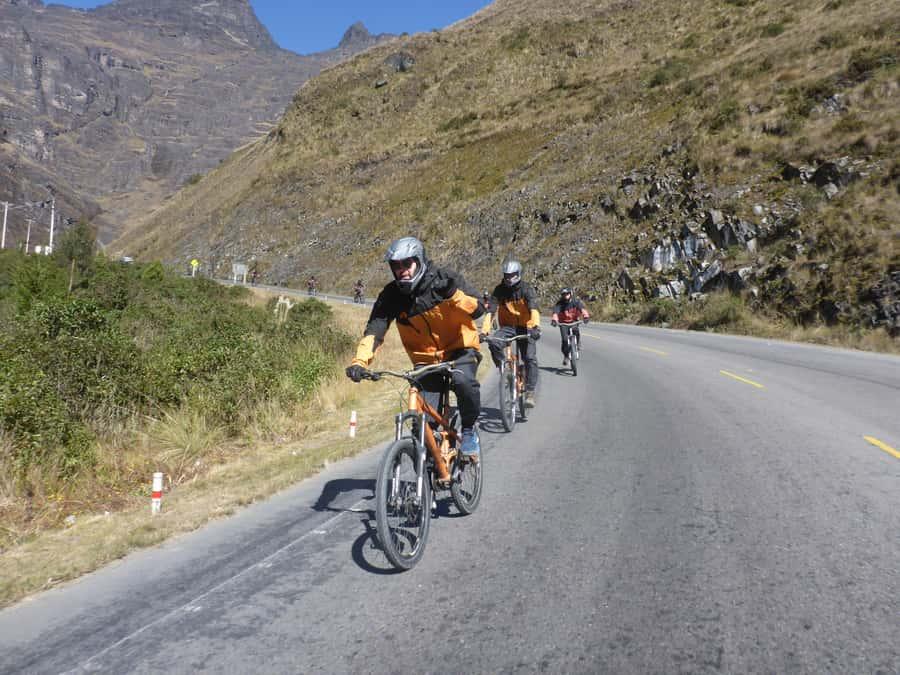
The first biking section follows a paved road for about an hour. It is not the famous rough track yet, and that is a good thing. You can get used to the mountain bike, test the brakes, and find a comfortable position before the more demanding riding begins.
The road passes small villages and opens to broad mountain views. The guides make several stops for photos, bike checks, and further instructions. If you are nervous, this part gives you time to settle down. If you are an experienced downhill rider, it may feel like a warm-up rather than the main event.
The tour uses full-suspension downhill bikes with hydraulic disc brakes. The bikes may not look brand new or high-tech, but the important points are that the brakes and suspension work and that the mechanics are available to help. You should still listen closely during the safety talk and ride within your own ability.
Chuspipata marks the real start of Death Road
After the opening descent, the bus carries you for about 15 minutes to Chuspipata. This is where the actual Death Road section begins.
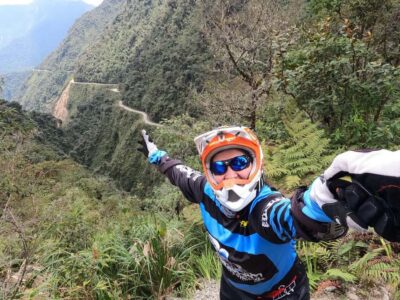
The change in scenery is immediate. The cold, open highlands give way to thicker vegetation, trees, low cloud, and mist. The road becomes dirt, and the ride feels less like a mountain transfer and more like a technical adventure.
You can expect about four hours of riding, stops, photo breaks, and safety instructions on this section. It is not four nonstop hours of pedaling. The guides pause to regroup, inspect bikes, take pictures, and explain what is coming next.
The route is famous for its exposure and rough surface, but the day is not presented as a race. You are guided downhill and can ride at a pace that suits you. Several guide teams have allowed stronger riders to move ahead in suitable sections while still keeping the group supported.
That flexibility helps, but you still need to control your speed. The road is not a place to show off. The useful skill is steady braking, careful line choice, and listening when the guide gives instructions.
Mist, waterfalls, and the road’s changing mood
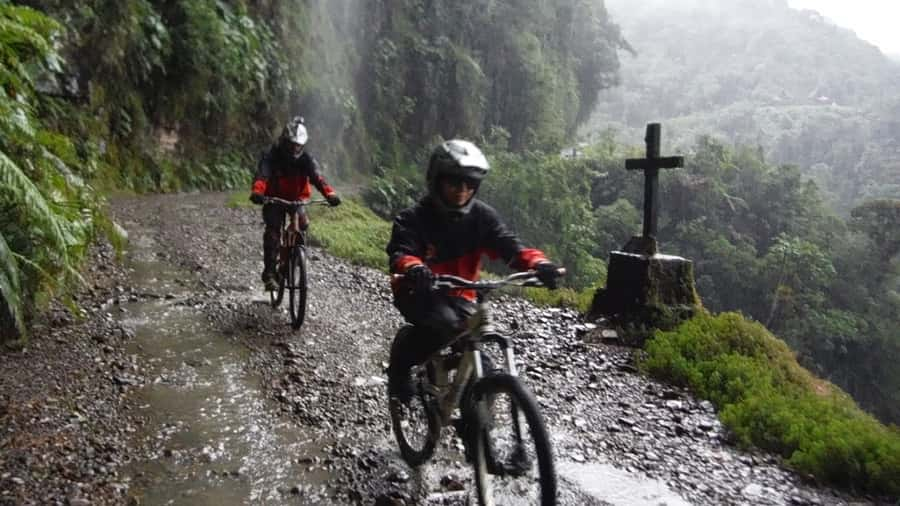
As you lose altitude, the temperature rises. The route can pass through mist and low cloud, then open into warmer conditions. Small waterfalls cross the road, and tiny rivers can leave you wet before you reach the bottom.
This is one of the best parts of the ride because the setting keeps changing. You do not spend the whole day looking at the same type of mountain. The cold start, cloud, trees, water, dirt, and heat create a clear sense of moving from the high Andes toward the edge of the Bolivian Amazon.
You should expect to get dirty. Water, mud, dust, and bike spray are part of the day, not signs that something has gone wrong. Pack a complete change of clothes and keep your phone protected inside your daypack.
The provided clothing includes pants and jackets, along with gloves and protective pads. You should still bring warm layers for the start, sunglasses, sunscreen, insect repellent, and swimwear for the finish.
More bike days around Bolivia:
- From La Paz: 3-Day Biking Tour Death Road & Uyuni Salt Flats
★ 4.7 · 4 reviews
How the guides affect the day
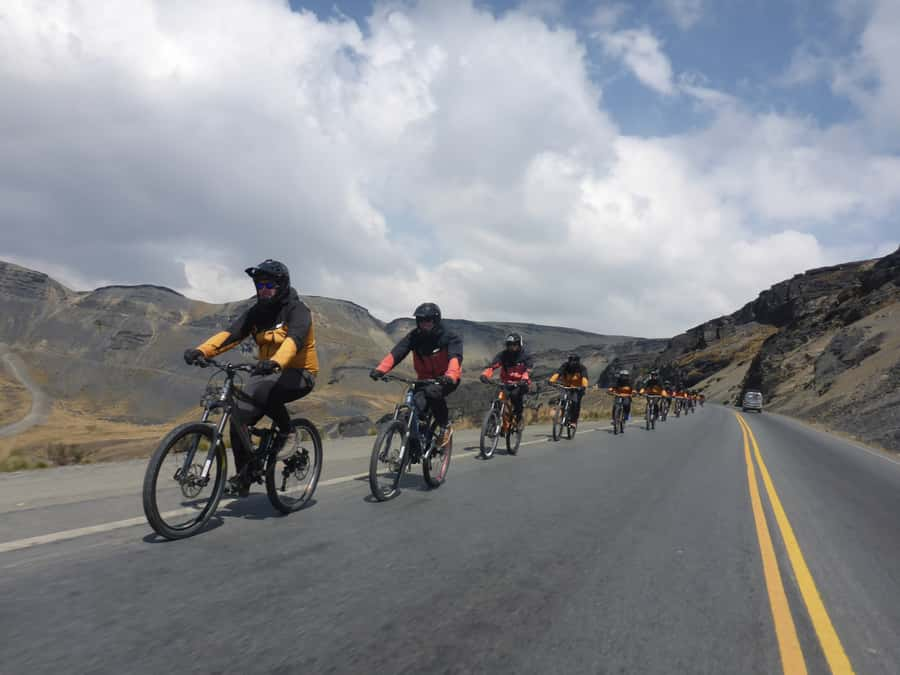
The guides are more than people who point down the road. They check bikes, explain each stage, take photos, help with pacing, and offer support when the ride becomes difficult.
This is especially important if you are fit but not used to downhill biking. One rider found the route challenging and credited guide Freddy with patient support and encouragement. That gives you a fair picture of the experience: the tour can be done by a determined beginner who can ride a bike, but it is not a gentle sightseeing outing.
Other guide teams have been praised for clear English, friendly conversation, and a calm approach to safety. Victor, in particular, has been singled out for fluent English, cultural conversation, and careful attention to the group. The company operates in English and Spanish.
You should tell the guide if you are uncomfortable with the speed or terrain. The best part of the service is that the guides can adjust the experience to different riding levels instead of treating the group like a single racing pack.
The support vehicle and roadside stops
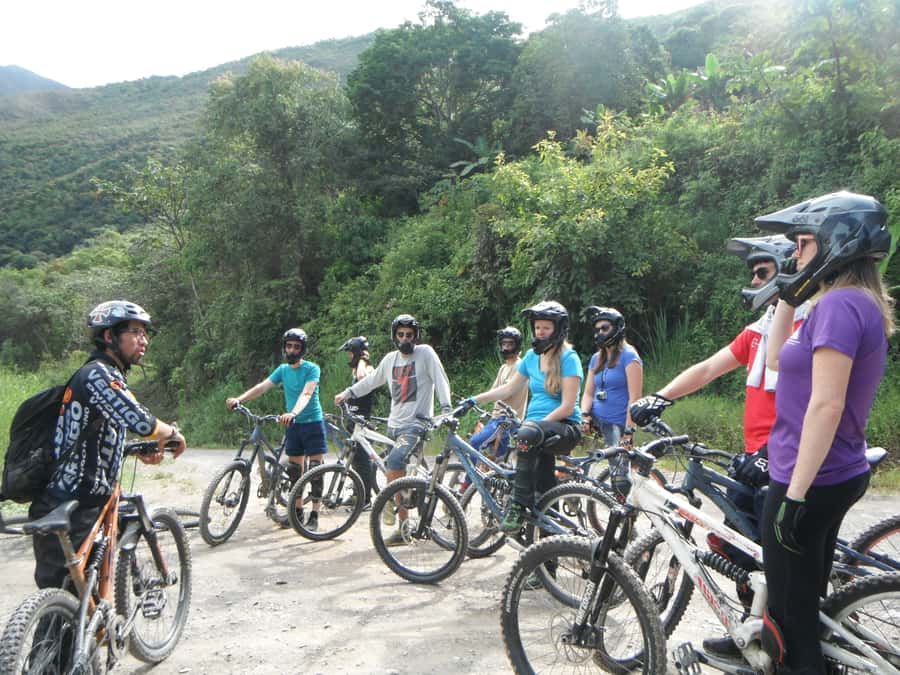
Private transport follows the day’s schedule, moving the group between sections and supporting the ride. The driver is part of the safety picture, too. Freddy, one of the drivers named in past trips, received praise for careful driving.
The tour includes snacks along the road and unlimited water. That is valuable because the route runs from cold high altitude to hot low altitude, and you may not want to carry a large supply on the bike.
The stops also break up the effort. You get time for photographs, a rest, bike checks, and more instructions. The guides upload photos and short videos from the day to Dropbox, which saves you from trying to film every turn yourself.
One practical caution: the transport is functional rather than luxurious. A few riders found the bus or van to be the weakest part of an otherwise strong day. You spend time in it at the start and again after the ride, so anyone sensitive to long road transfers should factor this into the decision.
Yolosita brings heat, lunch, and a pool
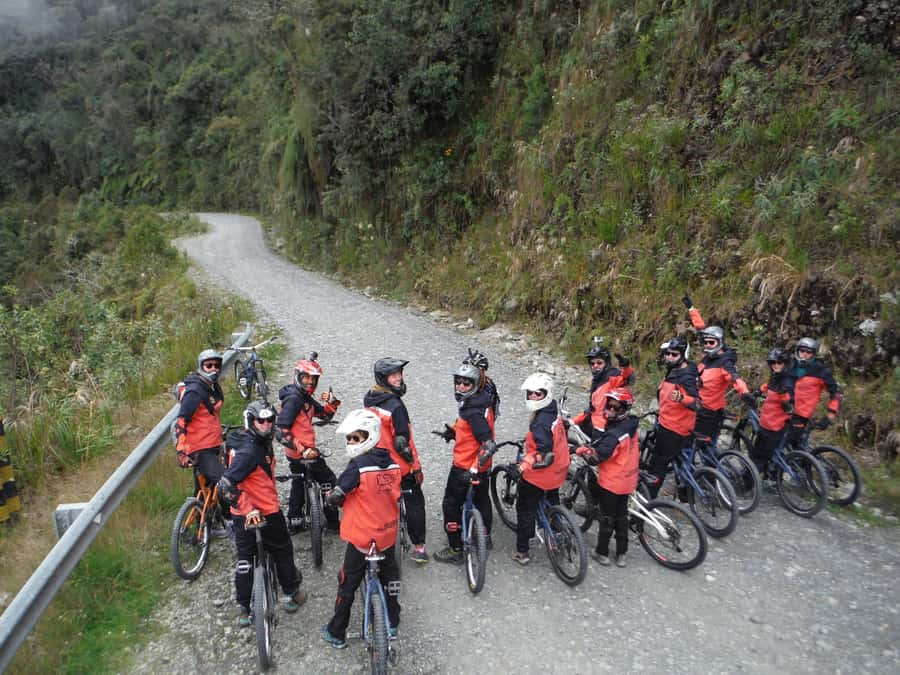
The ride finishes at Yolosita, around 1,200 meters above sea level and near the entrance to the Bolivian Amazon. By now, the cold of La Cumbre should feel like another day. You will likely be hot, wet, dusty, and ready to stop riding.
The group then travels by bus for about 20 minutes to a hotel or resort. The itinerary allows roughly 105 minutes for lunch and resort time. You get a buffet meal, a shower, and access to a swimming pool.
This ending is a major reason the tour feels like a complete day rather than just a difficult ride. You do not have to board the return bus immediately in muddy clothes. You can wash off, eat, cool down, and let your legs recover before the journey back.
The zipline is available as an optional extra if you want another activity, but it is not included in the $129 price. You also need to pay the 50-boliviano Death Road tax separately, so carry cash.
Is $129 good value?
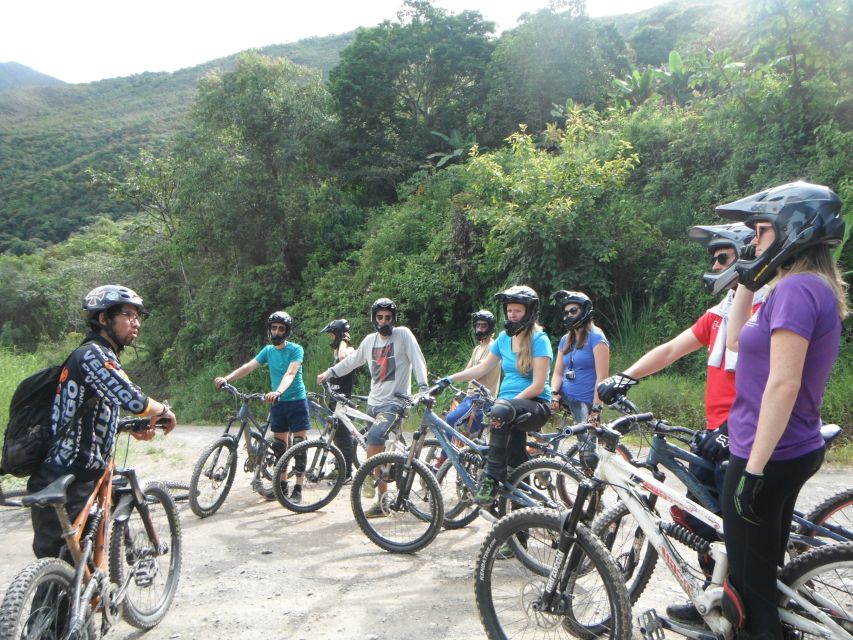
At $129 per person, the tour costs more than a simple bike rental, but that comparison misses most of what you are paying for. The price includes private transport, a full-suspension downhill bike, hydraulic brakes, protective clothing, a full-face helmet, gloves, elbow and knee protection, guides, mechanics, water, snacks, lunch, photos, and the pool stop.
You also get a carefully managed route between two very different climates. Hiring the equipment and arranging transport independently would be difficult, especially if you want a support vehicle and bilingual guidance.
The extra costs are modest but worth knowing before booking. The Death Road tax is 50 bolivianos, and the zipline is optional and paid on the day. If you need a souvenir shirt, do not count on one being included. One rider specifically noted that a shirt would have been a nice extra.
The main value depends on what you want. If you only want a short bike ride, this is too long and too involved. If you want an all-day adventure with safety support and a comfortable finish, the price is easier to justify.
Who should book this ride?
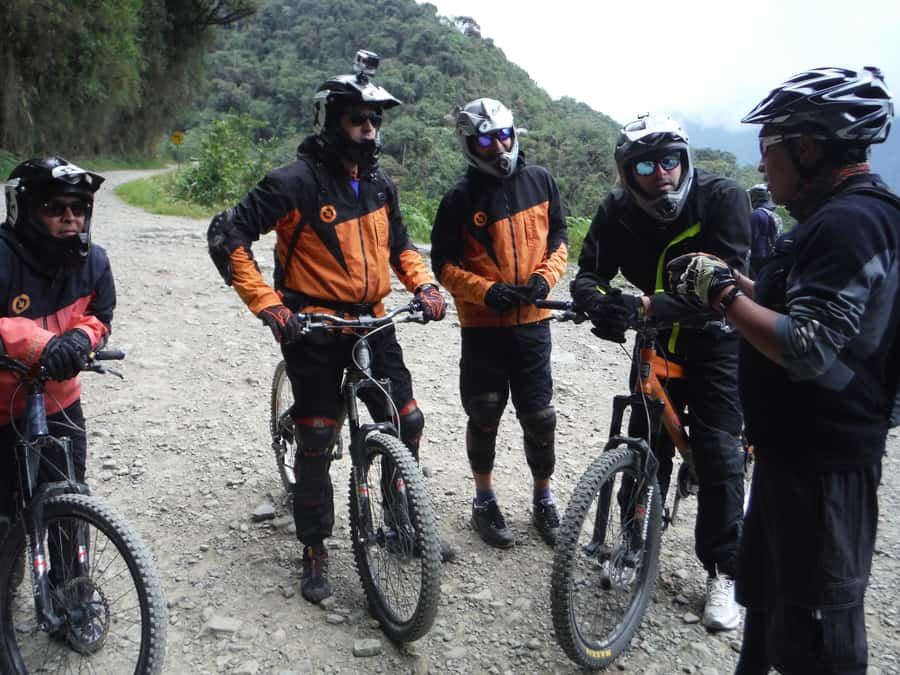
I would recommend it to confident cyclists, active visitors to La Paz, and anyone who wants a physical day with a strong change of scenery. You need to be able to ride a bike and handle a downhill route on dirt.
You do not need to be an expert mountain biker, but you should be willing to learn, follow instructions, and accept that the road can feel challenging. The guide support makes the ride more approachable, but it does not remove the physical and technical demands.
The tour is not suitable for pregnant women, wheelchair users, people with mobility impairments, people who cannot ride a bike, or anyone under 155 centimeters tall. It is also not a good choice if you want a quiet, low-effort day.
The minimum departure is two people. If you are booking for a particular date, check that a group is confirmed before making firm plans.
What to pack for the temperature change
You begin in cold high-altitude conditions and finish in a much warmer climate. Pack with both ends of the day in mind.
Bring:
- Warm clothing for La Cumbre
- Sunglasses and sunscreen
- Insect repellent
- Swimwear
- A full change of clothes
- A small daypack
- Cash for the tax and optional zipline
- Your passport or ID card, with a copy accepted
Wear clothing you do not mind getting dirty. Keep your clean clothes and valuables protected from water. The supplied jacket and pants help, but your own dry clothes will make the finish much more comfortable.
The final call: book it if you want a real adventure
I would book this tour if I wanted one memorable active day from La Paz and felt comfortable riding a bike downhill. The combination of snowy peaks, misty forest, waterfalls, changing temperatures, professional support, and a poolside finish gives the day far more range than its famous name suggests.
I would skip it if I disliked rough roads, long bus transfers, getting wet and dirty, or riding under pressure. For everyone else, the best reason to book is the balance of excitement and support. You get the famous Death Road, but also working equipment, protective gear, trained guides, food, water, photos, and a hot shower waiting at the end.
FAQ
How long is the Death Road biking tour?
It is a one-day experience. The biking route covers about 64 kilometers, and the full schedule includes transfers from La Paz and back.
Where does the tour start?
You meet at the Vertigo Biking office in La Paz. The tour bus should be parked outside the office.
Where does the bike ride begin?
The first ride begins at Cristo de la Cumbre, at La Cumbre, around 4,700 meters above sea level.
Where does the ride finish?
The ride finishes at Yolosita, around 1,200 meters above sea level, near the entrance to the Bolivian Amazon.
Is the whole route on dirt?
No. The first part follows a paved road and helps you get used to the bike. The actual Death Road section begins at Chuspipata and follows a dirt road.
What safety equipment is included?
You receive a full-face helmet, pants, a jacket, elbow and knee pads, mountain bike gloves, and a full-suspension downhill bike with hydraulic disc brakes.
Are food and drinks included?
Yes. The tour includes unlimited water, snacks during the ride, and a buffet lunch at the hotel or resort.
Can I use a swimming pool after the ride?
Yes. The finish includes time at a hotel or resort with showers and a swimming pool.
Is the Death Road tax included?
No. The Death Road tax costs 50 bolivianos and is paid separately. The optional zipline is also not included.
What languages do the guides speak?
The guides speak English and Spanish.
Can I cancel the booking?
You can cancel up to 24 hours in advance for a full refund. The tour also offers a reserve-now, pay-later option.
Does the tour operate with one person?
The tour leaves with a minimum of two people. Check that a group is confirmed for your chosen date.
Just added around Bolivia
- Uyuni: Classic Uyuni Salt Flats Tour + Hotel Pickup★ 3.0 · 4 reviews
- Uyuni tour express from Sucre by bus (round trip)★ 4.2 · 4 reviews
- Uyuni: Salar de Uyuni Traditional Tour+Sunset Tour★ 4.8 · 3 reviews
- UYUNI SALT FLAT: SUNRISE & STARLIGHT EXPERIENCE★ 3.1 · 3 reviews
- UYUNI SALT FLAT: SUNSET & STARLIGHT EXPERIENCE★ 5.0 · 3 reviews
- Uyuni: 3-Days Salt Flats and Desert Adventure Tour with Food★ 3.8 · 4 reviews
- Uyuni: Full-day tour, Salt flats and Sunset experience★ 4.8 · 5 reviews
- Uyuni: Salar de Uyuni and San Pedro de Atacama 3-Day Tour★ 4.2 · 4 reviews
Death Road Bike Tours, compared.
Mountain Bike Down the World’s Most Dangerous Road
Read our review →
World’s Most Dangerous Road “Private” Mountain Biking Trip
Read our review →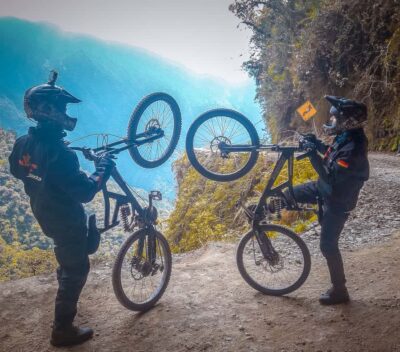
Browse the lists this tour appears in