

Reviewed · LA PAZ TOURS
Evening Foodie Tour of La Paz
La Paz is best understood one bite at a time. This three-hour evening tour takes you from market stalls and street vendors to local restaurants, pairing each taste with stories about Bolivian food, family life, and drinking customs. You may try five main specialties, with some groups receiving six tastes, plus a local beer or cocktail.
I like the mix of places you might not find on your own, and I like the relaxed pace, with little walking and plenty of time to ask questions. Guides such as Daniel, Matt, Max, and Marisol have been praised for making the food easier to understand. The main drawback is simple: there is a lot to eat, and only a few vegetarian choices are available.
Key points to know before booking
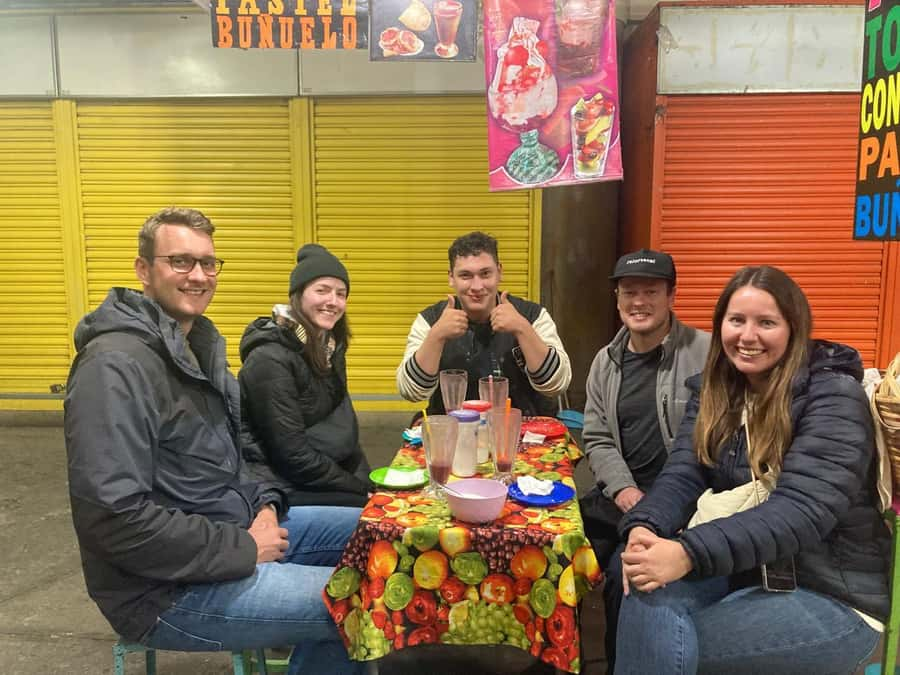
- Five food stops can become six tastes: Expect street food, market food, and restaurant dishes, with enough food to replace dinner.
- Api is a memorable introduction: This traditional Bolivian drink has been a favorite for some visitors, so watch for it during the evening.
- Guides shape the experience: Daniel, Matt, Max, Marisol, and other bilingual guides have brought humor, food knowledge, and local stories to the walk.
- The meeting point is easy to spot: Meet at the large doors of San Francisco Church in San Francisco Square, looking for the guide in a red cap.
- Vegetarian choice is limited: Tell the operator about dietary restrictions when booking, but do not expect a fully vegetarian menu.
- Bring a jacket and appetite: The tour starts at 18:25, includes outdoor walking, and ends with enough food to leave you very full.
Why this La Paz food tour works
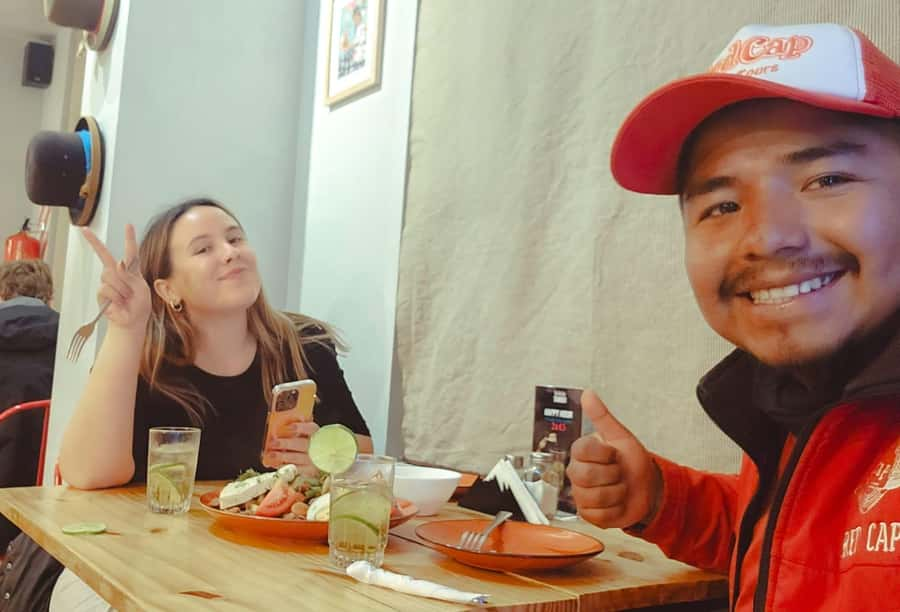
This is not a polished restaurant crawl built around famous dishes. It is a practical introduction to how people in La Paz eat: at markets, from small street vendors, and in modest local restaurants.
That matters because Bolivian food can be hard to decode when you first arrive. Menus may not explain much, and the most interesting food often appears at places that look ordinary from the outside. With a guide beside you, you can try unfamiliar dishes without spending your evening guessing what to order.
I like the way the tour connects food to daily life. The guide explains where ingredients come from, how dishes fit into family routines, and why eating and drinking can be social acts rather than quick fuel. You also pass markets, monuments, and historic sights along the way, so the evening gives you a useful first look at central La Paz.
The format is especially helpful on your first night in the city. You can learn which foods appeal to you, ask how to order them again, and note a few places for later meals. One person even returned to the same food stops during free time, which tells you how useful the tour can be beyond its three hours.
More food tours in La Paz:
- La Paz: Street Food Walking Tour
★ 3.3 · 6 reviews - La Paz: Cable Car Ride Tour with Food Tasting
★ 4.2 · 5 reviews - Uyuni: 3-Days Salt Flats and Desert Adventure Tour with Food
★ 3.8 · 4 reviews
Meeting at San Francisco Square at 18:25
The tour begins at San Francisco Square, at the large doors of San Francisco Church. Look for a guide wearing a red cap.
Pay attention to the exact meeting point. The map information may point to a church office door, but the group meets at the church entrance itself. That small distinction can save you a rushed search around the square.
The start time is listed as 18:25. Since the tour runs for three hours, you finish around 21:25, though the exact ending can vary with the group and the stops. You arrange your own way to the meeting point and your own taxi home. Carry some cash for extra drinks, tips, and the ride back.
A jacket is sensible. You are moving between indoor and outdoor settings after dark, and La Paz evenings can feel cool. Comfortable shoes are enough, since the walking is limited and the pace is described as easy.
First tastes: markets and street vendors
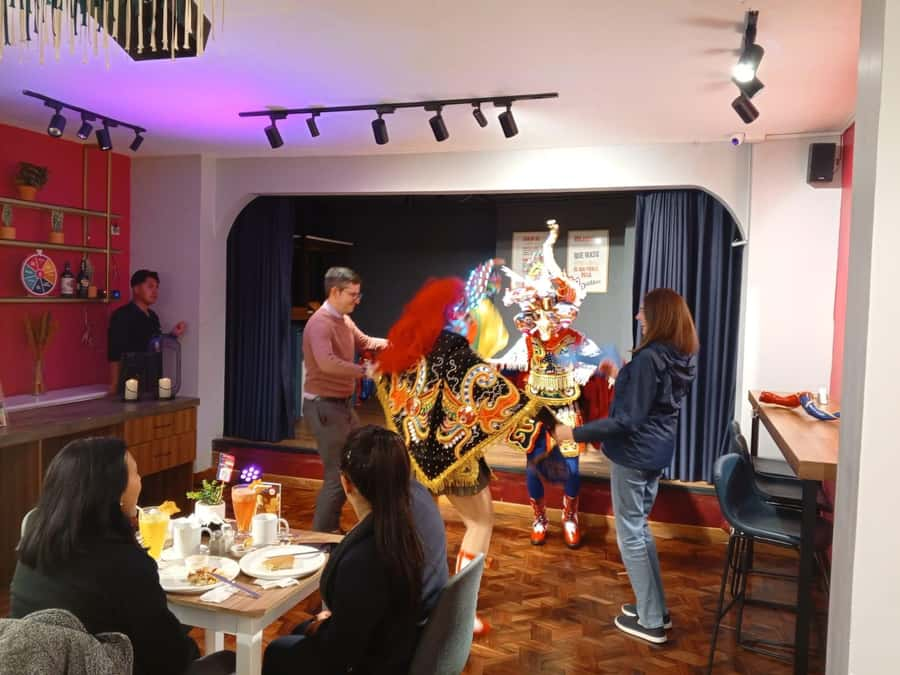
The early part of the evening usually focuses on market food and street stalls. This is where the tour earns its keep for anyone who would hesitate to order from an unfamiliar counter without help.
You might stop at several small vendors before moving into restaurants. The point is not just to taste a snack, but to see how food is bought and eaten in everyday La Paz. Your guide can explain the ingredients, preparation, and local customs while you try each item.
The food selection is designed to give you a broad introduction rather than one long meal. Expect hearty, filling flavors, with several tastes arriving close together. Pace yourself. More than one person finished the night unable to manage the last servings because the earlier stops had already added up.
Food safety is also part of the setup. The restaurants used for the tour have been checked for cleanliness and proper food handling. That does not turn every stop into a formal dining room, but it gives you a sensible framework for trying local food with more confidence.
The street food portion is one of the strongest reasons to book. You may walk past these stalls on your own without knowing what to order or how busy a place should be before you trust it. Here, you have a guide to explain what is being served and how it fits into local eating habits.
Market dishes and the story behind them
The food is only half of the lesson. The guide also explains the people and ingredients behind each taste.
That human context makes the evening more useful than a simple list of dishes. You learn how food brings families together, how the day slows down around a meal, and how drinks can support conversation and community. The discussion of Bolivian drinking customs has been a particular highlight, especially for anyone interested in the social side of eating.
Api is one taste to watch for. It is a local drink, and it has become a favorite part of the evening for some participants. Even if you know little about Bolivian cuisine before arriving, trying a drink such as Api helps show that the country’s food traditions go beyond the heavy main dishes many first-time visitors notice.
The guide also gives you a chance to ask practical questions. You can find out what to seek at a market, which foods are common in La Paz, and how local meals differ from what you might find in other parts of Bolivia. The exact dishes can vary, so do not book expecting a fixed menu with every item listed in advance.
A few more La Paz days to weigh up
- From La Paz: Trip to Uyuni Salt Flats with Wine at Sunset
★ 4.4 · 4 reviews - 3-Day Uyuni Salt Flat Tour with Sunset and Red Lagoons
★ 5.0 · 83 reviews - Uyuni: Sunset and Starlights Tour
★ 4.6 · 79 reviews - Full day Salar- Sunset and Stars; Magic Salar
★ 5.0 · 38 reviews
Finishing in local restaurants
The latter part of the tour moves into local restaurants. These stops give you a change of setting and a chance to try more substantial Bolivian cooking after the smaller market and street tastes.
The restaurant portion can feel more comfortable if you are new to local food. You have already learned some basic context, and the guide can explain how the dishes relate to what you tried earlier. Several stops can make the evening feel like a moving dinner rather than a single restaurant meal.
There is one useful caution here: not every stop will appeal equally to every person. One group found a tiny, nearly empty restaurant less successful than the street stalls, while the guide still made an effort to find a particular local beer for them. That is a fair picture of the tour. It is an exploration of ordinary places, not a carefully staged gourmet evening.
The amount of food can also become excessive. The tour is advertised around five specialty dishes, but some evenings include six different tastes or several extra components. Treat the portions as samples. You do not need to finish everything at every stop, and saving room for the final restaurant is wise.
Drinks, altitude, and pacing
The tour includes the food and drinks specified in the experience, with a local cocktail or local beer included as part of the evening. Extra drinks cost more, so bring cash if you want to continue ordering.
Take the alcohol seriously at La Paz’s high altitude. One past participant found that several drinks did not mix well with the elevation. You can ask for a nonalcoholic option or simply pace yourself. The food is the main reason to come, and you do not need to treat every included drink as a challenge.
The drinking discussion itself adds value. The guide explains how drinks fit into social life, and that makes the beverage stops more than a quick toast. Still, if you are sensitive to altitude, tired from arriving in Bolivia, or not interested in alcohol, keep your evening moderate.
The guides make the difference
The strongest feature of this tour is the guide. The assigned person can change, but Daniel, Matt, Max, Marisol, Denise, and others have led the experience.
Daniel has been especially good at combining food explanations with stories about La Paz and Bolivia. Matt has been praised for clear English, humor, and attention to different needs within the group. Max has brought an easy pace and warm conversation, while Marisol has helped explain what to look for in markets and local restaurants.
You should expect a live guide in Spanish or English. The best guides do more than identify each dish. They explain why it is eaten, how people talk about it, and what it says about life in the city. That is the difference between a food tasting and a useful cultural walk.
The social side is also worth noting. The tour suits solo visitors because the stops create natural conversation, and the guides have been attentive to making people feel comfortable. It can also work well for couples and small groups who want a shared evening without committing to a formal cooking class.
Price, value, and who should book
At $32 per person, the tour is good value if you treat it as both dinner and a guided introduction to La Paz. You receive five specialty dishes, possibly six tastes, included drinks, a bilingual guide, and access to food stops you might not locate alone.
The value is less obvious if you judge it only by the cost of the food. Some of the stops are street vendors, and you could spend less by finding a few snacks yourself. You are paying for the selection, the explanations, the safety check on the restaurant stops, and the confidence to try unfamiliar food.
Book it if you want to understand Bolivian food culture, enjoy tasting many small portions, or prefer local places over a single tourist restaurant. It is also a smart choice early in your stay, since you can return to the foods and places you like best.
Think twice if you need a fully vegetarian menu, dislike heavy food, or want a quiet sit-down dinner. The tour includes only a few vegetarian options, the portions can be large, and one stop may suit you less than another.
Free cancellation is available up to 24 hours before the activity, and you can reserve while paying later. Bring your passport or ID, cash, a jacket, and comfortable shoes. Most important, eat lightly beforehand.
Should you book the Evening Foodie Tour of La Paz?
I would book this tour if you want a friendly, practical introduction to La Paz through food rather than a formal history walk. The street and market stops are the main draw, and a good guide can turn unfamiliar dishes into a clear picture of Bolivian life.
Come hungry, but pace yourself. Tell the operator about dietary restrictions, keep alcohol moderate at altitude, and expect a few simple venues rather than a polished culinary production. For $32, it is a strong first evening in La Paz, especially if you want to leave with both new foods to seek out and a better sense of how people eat together.
FAQ
How long does the Evening Foodie Tour of La Paz last?
The tour lasts three hours. The listed start time is 18:25, so it generally finishes around 21:25.
Where does the tour meet?
Meet at San Francisco Square, at the large doors of San Francisco Church. Look for the guide wearing a red cap. The map details may show the church office, but the group meets at the church doors.
What food is included?
The tour includes five specialty dishes, along with the possibility of additional tastes. Food may come from street vendors, market vendors, and local restaurants.
Are drinks included?
The specified food and drinks are included. The tour features a local cocktail or local beer, and extra drinks are not included.
Are vegetarian options available?
Only a few vegetarian options are available. Tell the operator about all dietary restrictions when you book.
What languages does the guide speak?
The tour is offered with a live guide in Spanish or English.
What should I bring?
Bring your passport or ID card, comfortable shoes, a jacket, and cash. Cash is useful for extra drinks, tips, and the taxi home.
Can I cancel the tour for a refund?
You can cancel up to 24 hours in advance for a full refund. You can also reserve now and pay later.
Just added around La Paz
- Private Tour of Tiwanaku Ruins from La Paz★ 5.0 · 3 reviews
- Private Tiwanaku and Titicaca Day Trip from La Paz★ 4.8 · 3 reviews
- La Paz: Uyuni tour ending in Atacama Chile by bus.★ 3.9 · 3 reviews
- From La Paz: Lake Titicaca and Copacabana Private Tour★ 5.0 · 5 reviews
- LA PAZ: GUIDED TOUR CHACALTAYA + VALLEY OF THE MOON★ 3.6 · 3 reviews
- La Paz: The Feminist Tour★ 5.0 · 3 reviews
- Titicaca Lake: Highlights Tour from La Paz by Bus★ 4.0 · 3 reviews
- From La Paz: Trip to Uyuni Salt Flats with Wine at Sunset★ 4.4 · 4 reviews
La Paz Tours, compared.
La Paz and El Alto: Cable Car Rides and Walking Tour
Read our review →
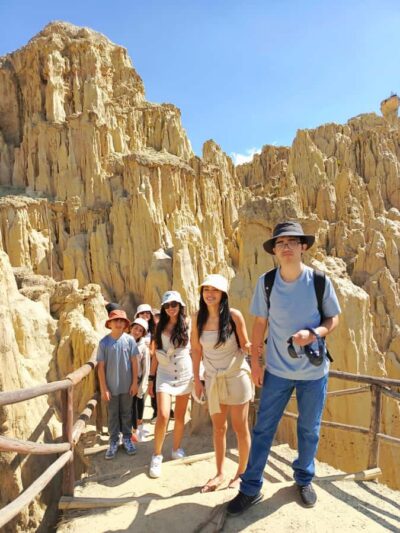
Private City Tour with Cable Car & Moon Valley Visit
Read our review →
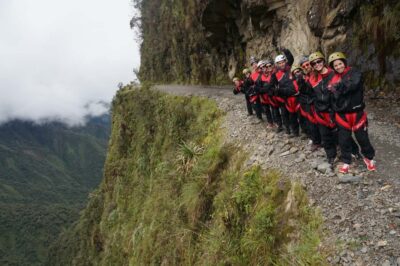
Mountain Bike Down the World’s Most Dangerous Road
Read our review →

Uyuni Salt Flat Tour & Overnight Roundtrip Bus
Read our review →
Browse the lists this tour appears in