
Reviewed · UYUNI TO ATACAMA CROSSINGS
San Pedro de Atacama: 4-Day Uyuni Salt Flats Tour
From the driest desert on Earth to the world’s largest salt flat, this four-day crossing into Bolivia packs a remarkable amount into one trip. You rise from San Pedro de Atacama to nearly 5,000 meters, pass flamingo-filled lagoons and steaming geysers, then reach the white expanse of Salar de Uyuni.
I like the small group of up to six, which makes a long ride in a Mercedes Benz van more manageable. I also like the range of stops: hot springs, strange volcanic rock, ancient cacti, salt hotels, and the eerie Train Cemetery. The main concern is the pace. Long drives, cold nights, rough roads, high altitude, and basic accommodation make this a demanding trip, not a soft-edged sightseeing holiday.
Key points to know before booking
- The altitude arrives fast: You climb about 2,000 meters in roughly 45 minutes after leaving San Pedro.
- Day one is the toughest: Laguna Verde, the Salvador Dalí Desert, hot springs, geysers, and Laguna Colorada all come before your overnight stay in Quetena Chico.
- The salt flats are the main event: Incahuasi Island, sunrise views, perspective photos, Ojos del Salar, and the vast Salar de Uyuni fill day three.
- Bring extra cash: National park entrances are not included, and about 300 Bolivianos is suggested for fees and purchases.
- Pack for several climates: You need thermal clothing, swimwear, sandals, hiking shoes, sun protection, and plenty of water.
- This suits hardy sightseers: Pregnant people, wheelchair users, and anyone with back problems should not book this trip.
From San Pedro to Bolivia in one sharp climb
Your morning begins at White & Green Travel in San Pedro de Atacama. Look for the agency sign over the entrance, and arrive ready for an early start. The van heads uphill quickly, climbing about 2,000 meters in 45 minutes before you cross the Chilean and Bolivian borders.
That rapid change is important. San Pedro sits at high altitude already, but the Bolivian route takes you much higher. Have breakfast before or during the border crossing, drink water, and avoid treating the first morning as a casual photo stop. The itinerary includes an oxygen bottle, but that is an emergency aid, not a substitute for pacing yourself.
The tour is conducted in Spanish. A group capped at six people is a real advantage here. You have less crowding at the van, a better chance of hearing explanations, and a more manageable group at border formalities and meal stops. Still, the small group does not shorten the roads or soften the altitude.
More Uyuni to Atacama crossings:
- Uyuni: Uyuni Salt Flats and San Pedro de Atacama 3-Day Tour
★ 4.3 · 122 reviews - Uyuni: 3-Day Salt Flats Tour ending in San Pedro de Atacama
★ 4.7 · 62 reviews - San Pedro de Atacama: 3 D. Tour Uyuni and Back to San Pedro
★ 4.8 · 61 reviews
Laguna Blanca and Laguna Verde set the tone
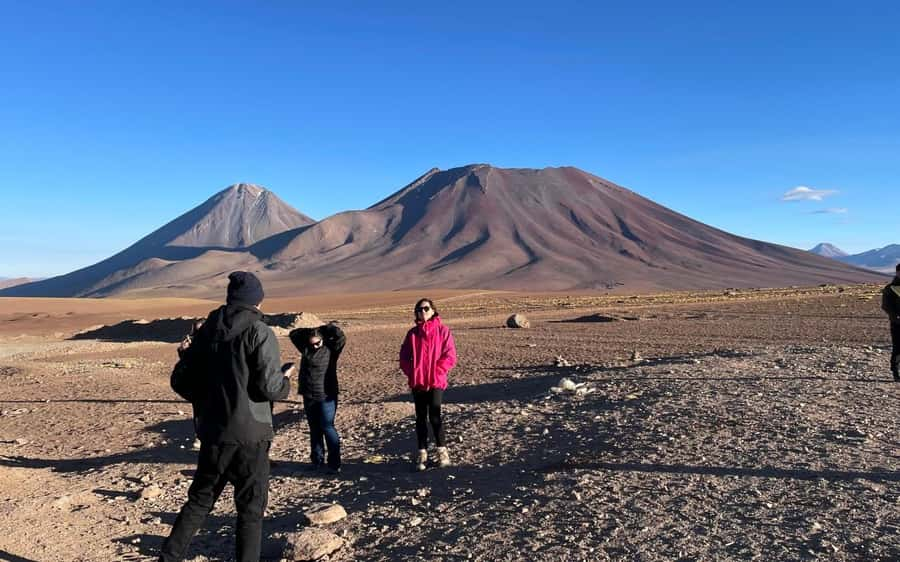
The first major stops are Laguna Blanca and Laguna Verde, two high-altitude lakes surrounded by volcanoes considered sacred in the region. Their colors come from different mineral and natural conditions, giving you an immediate sense that this is not an ordinary desert outing.
Laguna Blanca is pale and reflective, while Laguna Verde is known for its green tones. The color can vary with light and weather, so do not expect a fixed postcard shade at every moment. The setting matters as much as the water: broad open ground, severe mountain forms, and almost no sign of towns or roads.
You will want your camera ready, but take a moment to look away from the screen. At this altitude, even short walks can feel harder than expected. Follow the guide’s pace, keep warm, and do not spend all your energy chasing the perfect angle.
Salvador Dalí Desert and Polques Hot Springs
The Salvador Dalí Desert brings a different mood. Wind-shaped rock formations sit in a stark open setting, with shapes that can remind you of surrealist paintings. The name refers to the strange visual effect, not to any direct connection with the artist.
This is one of the better photo stops on the route because the setting needs little decoration. The rock, sky, and empty ground do the work. Your visit may be brief, since day one contains several major stops, but the unusual formations make it worth putting the camera down for a few seconds and taking in the scale.
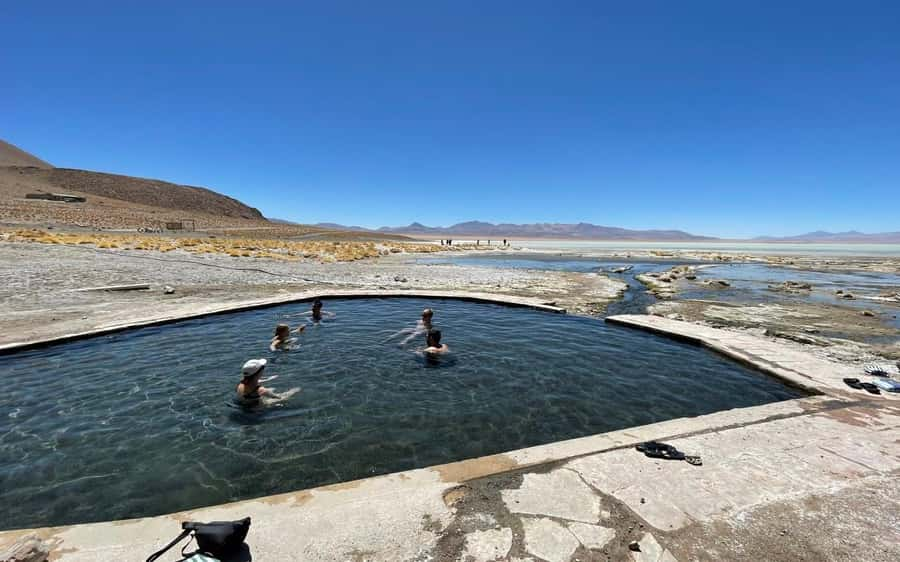
At Polques Hot Springs, you can soak in warm water while looking toward the surrounding high country. Flamingos may be visible nearby, creating one of the trip’s most unusual combinations: warm water, cold air, and pink birds in a severe mountain setting.
Bring a swimsuit, towel, and sandals where you can reach them without unpacking your whole bag. The bathing stop is a welcome break after the morning ride, but remember that changing facilities and comfort levels are not presented as a major feature of the tour. Keep your belongings organized and expect a practical rather than polished stop.
Geysers at nearly 5,000 meters
The Geyser del Sol de la Mañana is one of the day’s most dramatic stops. At nearly 5,000 meters above sea level, fumaroles and eruptions push through the ground, producing steam, gases, and strong volcanic smells.
You may see bubbling mud and vapor rising from several openings. The ground around geothermal areas can be uneven, so hiking shoes are useful. Stay with the marked route and follow the guide’s instructions. This is not a place for wandering close to the vents for a better photograph.
The altitude adds to the intensity. You are not simply looking at a geyser from a comfortable lowland viewpoint. Cold air, thin air, and volcanic steam all arrive together. If you develop a headache, dizziness, or unusual shortness of breath, tell the guide rather than trying to push through for the next stop.
A few more Uyuni days to weigh up
- From La Paz to Atacama: Uyuni Salt Flats 4-Day Tour
★ 3.9 · 31 reviews - From La Paz: 4-Day Trip to San Pedro de Atacama w/Salt Flats
★ 4.2 · 109 reviews
Laguna Colorada and a night in Quetena Chico
The first day finishes at Laguna Colorada inside the Eduardo Abaroa Andean Fauna National Reserve. The lake is known for red and rust-colored water, with Andean flamingos feeding around its edges.
The color comes from mineral content and microscopic organisms, while the flamingos provide movement in an otherwise spare setting. Bring sunglasses because the light can be harsh, even when the air feels cold. This is also a good place for a zoom lens if you have one, since you should avoid approaching the birds.
After the lake, you continue to Quetena Chico for dinner and the night. The village is remote, and the accommodation is described as a cozy hostel rather than a luxury hotel. Expect basic facilities and a cold night. Thermal layers, a hat, and dry socks will matter more here than fashionable clothing.
Day one is a full day of sights and driving. You may finish tired, especially if you have arrived from San Pedro after limited sleep. That is part of the tradeoff for seeing so many remote sites in one route.
Valley of Rocks and Laguna Catal on day two
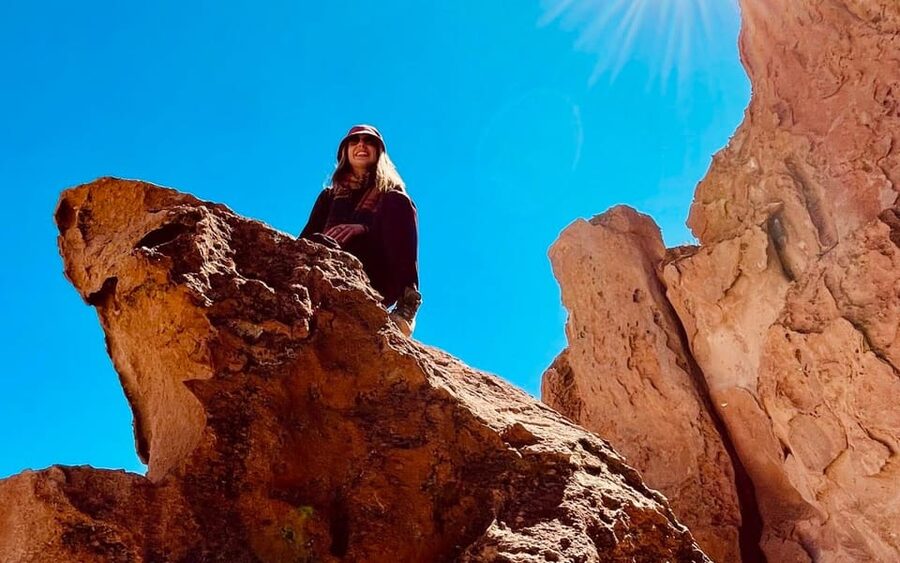
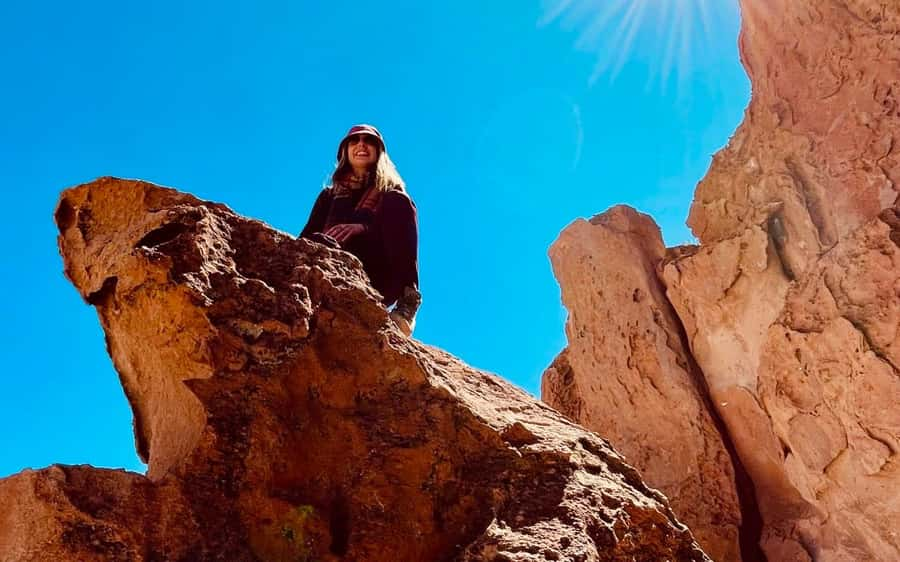
After breakfast, the route turns north toward the Valley of Rocks. Wind and time have shaped the formations into recognizable figures, including Camel Rock and the Stone Tree.
These formations give you a chance to stretch your legs after the previous day’s driving. They also show how varied the Bolivian highlands can be. The trip is not just a straight run toward the salt flats. You get rock formations, volcanic lakes, thermal water, and wildlife before the white salt appears.
At Laguna Catal, you can walk through a gorge and look for native Bolivian plants and animals. The stop is quieter than the famous salt flat viewpoints, which makes it useful for slowing down. You will have time for photographs before lunch, but the exact walking conditions are not specified, so sturdy trekking shoes are the sensible choice.
The second day is still road-heavy. If you prefer long walks, detailed naturalist talks, or plenty of time at each site, the schedule may feel quick. If you want to cover a large area without arranging separate transport, the pace is the reason the tour works.
Sleeping in a salt hotel
The second night is spent at a salt hotel. This is one of the route’s more distinctive details, since salt is not just something you see outside on the flats. It becomes part of the accommodation experience.
Do not confuse the salt hotel with a full-service resort. The attraction is the setting and construction style, while the tour remains a remote overland trip with practical accommodation. Dinner is included, and the stop gives you a place to rest before the early departure for Salar de Uyuni.
Keep a small overnight bag with you. You will be happier if your warm layer, toiletries, passport, water, and camera are easy to reach instead of buried in a large suitcase. Toilet paper is specifically recommended, so pack your own supply.
Sunrise at Incahuasi Island
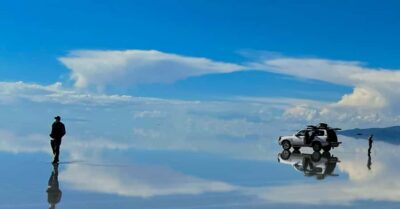
Day three begins early, taking you onto Salar de Uyuni. Covering more than 10,000 square kilometers, the salt flat can feel almost impossible to measure from ground level. The white surface stretches outward with few visual clues, and the horizon can seem to disappear.
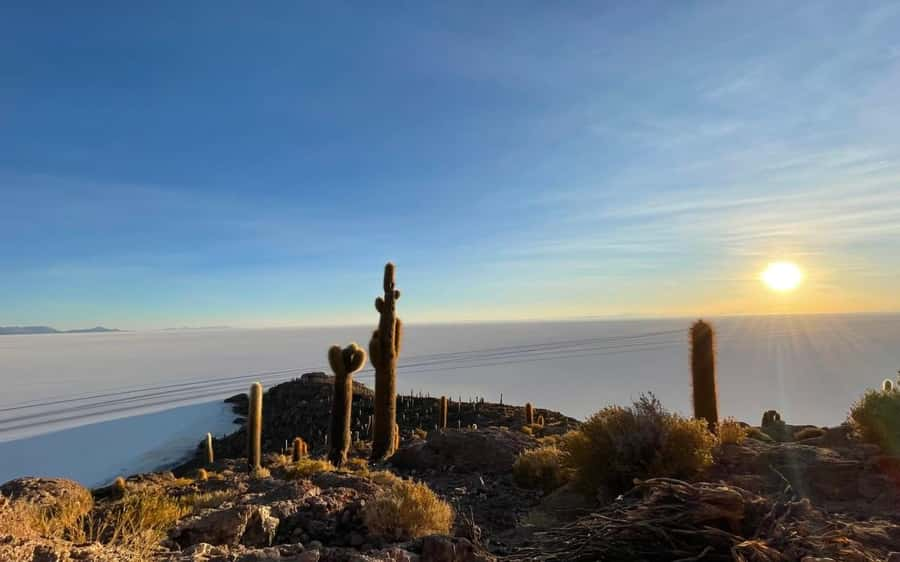
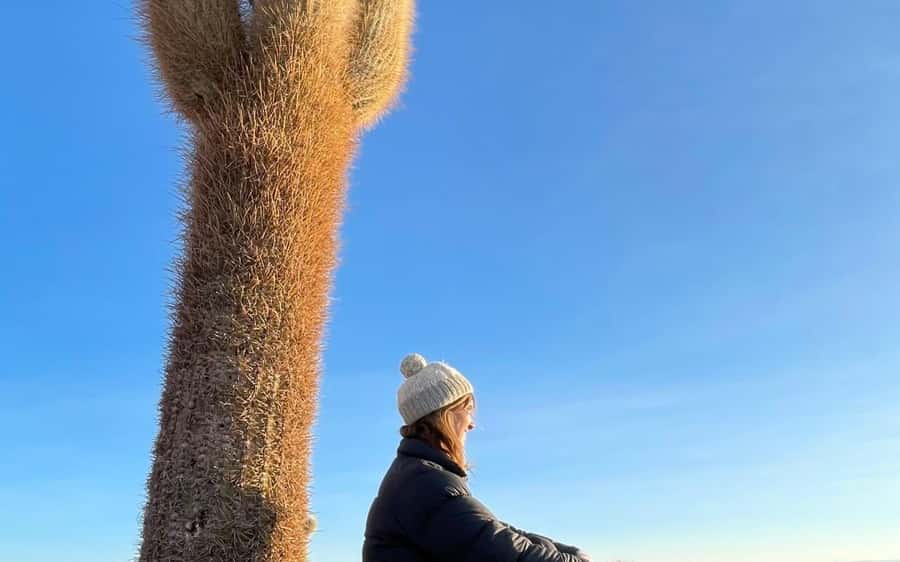
Incahuasi Island is the day’s signature stop. Ancient cacti rise from the island, creating a strong contrast with the flat salt around it. From the island, you get broad views across the salar and a good position for sunrise photographs.
The timing gives you beautiful light, but it also means a cold start. Wear your thermal layers rather than relying on a jacket alone. You will want sunglasses too, since the white salt can be hard on your eyes even when the sky is not especially bright.
The island requires walking, and the trip is not suitable for wheelchair users. People with back problems should also take the rough transport and uneven walking surfaces seriously. The tour is best for people who can manage short walks at high altitude without assistance.
Salt-flat photos, Ojos del Salar, and Colchani
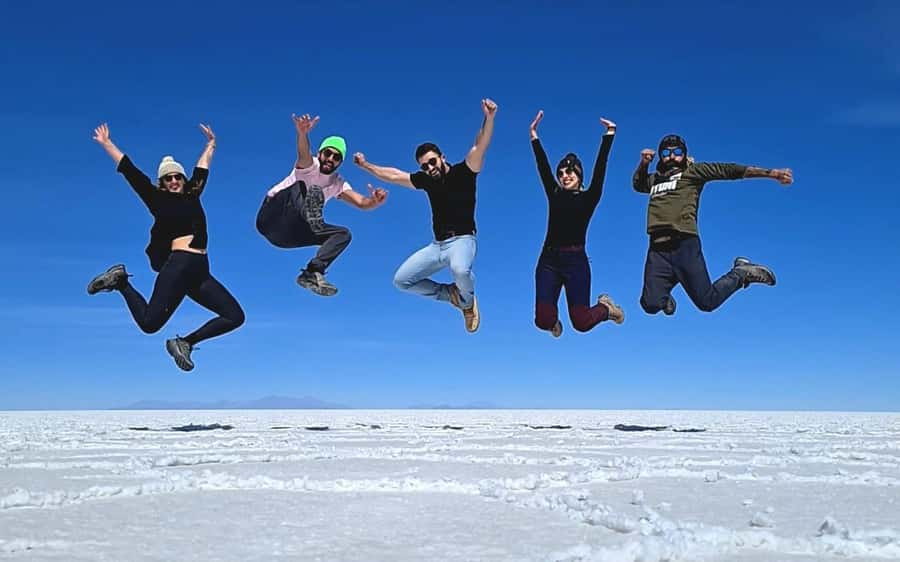
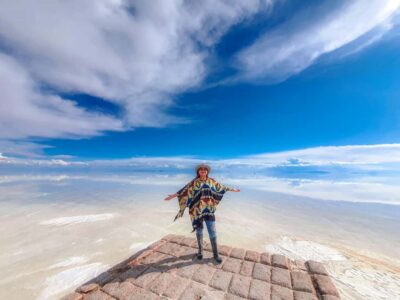
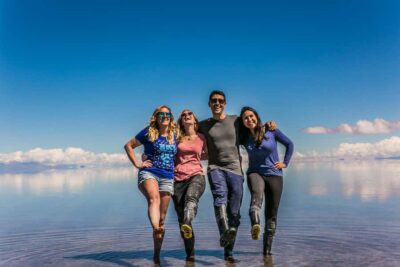
Once you are on the salar, the guide can help you create perspective photographs with props. The flat surface makes people and objects appear much larger or smaller than they really are, giving you the chance to make playful images without special equipment.
Bring a camera with a charged battery and enough storage. The white surface offers few visual distractions, so simple props can work well. A group of six also makes it easier to take turns with photographs than a large coach group would.
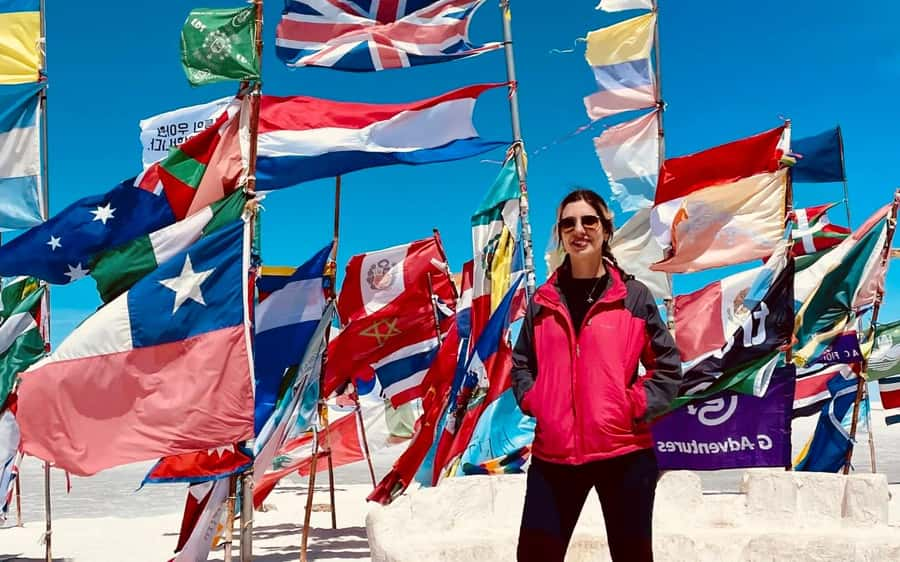
The route includes a salt hotel and the Plaza de las Banderas, where flags add color to the otherwise white setting. You will also visit the Ojos del Salar, points where volcanic activity creates bubbling openings and pools in different hues.
In Colchani, you can look for souvenirs before continuing to Uyuni. This is a practical shopping stop, not a large market experience, and it gives you a chance to buy a small reminder of the salt region. Keep purchases compact because you still have more road time.
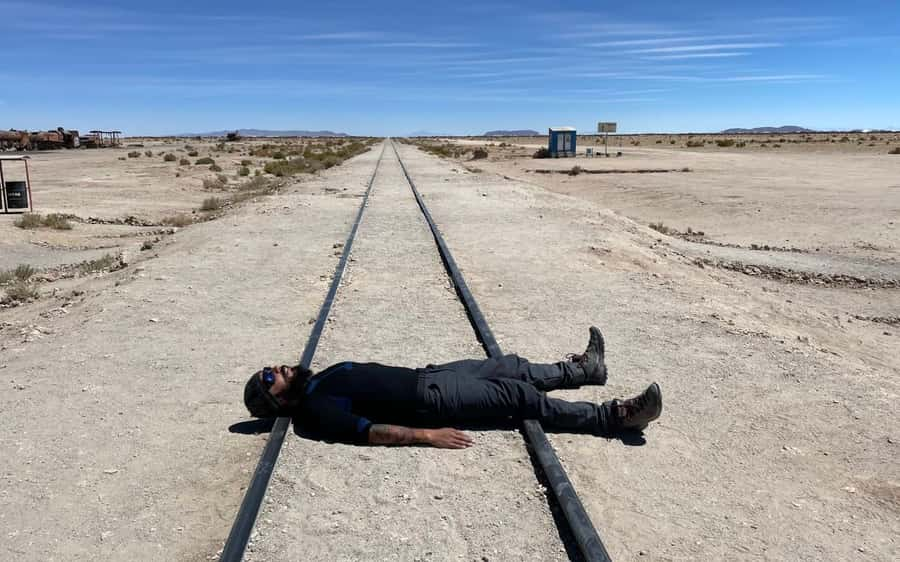
The Train Cemetery near Uyuni provides a sharp contrast to the salt. Rusting locomotives and railway equipment recall Bolivia’s industrial past. The open site is atmospheric and photogenic, though you should watch your footing around old metal and uneven ground.
Food, transport, and the real value of $332
The price is $332 per person. That includes transportation, the driver, accommodation, breakfast, lunch, and dinner, along with an oxygen bottle. For a four-day cross-border route through remote areas, that bundle gives the price solid value, especially if you would otherwise need to arrange vehicles, meals, lodging, border travel, and park visits separately.
The cost is not all-inclusive. Entrance fees to Bolivia’s national parks are extra, and about 300 Bolivianos is suggested for entrances and purchases. Carry the required currency and keep some money available for Colchani or other small expenses.
You should also budget effort, not just cash. The van covers long distances, the road conditions may be rough, and the accommodation is basic. If you are comparing this with a short salt-flat visit from Uyuni, this tour costs more because it links two major destinations and adds the Bolivian reserve, lagoons, geysers, hot springs, and rock formations.
Meals are included, which simplifies the route. Do not assume every meal will match the choice and comfort of a city restaurant. This is a remote trip, and the useful benefit is having food arranged during long days far from towns.
What to pack for four days at altitude
Pack light, but do not pack thin. You need clothing for cold mornings, bright sun, warm water, and long drives.
- Thermal clothing and several warm layers
- Sunglasses and a hat or cap
- Swimsuit, towel, and sandals for Polques Hot Springs
- Hiking or trekking shoes
- Comfortable clothing for the van
- At least 5 liters of drinking water
- Toilet paper
- Passport or ID card
- Camera and spare charging supplies if available
- Passport or ID documents for children, if applicable
Smoking, alcohol, drugs, littering, and alcoholic drinks in the vehicle are not allowed. Make sure your identification documents are current before leaving San Pedro. Border crossings are not the place to discover that a document is expired.
The return to San Pedro on day four
After breakfast, you begin the return journey to San Pedro de Atacama and should reach your hostel around midday. This final morning is mainly about getting back, not adding another major attraction.
That timing is useful if you have onward plans, but leave room for delays. The trip crosses borders and covers remote roads, so I would not schedule a tight connection immediately after the stated drop-off time. The tour information gives an approximate midday arrival, not a guaranteed minute-by-minute transfer.
Who should book this trip?
I would choose this tour if you want the broadest possible introduction to the Atacama to Uyuni route in four days. It suits photographers, scenery-focused sightseers, and people who would rather accept long drives than miss the high-altitude lagoons, geysers, and salt flat.
I would also choose it if you value a small group and included meals over private transport or upscale lodging. The recent feedback available for the experience includes a five-star rating from Julia of Russia, who described it as a very nice experience. That positive note fits the trip’s strongest feature: it gives you an unusually full run of major sights in one compact route.
I would skip it if you need comfortable roads, low altitude, private facilities, or a flexible schedule. The stated overall rating is 3.7 from eight reviews, so the experience is not presented as a perfect fit for everyone. The likely dividing line is simple: enjoy remote overland travel and this can be a memorable bargain; dislike cold, altitude, and basic lodging and the same itinerary can feel relentless.
Cancellation is available up to 24 hours before departure for a full refund, and you can reserve now and pay later. Those terms help if your border plans are still shifting, but the bigger decision is your physical readiness. Prepare well, carry water, and treat the altitude with respect.
FAQ
Where does the tour meet in San Pedro de Atacama?
Meet at White & Green Travel. Look for a sign with the agency name above the entrance.
How long is the tour?
The tour lasts four days, with drop-off at your San Pedro de Atacama hostel around midday on day four.
What language is the tour conducted in?
The live tour guide service is in Spanish.
How large is the group?
The tour is limited to six participants.
Are national park entrance fees included?
No. National park entrance fees in Bolivia are not included. About 300 Bolivianos is suggested for entrances and purchases.
What meals and accommodation are included?
Breakfast, lunch, and dinner are included. Accommodation is also included, with nights in Quetena Chico and at a salt hotel.
Is the tour suitable for people with mobility or health concerns?
The tour is not suitable for pregnant women, people with back problems, or wheelchair users. The route also reaches nearly 5,000 meters, so you should consider the altitude before booking.
Just added around Uyuni
- Uyuni: Classic Uyuni Salt Flats Tour + Hotel Pickup★ 3.0 · 4 reviews
- Uyuni: Salar de Uyuni Traditional Tour+Sunset Tour★ 4.8 · 3 reviews
- UYUNI SALT FLAT: SUNRISE & STARLIGHT EXPERIENCE★ 3.1 · 3 reviews
- UYUNI SALT FLAT: SUNSET & STARLIGHT EXPERIENCE★ 5.0 · 3 reviews
- Uyuni: 3-Days Salt Flats and Desert Adventure Tour with Food★ 3.8 · 4 reviews
- Uyuni: Full-day tour, Salt flats and Sunset experience★ 4.8 · 5 reviews
- Uyuni: Salar de Uyuni and San Pedro de Atacama 3-Day Tour★ 4.2 · 4 reviews
- Uyuni: 2-day tour to the salt flat and altiplanic lagoons★ 3.3 · 3 reviews
Uyuni to Atacama Crossings, compared.
Uyuni Salt Flats & San Pedro de Atacama 3-Day Tour
Read our review →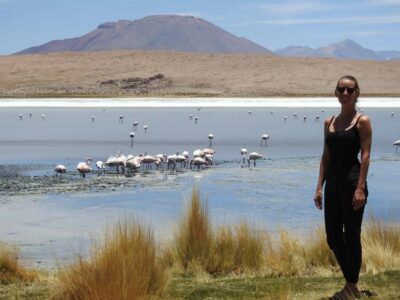
Uyuni Salt Flats and San Pedro de Atacama 3-Day Tour
Read our review →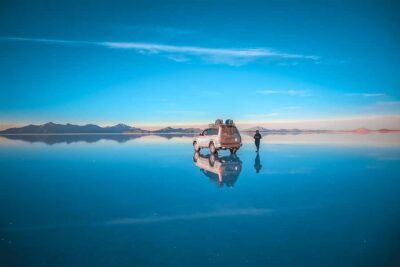
4-Day Trip to San Pedro de Atacama w/Salt Flats
Read our review →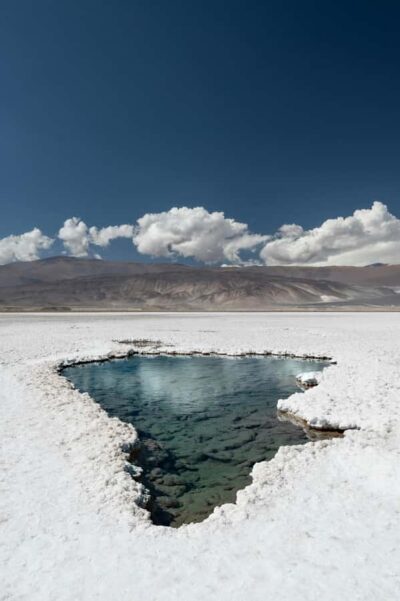
3-Day Salt Flats Tour ending in San Pedro de Atacama
Read our review →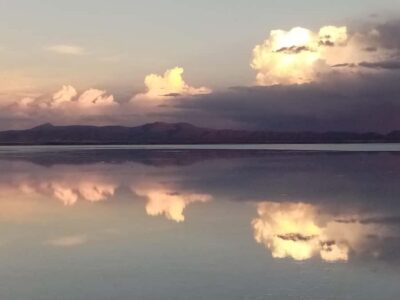
From La Paz to Atacama: Uyuni Salt Flats 4-Day Tour
Read our review →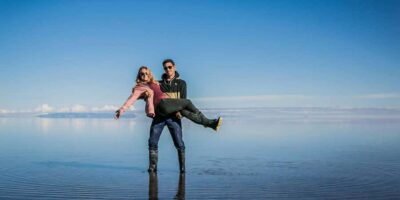
Salar de Uyuni and San Pedro de Atacama 3-Day Tour
Read our review →Browse the lists this tour appears in