
Reviewed · LA PAZ TOURS
Cholet Tour – Andean Architecture and Culture – El Alto
El Alto’s cholets are more than eye-catching buildings. Their bright colors, unusual shapes, and grand interiors reflect Aymara ambition, family life, business, and identity. This three-hour tour gives you a way to see them with context instead of simply passing them from a cable-car window.
I like two things right away: the cable-car ride is included, and the small group makes it easier to ask questions while walking through El Alto. Guides such as Denise, Max, and Dani have been praised for explaining the city’s traditions and the meaning of cholets clearly.
The main drawback is pace. You cover a lot of ground in about two hours on foot and by local transport, so this is not a slow architectural sketching tour. Your experience may also depend heavily on the guide, with one account describing a rushed day and limited explanation.
Key points to know before you book
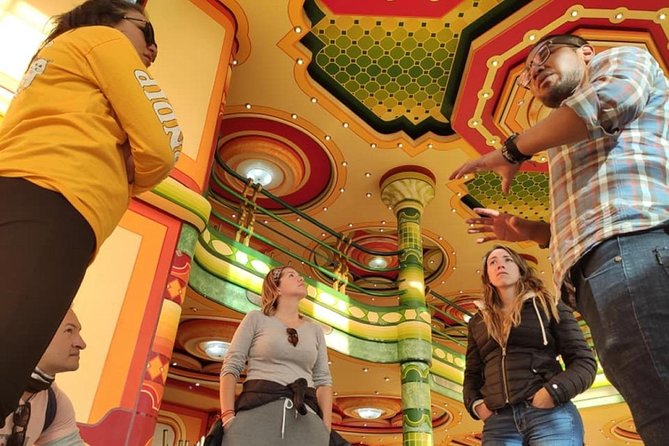
- Cholets are the main event: You get a chance to enter a traditional cholet, not just photograph its colorful exterior.
- The cable car begins the adventure: The tour starts at Mi Teleférico Línea Morada, with tickets included for the ride to El Alto.
- El Alto is explored on foot: Expect roughly two hours among the city’s colorful streets with a local guide.
- The group is limited to 12 people: That is a useful size for questions and easier movement through busy streets.
- Local transport adds realism: You may use public buses or other local transport as you move between cholets.
- The cost is modest: At $25.65 per person, the tour includes transport tickets, guiding, and snacks for about three hours.
Why cholets make El Alto worth your morning
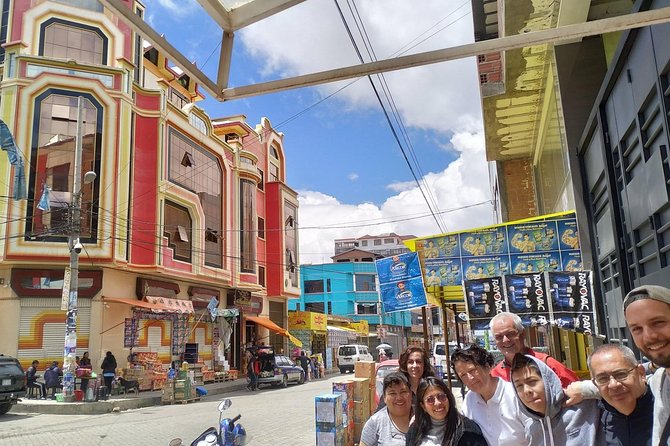
A cholet is not simply a painted house. It is a distinct form of Andean architecture associated with Aymara culture and the success of local families and businesses. The buildings can combine homes, shops, event spaces, and other uses, often with strong colors and decorative forms that make them easy to spot.
That mix is what makes the tour useful. On your own, you might admire the facades but miss the reasons behind them. A local guide can explain the different types of cholets and how they fit into life in El Alto.
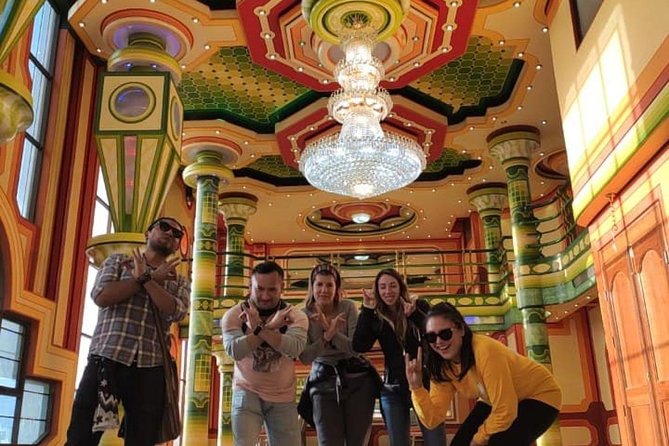
I especially like that the tour includes a look inside a traditional cholet. Exterior photographs show only half the story. The interior visit gives you a better sense of how these buildings function and why they matter to the people who build and use them.
The tour also takes you beyond a single famous building. You walk through parts of El Alto and see several examples, so you can compare designs and get a feel for the city rather than treating the cholet as an isolated curiosity.
A few more La Paz days to weigh up
- La Paz and El Alto: Cable Car Rides and Walking Tour
★ 4.8 · 790 reviews - La Paz Half-Day Walking Tour
★ 4.8 · 591 reviews - La Paz: Private City Tour with Cable Car & Moon Valley Visit
★ 4.9 · 508 reviews
Starting at La Paz’s Morada cable-car station
Your meeting point is Mi Teleférico Línea Morada, Estación Obelisco, in La Paz. The start time is 10:00 a.m., and the activity returns to this same meeting point at the end.
The cable car is not just a convenient transfer. It gives you a practical introduction to the way La Paz and El Alto connect. The ride lasts about 30 minutes and forms the first part of the tour, with admission included in the price.
I like beginning this way because it saves you the trouble of figuring out the route to El Alto by yourself. It also gives your guide a natural setting for explaining what you are seeing as the city changes around you.
Stay alert to the meeting-point details when you book. The stated start is the Morada Line station, and the published information does not promise hotel pickup. One account specifically describes confusion about a pickup point, so I would confirm the exact station and time rather than assume transportation from your hotel is included.
The tour is near public transportation, and most people can participate. Still, you should be comfortable with walking, getting on and off local transport, and keeping up with a group across a busy city.
Two hours on foot through El Alto
Once you reach El Alto, the tour shifts from transport to street-level exploration. You spend about two hours walking through colorful parts of the city with your guide, looking at cholets and learning about local culture.
This is where the experience earns its price. El Alto is a large, growing city, and its streets are not arranged as a simple sightseeing circuit. A guide helps you find the buildings and gives meaning to what you see instead of leaving you to guess at every painted facade.
You may also use local public transport between sites. That can make the tour feel less polished than a private vehicle, but it is also part of the appeal. You are seeing how people move around the city, not just being carried from one photo stop to another.
I would not book this expecting a leisurely stroll with long pauses at every building. The route covers a lot of ground, and one negative account describes moving quickly from place to place and spending too little time taking in the architecture. That warning matters if you like to photograph every detail or prefer a relaxed pace.
On the other hand, the short format works well if you have limited time in La Paz. In three hours, you can ride the cable car, see El Alto with local direction, visit a cholet, and return to your starting point without giving up an entire day.
Inside a traditional cholet
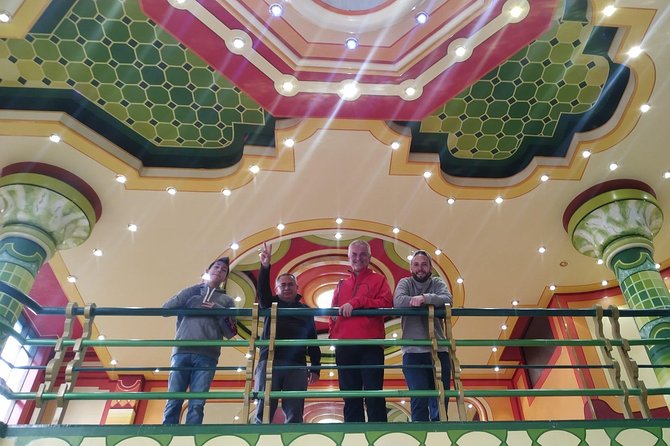
The interior visit is the tour’s most useful detail. Outside, the cholets can look like oversized works of modern decoration. Inside, you get a clearer idea of how architecture, family wealth, commerce, and social life come together.
The precise building visited can vary, so I would not expect a fixed museum-style exhibit. Instead, think of it as a chance to see one traditional cholet from the inside and connect the guide’s explanation with a real place.
This is also where guide quality matters most. Denise has been singled out for explaining the history of cholets and the different types found around El Alto. Dani has also been praised for clearly presenting the city’s past and culture, while Max has been described as a pleasant companion for the outing.
The comments are not uniformly positive. One person felt the guide did not explain Aymara culture well enough and that the day became too focused on quick movement. That does not mean every departure will be rushed, but it is a fair reminder to ask questions and tell your guide if you need a moment to look around.
If architecture interests you, I would make the cholet visit your priority. You can take photographs from the street anywhere, but entering one and hearing how it is used gives the tour its real value.
Same corner of Bolivia, a completely different day out:
- La Paz: Full Day Trip to Copacabana and Isla del Sol
★ 4.5 · 400 reviews - La Paz: Mountain Bike Down the World’s Most Dangerous Road
★ 4.9 · 386 reviews - La Paz: Cholitas Wrestling Tickets and Transfer
★ 4.4 · 338 reviews - From La Paz: Uyuni Salt Flat Tour & Overnight Roundtrip Bus
★ 4.5 · 327 reviews
What you learn about Aymara identity
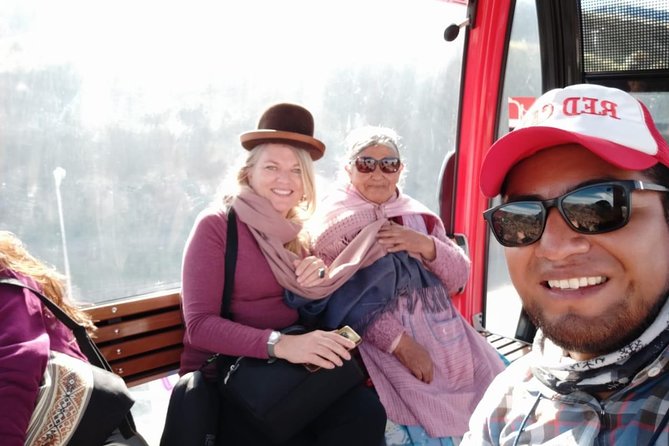
The tour is not only about unusual buildings. Its larger subject is the way Aymara culture appears in modern urban life.
Aymara communities have their own traditions, social structures, and visual language. Cholets provide a public expression of those values, particularly through color, scale, decoration, and the use of space. A good guide helps you see that these buildings are not random displays. They carry messages about success, family, business, and belonging.
That cultural explanation is the difference between a guided visit and a self-guided walk. You might find the buildings on your own, but you would have a harder time understanding what makes a cholet a cholet or why the style is important in El Alto.
I would pay attention to the guide’s examples rather than trying to memorize architectural labels. The strongest part of the experience is likely to be the connection between a building you can see and a tradition you can understand.
Because the group is capped at 12, you should have a better chance to ask about details that catch your eye. A group of this size is still large enough to keep the tour social, but small enough for a guide to speak with people directly.
Is $25.65 a fair price?
At $25.65 per person, this is a good-value half-day outing if you want guided access to El Alto without arranging the route yourself.
The price includes the cable-car tickets, about three hours of guiding, the cholet visit, and snacks. It does not simply pay for transport. You are also paying for local explanation in a city that can be difficult to read from the outside.
The value is strongest for first-time visitors who are curious about El Alto but unsure how to organize a visit. One person who had already seen the Sunday market still found a guide useful because the route and the meaning of cholets were not easy to work out alone.
The value is weaker if you want a slow, private architecture tour. The group may include up to 12 people, and the itinerary uses walking and local transport. You may need to share attention and accept a fairly active pace.
Snacks are included, which is a small but welcome touch. I would view them as a convenience rather than a major part of the experience.
Who should book this El Alto tour?
I would recommend it to you if you:
- Want to see El Alto with local guidance rather than visit only its market
- Are interested in Aymara culture and modern Andean architecture
- Enjoy public transportation as part of sightseeing
- Have about three hours available in the morning
- Prefer a small group to a large coach tour
- Want a guided introduction before exploring more of La Paz on your own
It is less suitable if you need a private vehicle, dislike walking, or want long stretches of unstructured time. It is also not the best match for someone who wants a purely photographic outing with complete control over the pace.
The tour is recommended by 97 percent of those who rated it, with an overall score of 4.8 from 72 reviews. Those numbers suggest a strong experience overall, but the one poor account is useful because it identifies the main risk: the guide can make the difference between a thoughtful cultural visit and a hurried sequence of stops.
Practical details for a smoother morning
Arrive at the Morada Line station with enough time to find the meeting point. The published start time is 10:00 a.m., and the tour ends back where it began.
Wear shoes suited to walking and local transport. That advice follows directly from the route, which includes around two hours exploring El Alto on foot and may include buses or other public transport between buildings.
Bring your questions. Ask about the different types of cholets, how they are used, and what specific details reveal their cultural meaning. A curious visitor will get more from this tour than someone who simply follows the group and waits for photographs.
The group limit of 12 helps, but it does not guarantee a slow pace. If you want more time at a particular building, say so politely. Clear communication may help your guide balance the group’s needs.
Free cancellation is available when you cancel at least 24 hours before the start time. Cancellations or changes made less than 24 hours before the tour are not refunded or accepted, and the cut-off uses local time.
My call: book it for context, not just color
I would book this tour if my goal were to understand El Alto’s cholets and Aymara culture, not merely photograph unusual buildings. The included cable-car ride, small group, local transport, and interior visit give you more than a quick view from a city overlook.
Go in expecting a compact, active morning. The route may feel rushed if you want to linger, and the quality of the explanation depends on the guide assigned. But with a strong guide such as Denise, Max, or Dani, this can become one of the more memorable ways to see the modern side of La Paz and El Alto.
FAQ
Where does the Cholet Tour start?
The tour starts at Mi Teleférico Línea Morada, Estación Obelisco, in La Paz.
What time does the tour begin?
The scheduled start time is 10:00 a.m.
How long does the tour last?
The activity lasts approximately three hours.
Does the tour include a cable-car ride?
Yes. The tour includes a roughly 30-minute ride on the cable cars, with admission tickets included.
Does the tour visit the inside of a cholet?
Yes. You have a chance to visit a traditional cholet and see inside.
How large is the tour group?
The activity has a maximum of 12 travelers.
Are snacks included?
Yes. Snacks are included in the tour.
Where does the tour end?
The tour ends back at the original meeting point.
Can I cancel for a full refund?
Yes, if you cancel at least 24 hours before the experience starts. Cancellations or changes made less than 24 hours before the start time are not refunded or accepted.
Just added around La Paz
- Private Tour of Tiwanaku Ruins from La Paz★ 5.0 · 3 reviews
- Private Tiwanaku and Titicaca Day Trip from La Paz★ 4.8 · 3 reviews
- La Paz: Uyuni tour ending in Atacama Chile by bus.★ 3.9 · 3 reviews
- From La Paz: Lake Titicaca and Copacabana Private Tour★ 5.0 · 5 reviews
- LA PAZ: GUIDED TOUR CHACALTAYA + VALLEY OF THE MOON★ 3.6 · 3 reviews
- La Paz: The Feminist Tour★ 5.0 · 3 reviews
- Titicaca Lake: Highlights Tour from La Paz by Bus★ 4.0 · 3 reviews
- From La Paz: Trip to Uyuni Salt Flats with Wine at Sunset★ 4.4 · 4 reviews
La Paz Tours, compared.
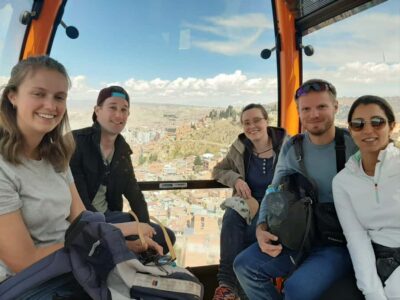
La Paz and El Alto: Cable Car Rides and Walking Tour
Read our review →
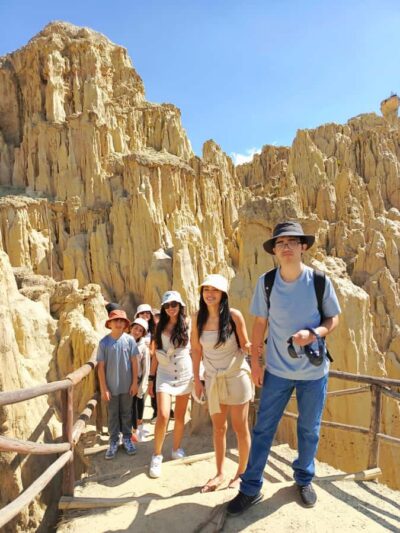
Private City Tour with Cable Car & Moon Valley Visit
Read our review →

Mountain Bike Down the World’s Most Dangerous Road
Read our review →

Uyuni Salt Flat Tour & Overnight Roundtrip Bus
Read our review →
Browse the lists this tour appears in