
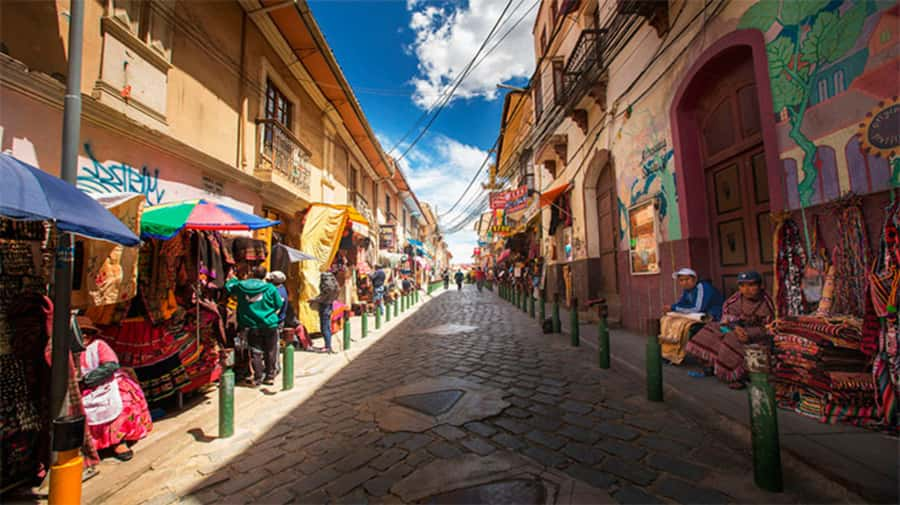
Reviewed · LA PAZ TOURS
La Paz: The Feminist Tour
La Paz looks different when you pay attention to who gets heard, who gets educated, and who controls their own body. This 150-minute walking tour uses women’s lives as its way into Bolivian history and present-day city life, from indigenous identity and migration to activism, work, motherhood, and political voice.
I like the small group of no more than 10, which gives a sensitive subject room for questions. I also like that guides bring their own focus: Anita is known for weaving in folklore, dance, rituals, or spiritual traditions, while Emma Radar Villaroel has led private versions of the tour. The main drawback is practical: La Paz’s high altitude makes the walk more tiring, and the tour is not suitable for wheelchair users.
Key points to know before you book
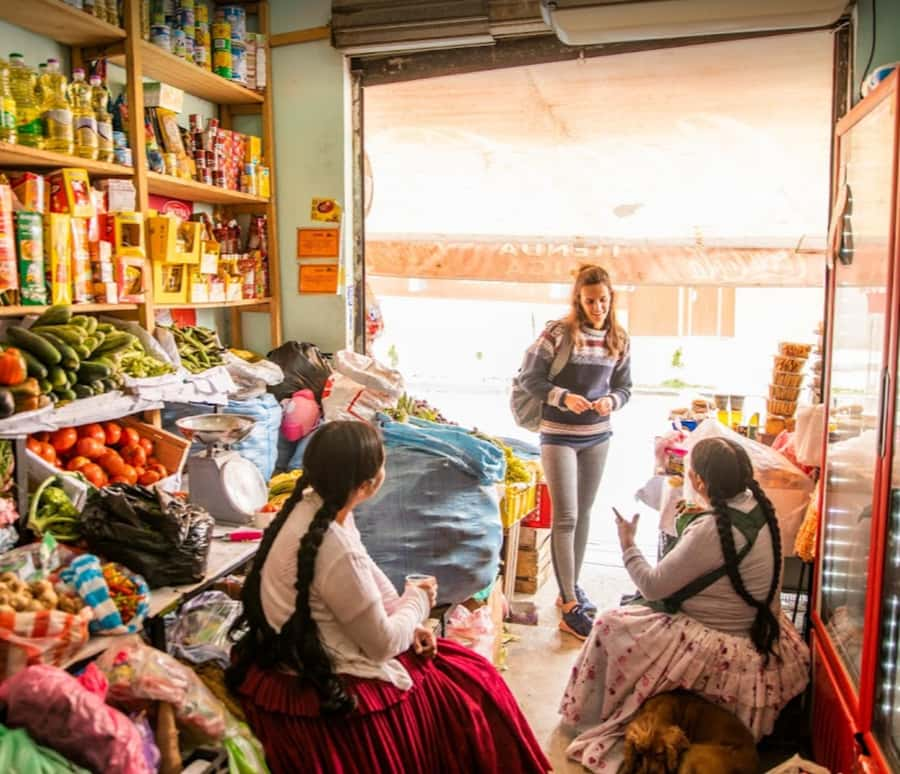
- A women-centered view of La Paz: The tour looks at the city through the lives of indigenous women, students, immigrants, mothers, merchants, businesswomen, and activists.
- A small English-speaking group: With a maximum of 10 participants, you can ask questions without competing with a crowd.
- A guide-led discussion of real issues: Expect attention to education, bodily autonomy, gender inequality, and having women’s proposals heard.
- Guide personalities shape the experience: Anita and Emma Radar Villaroel are among the named guides, and each guide may bring a different specialty.
- A central meeting point: Find your guide in the pink jacket in front of the Basilica of Saint Francis.
- High-altitude walking: Bring water, sunscreen, a hat, and comfortable clothes. Leave large luggage behind.
Why women’s stories change your view of La Paz
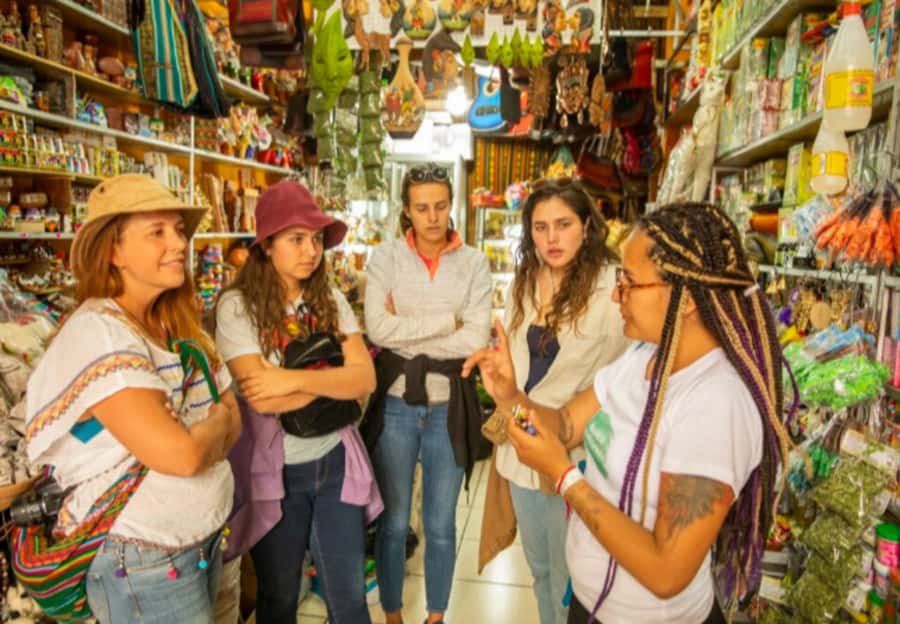
Many city walks focus on grand buildings, famous men, political leaders, and dramatic events. This one asks a more personal question: what is it like to live in La Paz as a woman?
That question opens several doors at once. You may consider how life differs for an indigenous woman and an immigrant, or how a student’s choices compare with those of a mother or market merchant. A businesswoman and an activist may face different pressures, yet both need a public voice and a fair chance to shape their future.
I like this approach because it does not treat women as a single group. The tour points toward differences of class, identity, work, age, and experience. You are not simply given a list of famous women. You are asked to think about the daily structures that shape ordinary life.
The subject is serious, but the format is active. You walk through central La Paz while your guide connects the streets around you with larger questions about power, education, work, and independence. That combination makes the discussion easier to grasp than a lecture in a museum room.
A few more La Paz days to weigh up
- La Paz and El Alto: Cable Car Rides and Walking Tour
★ 4.8 · 790 reviews - La Paz Half-Day Walking Tour
★ 4.8 · 591 reviews - La Paz: Private City Tour with Cable Car & Moon Valley Visit
★ 4.9 · 508 reviews
Meeting at Saint Francis Basilica
Your starting point is in front of the Basilica of Saint Francis, one of the easiest central landmarks to locate. Look for a guide wearing a pink jacket. Since the meeting point is outdoors and the tour begins on foot, arrive ready to walk rather than expecting a formal check-in desk.
This location also gives the tour a practical advantage. You begin in a part of La Paz where city life is close at hand, so the discussion can connect directly to the people, streets, and public spaces around you. The available information does not give a fixed list of stops, so you should not book this expecting a tightly scripted route with named monuments at every stage.
Instead, think of the walk as a guided conversation with a city attached to it. The guide sets the route and explains the social questions that matter. That makes the exact path less important than the way your guide interprets La Paz.
The pink jacket is a useful detail, especially in a busy central meeting area. I would also save a phone screenshot of the meeting point before leaving your accommodation. You will want both hands free for walking and note-taking, not for searching through luggage.
The opening discussion: what does it mean to be a woman here?
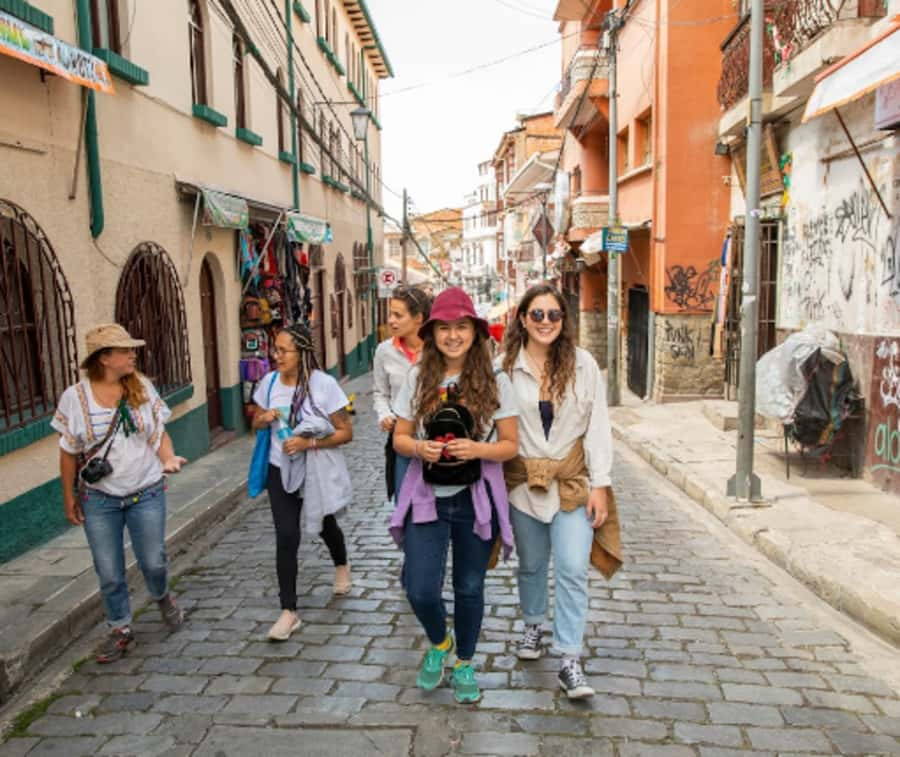
The first part of the tour introduces the central idea: La Paz cannot be understood fully without asking how women move through it and how much freedom they have to make decisions.
Your guide may compare several kinds of experience. The tour specifically considers indigenous women, students, immigrants, mothers, merchants, businesswomen, and activists. These categories are not just labels. They help you see that access to education, paid work, public influence, and personal choice can vary sharply from one woman to another.
I appreciate that the tour includes both struggles and achievements. A discussion of gender inequality can become grim if it only lists problems. Here, the subject also includes women’s efforts to study, work, organize, speak publicly, and change the rules that limit them.
The wording of the experience points to three major goals: women pursuing education, gaining control over their bodies, and having their voices and proposals heard. Those are broad themes, but they are also practical ones. They connect private decisions with public life.
You should come ready to listen rather than expecting a performance built around quick facts. Some subjects may be personal or politically charged. The small group helps, since a group of 10 allows more space for thoughtful questions than a large coach tour.
Indigenous identity, migration, and daily work
La Paz is a useful setting for a discussion of identity because the tour does not present women as having one shared path. Indigenous women, immigrants, merchants, students, and professionals may all experience the city differently.
The tour’s focus on indigenous women is especially important. It asks you to consider how gender inequality can overlap with cultural and social inequality. The experience does not promise a full academic study, but it gives you a way to notice whose work is visible, whose voice is respected, and whose needs are easily ignored.
The inclusion of merchants adds another practical layer. Markets and street commerce are not just colorful background for a photograph. Work, income, family duties, and public space all meet there. A discussion of women merchants can help you see the city as a place where earning a living and caring for others often happen at the same time.
Immigration adds a different question: how does a woman build a life in a new place while dealing with work, belonging, and social expectations? The tour description does not identify specific communities or locations, so I would avoid expecting a detailed neighborhood-by-neighborhood study. What you do get is a framework for understanding how identity affects daily life.
Same corner of Bolivia, a completely different day out:
- La Paz: Full Day Trip to Copacabana and Isla del Sol
★ 4.5 · 400 reviews - La Paz: Mountain Bike Down the World’s Most Dangerous Road
★ 4.9 · 386 reviews - La Paz: Cholitas Wrestling Tickets and Transfer
★ 4.4 · 338 reviews - From La Paz: Uyuni Salt Flat Tour & Overnight Roundtrip Bus
★ 4.5 · 327 reviews
Education, bodies, and political voice
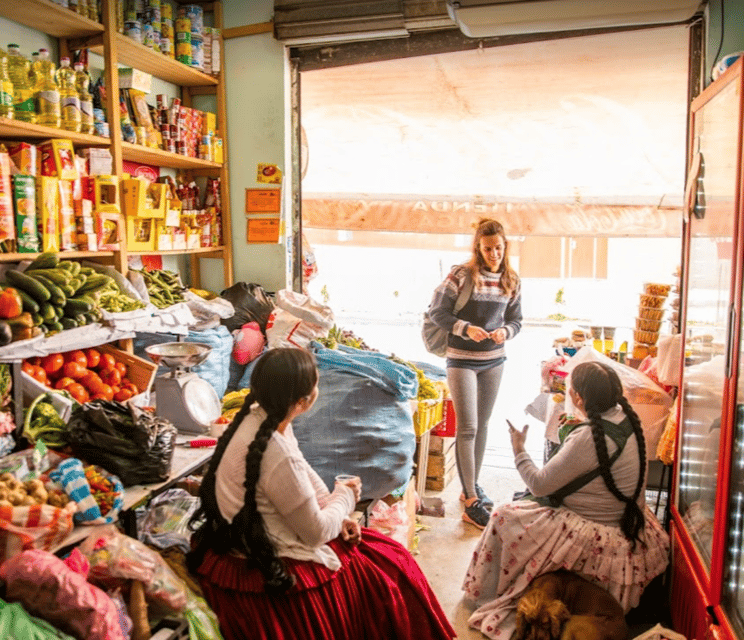
Three themes give the walk its backbone: education, control over one’s body, and the right to be heard.
Education matters because it affects more than employment. It can shape independence, confidence, family decisions, and access to public life. When your guide explains women’s efforts to become educated, listen for the link between personal opportunity and wider social change.
The focus on bodily autonomy is direct and important. The tour examines women’s pursuit of control over their bodies, a subject tied to freedom, dignity, and unequal power. The supplied information does not specify which laws, organizations, or campaigns the guide will cover, so expect a broad historical and social discussion rather than a guaranteed list of case studies.
The final theme is public voice. Women may have ideas and proposals, but being able to express them and have them taken seriously is another matter. The tour looks at how women work to make their voices heard, including through activism and community action.
I like that these themes are linked instead of treated as separate lecture topics. Education affects independence. Bodily autonomy affects personal freedom. Public voice affects the ability to change society. The walk shows how those concerns overlap.
Guides who bring their own specialty
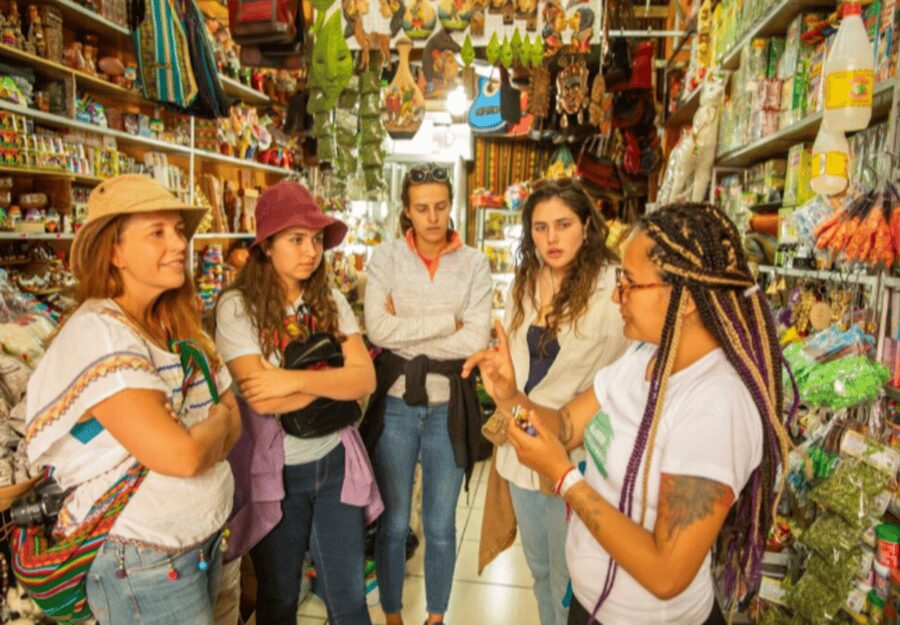
The guide can shape this experience more than the route does. Anita and Emma Radar Villaroel are named guides connected with the tour, and the guide team brings different areas of interest to the walk.
Anita’s version may include folklore, dance, rituals, or spiritual traditions. That can add a valuable cultural layer, especially if you want to understand how women’s experiences connect with Bolivian traditions and public expression. It also means two bookings may not feel exactly alike.
Emma Radar Villaroel has led a private version of the tour. A private walk can be useful if you want more time for questions or if the subject is especially important to your group, though the standard experience is already limited to 10 participants.
I would not choose this tour only because of a particular guide unless you can confirm who is scheduled. Instead, think of the different guide specialties as a benefit. The central themes remain the same, but the examples and emphasis may change.
This variation is also why the experience can work for repeat visitors to La Paz. A guide focused on folklore or ritual may help you notice aspects of women’s cultural roles that another guide treats more briefly. The tour is not designed as a fixed audio program, so the human element matters.
What the 150-minute walk feels like
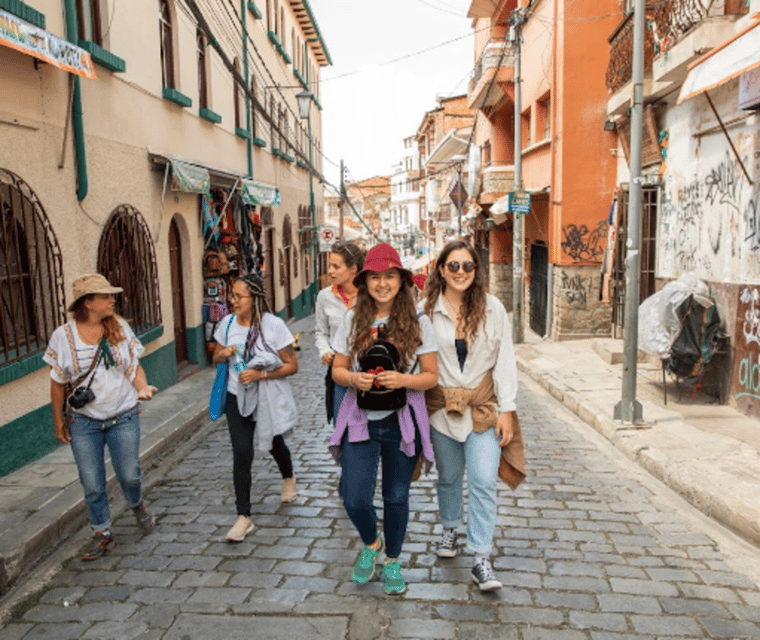
Two and a half hours is long enough to move beyond a quick introduction, but short enough to fit into a busy La Paz schedule. You have time for historical context, present-day issues, questions, and pauses in the city without giving up an entire day.
The walking format means you should pace yourself. La Paz sits at high altitude, and the experience specifically warns that the tour includes walking at altitude. Even a fit person may want to move more slowly than usual, drink water, and avoid overloading the same day with strenuous plans.
The walk is not designed for wheelchair users. Large bags and luggage are not allowed, and comfortable clothes are a must. Bring sunglasses, a hat, sunscreen, and water. Smoking, alcohol, drugs, and audio recording are not permitted.
Since food and drinks are not included, have anything you need before the tour or plan it afterward. Do not expect a meal stop to be part of the experience. The focus stays on the guide’s interpretation and the walking discussion.
Is $25 a fair price?
At $25 per person, this is priced like an affordable small-group city walk rather than a private specialist lecture. The value depends on what you want from La Paz.
If you only want landmark facts and photographs, you may find a conventional city tour more suitable. If you want help understanding gender inequality and women’s empowerment in Bolivia, the price is reasonable because you are paying for a focused subject, an experienced local guide, and a small group.
The group limit matters here. Sensitive subjects are easier to discuss when you are not one person among 30. You can ask about points that interest you, and your guide has a better chance of responding to the group’s concerns.
The price does not include food, drinks, or a tip. Tipping is optional. You are paying for the guided experience, not transportation, a meal, or entry to a separate attraction. That makes the value clearest for people who already want a walking tour and prefer depth over a long list of sights.
Free cancellation up to 24 hours before the start gives you some protection if altitude, weather, or schedule problems affect your plans. You can also reserve now and pay later, which helps if you are still arranging a Bolivia itinerary.
Who will appreciate this tour most?
I would recommend it to you if you want a social and cultural explanation of La Paz, not just a sightseeing route. It suits visitors interested in women’s rights, Bolivian society, indigenous identity, migration, activism, folklore, and everyday work.
It is also a good choice for solo visitors. A group capped at 10 offers a natural setting for discussion, and an English-speaking local guide gives you context that can be hard to find on your own.
Students, educators, and anyone interested in social history may find the themes especially useful. So might returning visitors who have already seen the main sights and want to understand how people live within the city.
I would hesitate if you dislike discussion of political or social inequality. The tour is built around those subjects, and it is not a light stroll with occasional historical facts. I would also choose another activity if you need wheelchair access, cannot manage high-altitude walking, or want a food-focused experience.
Booking advice for a smoother walk
Wear shoes and clothes that let you walk comfortably for two and a half hours. La Paz’s altitude is the key physical issue, so keep your pace steady and carry water.
Bring sunscreen, sunglasses, and a hat even if the day does not feel hot. High-altitude sun can be strong. Leave large bags and luggage behind, and do not plan to record the guide’s talk.
Meet in front of Saint Francis Basilica and look for the pink jacket. If you have a strong preference for Anita, Emma Radar Villaroel, or another guide, ask about availability before booking, since the guide’s specialty can shape the discussion.
You can cancel up to 24 hours in advance for a full refund, and the reserve-now, pay-later option keeps your plans flexible. Those terms are useful in La Paz, where altitude can affect how ambitious you feel after arrival.
Should you book La Paz: The Feminist Tour?
Book it if you want to understand La Paz through women’s daily lives, struggles, and achievements. The strongest reasons are the focused subject, the small English-speaking group, and the chance to hear different guide perspectives, including Anita’s cultural specialties and Emma Radar Villaroel’s experience with private tours.
Skip it if you want a classic monument tour, a relaxed food walk, or a route that avoids serious discussion. For $25, this is a good-value choice for curious visitors who want the city to make more social sense, provided you are ready for high-altitude walking and a direct conversation about inequality.
FAQ
How long does the Feminist Tour in La Paz last?
The tour lasts 150 minutes, or two and a half hours.
How much does the tour cost?
The price is $25 per person.
Where does the tour meet?
The meeting point is in front of the Basilica of Saint Francis. Your guide will wear a pink jacket.
Is the tour conducted in English?
Yes. The tour has a live English-speaking guide.
How large is the group?
The tour is limited to 10 participants.
What should I bring?
Bring sunglasses, a hat, sunscreen, water, and comfortable clothes. The tour includes walking at high altitude, so prepare for that physical condition.
Just added around La Paz
- Private Tour of Tiwanaku Ruins from La Paz★ 5.0 · 3 reviews
- Private Tiwanaku and Titicaca Day Trip from La Paz★ 4.8 · 3 reviews
- La Paz: Uyuni tour ending in Atacama Chile by bus.★ 3.9 · 3 reviews
- From La Paz: Lake Titicaca and Copacabana Private Tour★ 5.0 · 5 reviews
- LA PAZ: GUIDED TOUR CHACALTAYA + VALLEY OF THE MOON★ 3.6 · 3 reviews
- Titicaca Lake: Highlights Tour from La Paz by Bus★ 4.0 · 3 reviews
- From La Paz: Trip to Uyuni Salt Flats with Wine at Sunset★ 4.4 · 4 reviews
- La Paz: Uyuni Salt Flats & Lagoon Share Trip (private room)★ 4.7 · 4 reviews
La Paz Tours, compared.
La Paz and El Alto: Cable Car Rides and Walking Tour
Read our review →
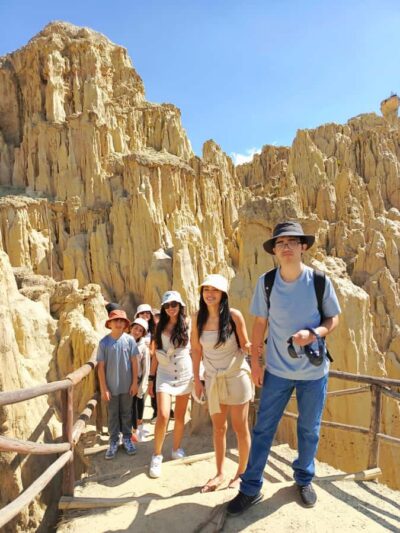
Private City Tour with Cable Car & Moon Valley Visit
Read our review →
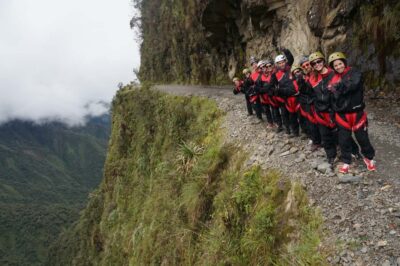
Mountain Bike Down the World’s Most Dangerous Road
Read our review →

Uyuni Salt Flat Tour & Overnight Roundtrip Bus
Read our review →
Browse the lists this tour appears in