
Reviewed · MOUNTAIN CLIMBING TOURS
Climbing Huayna Potosí
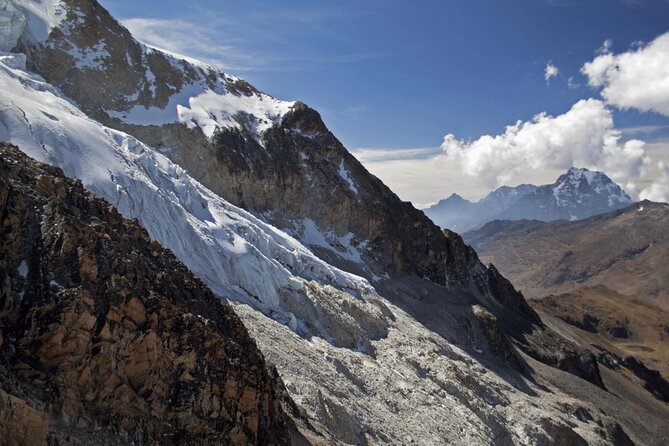
Huayna Potosí gives you a real high-mountain test without requiring a long expedition. In three demanding days, you travel from La Paz to a 4,700-meter base camp, practice on a glacier, sleep at 5,130 meters, and then climb through the night toward a 6,088-meter summit.
I like the built-in glacier practice, which lets you handle crampon-style boots, an ice axe, rope systems, and steep ice before summit night. I also like the clear progression from base camp to high camp, with a full morning to rest and adjust before the hardest part. The drawback is serious: this is not a sightseeing trip with a little walking. Altitude sickness, cold, darkness, and steep snow and ice can stop you, even if you are fit.
Key points to know before booking
- The summit is 6,088 meters high, with the final climb beginning around 1:00 in the morning.
- Day one includes glacier instruction, including about an hour of ice-climbing practice.
- You sleep at 4,700 meters and then 5,130 meters, so acclimatization is central to the plan.
- The summit route reaches slopes of 35 to 40 degrees, followed by a 50-meter section at roughly 55 to 60 degrees.
- Guides such as Johnny, Jhonny, and Cristian receive especially strong praise for patience, encouragement, and summit support.
- The $230.77 price includes transport, meals, shelter, gear, and an English or Spanish-speaking guide, but several useful personal items cost extra or must be supplied by you.
What the $230.77 price really covers
At $230.77 per person, this climb offers a fair amount for a short high-altitude trip. The package includes private transport from the All Transport Tour Operator office at Av. Illampu 339 in La Paz, meals, shelter at base and high camp, and a mountain guide who speaks English or Spanish.
The equipment list is also useful. You receive a helmet, down jacket, wind jacket, thermal pants, sturdy grass boots, and an ice axe. For a climber who does not own cold-weather mountain gear, that can make the price much more attractive. Several climbers specifically appreciated the condition and range of equipment available, as well as the chance to change dates after illness in one case.
You still need to budget for a sleeping bag, headlamp, sunglasses, two liters of water, and a personal baggage carrier. The supplied information also says the entry ticket is not included. Ask clearly about the headlamp before you go. One unhappy climber reported being charged for a weak lamp without batteries, while other climbers praised the equipment overall. That difference makes it sensible to bring your own headlamp if possible.
The tour is private, so only your group participates. That can be a major advantage on a mountain. A guide can adjust the pace and offer direct encouragement rather than managing a large crowd. Still, private does not mean easy, and it does not remove the need for careful safety questions before departure.
More high peaks to climb near La Paz:
- From La Paz: Huayna Potosí Mountain 3-Day Ice-Climbing Trip
★ 4.9 · 21 reviews - From La Paz: Huayna Potosí 2-Day Climbing Trip
★ 4.7 · 10 reviews - From La Paz: Austria Peak One-Day Climbing Trip
★ 4.8 · 8 reviews
Day one: From La Paz to glacier practice at 4,700 meters
Your day begins at 8:30 in the operator’s office. This equipment check is more important than it sounds. Use the time to confirm that boots fit, jackets close properly, and nothing feels loose or damaged. High-altitude discomfort becomes much harder to fix once you are at the glacier.
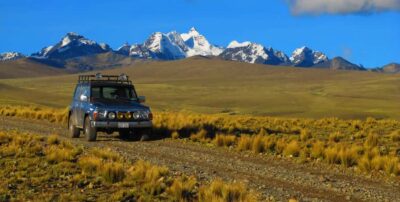
The drive to base camp takes about one hour and 45 minutes in private transport. You reach the 4,700-meter camp around late morning, with the schedule placing arrival near 11:00 or 12:00. The change from La Paz to this height is quick, so take the first hours slowly and drink the water you brought.
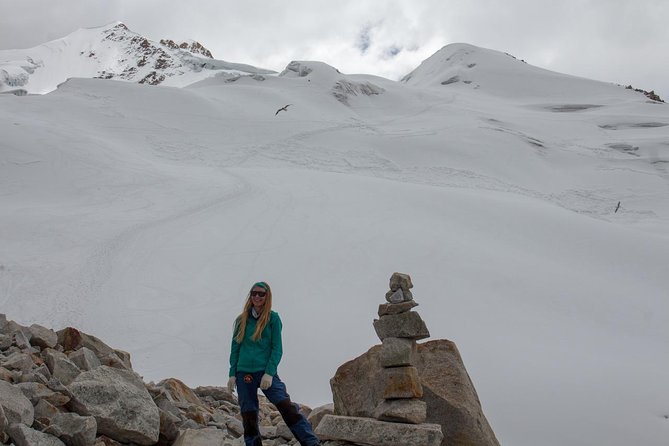
After lunch, you walk for about an hour and a half to an older, more distant glacier. There, you practice ice climbing for roughly an hour using the equipment provided. This is one of the most valuable parts of the trip. You are not simply being handed an ice axe at midnight and told to follow a rope. You get a chance to learn how the gear feels, how to move on ice, and how the guide connects you to the climbing system.
The training session also gives you a useful reality check. If the glacier practice feels far harder than expected, you have time to discuss your condition with the guide before the summit attempt. Pay attention to headache, nausea, unusual fatigue, or poor coordination. A mountain guide’s encouragement can help, but no summit is worth hiding serious altitude symptoms.
You return to the base camp refuge after practice. Dinner is scheduled at 6:00 in the evening, followed by rest. The early finish matters because the next two days are physically demanding. Do not treat this as a normal vacation evening. Eat what you can, organize your clothing, and sleep whenever your body allows.
Day two: A short climb to high camp at 5,130 meters
The second morning is intentionally quiet. You rest at base camp, eat lunch there, and use the slower schedule to adjust to the altitude. After lunch, the climb to Campo Alto begins.
The route to high camp takes about three hours. At 5,130 meters, Campo Alto is not a comfortable hotel stop. It is a basic mountain refuge used mainly to place you closer to the summit. You will feel the height, and even simple tasks can take more effort than expected.
The plan calls for dinner on arrival, then free time for acclimatization. Rest begins around 6:00 in the evening, with the wake-up call near midnight. This odd schedule is necessary because the summit attempt starts at about 1:00 in the morning.
I would use the afternoon to prepare every item before lying down. Put your warm layers, gloves, headlamp, water, and sunglasses where you can reach them quickly. You do not want to sort through bags in a crowded refuge while tired and cold.
This is also a good moment to speak directly with your guide. Guides named Johnny, Jhonny, and Cristian have been praised for patience, careful gear instruction, motivation, and steady support. One climber nearly quit but reached the top after Jhonny kept encouraging them. That kind of support matters, but you should still expect to contribute your own effort. The guide can pace you and protect the rope system, but cannot remove the effects of altitude.
Summit night: A 4-to-7-hour climb toward 6,088 meters
Breakfast comes around midnight. The summit climb starts at approximately 1:00 a.m., with the group roped together on the glacier. The darkness changes the experience. Your headlamp shows only the next section of snow, while the route slowly rises toward the ridge.
The first part is described as relatively easy until around 5,500 meters. Even here, the altitude can make each step slow. The complete ascent takes about four to seven hours, depending on conditions and your pace. That range is worth taking seriously. You should not plan the rest of your day around an exact summit time.
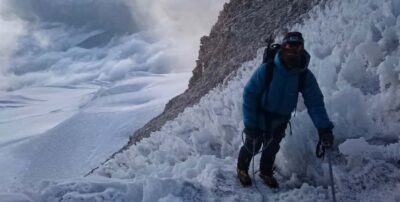
Above 5,500 meters, the route becomes much more demanding. You climb a 50-meter wall with an incline of about 55 to 60 degrees. That is steep terrain, not a casual uphill walk. The earlier glacier practice becomes useful here because you have already handled the tools and movement needed for the climb.
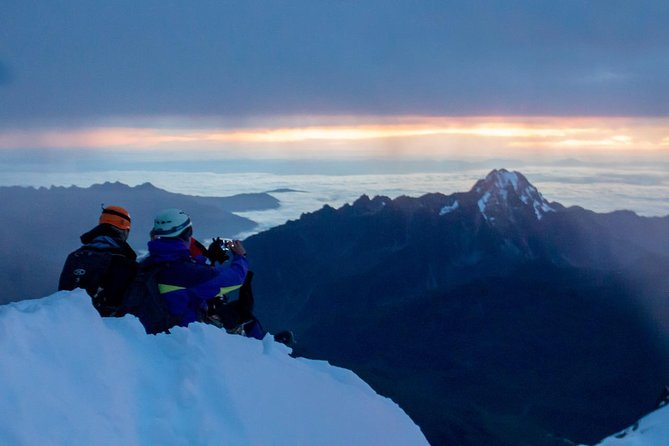
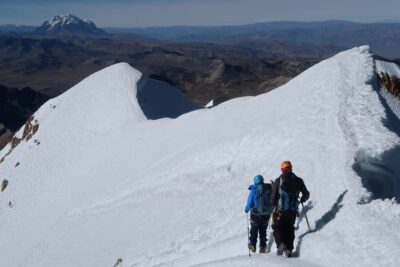
At roughly 5,800 meters, you reach a plateau. From there, the route follows a ridge toward the 6,088-meter summit. The schedule expects an arrival around 6:30 in the morning, when the first light can reveal the surrounding Andes. You get about ten minutes at the top before beginning the return.
Ten minutes may sound brief, but it is sensible at this altitude. You will have worked hard for several hours, and the descent still requires care. Take your photographs quickly, stay close to the guide, and do not let the excitement of the summit distract you from the route down.
A few more La Paz days to weigh up
- La Paz and El Alto: Cable Car Rides and Walking Tour
★ 4.8 · 790 reviews - La Paz Half-Day Walking Tour
★ 4.8 · 591 reviews - La Paz: Private City Tour with Cable Car & Moon Valley Visit
★ 4.9 · 508 reviews - La Paz: Full Day Trip to Copacabana and Isla del Sol
★ 4.5 · 400 reviews
The descent is part of the climb
The return to high camp takes about two hours. You collect your equipment there, then descend for another hour and a half to base camp. From base camp, private transport returns you to La Paz, with arrival expected around 2:00 in the afternoon.
The total summit day is long. You climb through the night, reach the top in the morning, descend to both camps, and then ride back to the city. Your legs may feel tired, but the bigger concern is maintaining attention on the glacier and steep sections.
This is where guide conduct matters most. The strongest accounts describe guides checking on climbers, offering encouragement, and helping them continue safely. At the same time, one sharply negative account described poor communication, guides walking away from the group during parts of the trip, and insufficient attention when a climber felt altitude sickness. I would not ignore that criticism. Before leaving La Paz, confirm who your guide is, how the group stays together, and what happens if someone needs to turn around.
Gear, food, water, and what you must bring
The included gear covers many expensive items, but your personal packing still matters. Bring or arrange:
- A sleeping bag
- A reliable headlamp with batteries
- Sunglasses
- Two liters of water
- Personal luggage support if you need a carrier
- The required entry ticket, since it is not included
The operator provides meals and shelter at the base and high camps. The information does not give menus, so bring only personal snacks if you know you need something specific. At altitude, familiar food can be easier to manage than trying something new.
Layering is important. The included down jacket, wind jacket, and thermal pants help, but you still need to use them well. The summit begins in the coldest part of the night, while the walk down may feel warmer as the sun rises. Keep clothing accessible rather than packed at the bottom of a bag.
A headlamp is not optional for this schedule. The summit attempt begins at 1:00 in the morning, and the route includes glacier travel and steep terrain. If the supplied lamp is unclear or weak, use your own dependable one.
Fitness, altitude, and safety
The operator asks for a moderate fitness level, but that phrase should not lull you into underestimating the climb. You need to manage a three-hour walk to high camp, a four-to-seven-hour ascent, a two-hour descent to high camp, another descent to base camp, and transport back to La Paz, all at extreme altitude.
You do not need to be an experienced mountaineer according to the information provided, since the first day includes training. You do need to be honest about your physical condition and willing to move slowly. The climb involves ropes, ice, steep slopes, darkness, and cold.
Altitude is the biggest unknown. You can be fit and still become sick at 5,000 meters or more. Report symptoms early. If a guide asks you to stop or turn back, take that advice seriously. Reaching the summit is not the only successful outcome. Returning safely is part of the climb.
The operator’s overall rating is 4.8 out of 5 from 50 ratings, with 94 percent recommending the experience. The praise centers on guides who are patient, encouraging, organized, and attentive. Johnny and Jhonny are named repeatedly, while Cristian is praised for helping a climber reach the top and creating a memorable sunrise experience.
That strong pattern is encouraging, but the negative account shows why you should not book on reputation alone. Ask about guide names, equipment checks, communication, and the plan for altitude sickness. Good service on a mountain means more than friendly conversation. It means keeping the group informed and together.
Who should book this climb?
I would recommend Huayna Potosí to a fit, determined visitor who wants a genuine glacier and summit experience from La Paz in a compact three-day format. It suits you if you are comfortable with an early start, basic mountain shelter, cold conditions, and the possibility that altitude may end the attempt.
It is less suitable if you want a relaxed day trip, dislike basic sleeping arrangements, or have no interest in steep snow and ice. You also need to accept that the summit is never guaranteed. Weather can cancel the trip, and the operator requires a minimum number of participants, although this is a private activity once it goes ahead.
The booking is non-refundable and cannot be changed for personal reasons. If bad weather cancels the climb, you are offered another date or a full refund. If the minimum number is not reached, you are offered another date or experience, or a full refund. Plan carefully before paying.
Should you book Huayna Potosí?
Book it if you want a serious high-altitude challenge, value hands-on glacier practice, and are prepared to take responsibility for your own water, headlamp, clothing, and health. The price is attractive when you count transport, meals, shelter, guide service, and major climbing gear.
Before booking, confirm the equipment details and the guide arrangement in writing. Bring a dependable headlamp, ask how the group stays together, and treat any altitude symptoms seriously. With those precautions, Huayna Potosí offers a powerful three-day test, a high Andean sunrise, and a summit that feels earned rather than simply visited.
FAQ
Where does the Huayna Potosí tour begin?
It begins at the All Transport Tour Operator office at Av. Illampu 339 in La Paz, Bolivia.
Where does the activity end?
The activity ends back at the meeting point in La Paz.
How long does the climb take?
The experience lasts approximately three days.
How high is the summit?
Huayna Potosí reaches 6,088 meters.
What time does the summit climb begin?
Breakfast is scheduled around midnight, and the summit ascent begins at about 1:00 in the morning.
How long does the summit ascent take?
The ascent from high camp takes an average of four to seven hours.
What climbing equipment is included?
The package includes a helmet, down jacket, wind jacket, thermal pants, grass boots, and an ice axe.
Is a sleeping bag included?
No. You must provide or arrange your own sleeping bag.
Is water included?
No. You need to bring two liters of water.
Is the tour private?
Yes. Only your group participates in the activity.
Does the guide speak English?
The package includes a guide who speaks English or Spanish.
What happens if bad weather cancels the climb?
You are offered a different date or a full refund if poor weather causes the cancellation.
Just added around La Paz
- Private Tour of Tiwanaku Ruins from La Paz★ 5.0 · 3 reviews
- Private Tiwanaku and Titicaca Day Trip from La Paz★ 4.8 · 3 reviews
- La Paz: Uyuni tour ending in Atacama Chile by bus.★ 3.9 · 3 reviews
- From La Paz: Lake Titicaca and Copacabana Private Tour★ 5.0 · 5 reviews
- LA PAZ: GUIDED TOUR CHACALTAYA + VALLEY OF THE MOON★ 3.6 · 3 reviews
- La Paz: The Feminist Tour★ 5.0 · 3 reviews
- Titicaca Lake: Highlights Tour from La Paz by Bus★ 4.0 · 3 reviews
- From La Paz: Trip to Uyuni Salt Flats with Wine at Sunset★ 4.4 · 4 reviews
Mountain Climbing Tours, compared.
Browse the lists this tour appears in